Content note: deaths at the hands of police, deaths of officers, and the insults each camp used about the other.
What it said
The two slogans answer each other by design. In July 2013, when a jury acquitted George Zimmerman in Trayvon Martin's death, three organizers, Alicia Garza, Patrisse Cullors and Opal Tometi, launched #BlackLivesMatter. By Pew's count it was used on Twitter almost 30 million times before 1 May 2018. Blue Lives Matter followed in December 2014, when the shooting of Officers Rafael Ramos and Wenjian Liu as they sat in a Brooklyn patrol car led three NYPD officers, Joseph Imperatrice, Christopher Brinkley and Carlos Delgado, to start it. It said its purpose was to support officers and their families. A third reply, All Lives Matter
, appeared on social media in 2014, and a black-and-white flag with one blue stripe, designed that year by a college student, Andrew Jacob, spread with it.
Each side's stated position, in its own terms: the BLM Global Network Foundation holds that policing has failed to make Black neighborhoods safe, and wants spending shifted away from police and prisons toward housing, health and schooling. Blue Lives Matter argues that officers are often unfairly called racists and blamed as a group for what individual officers did, and backers of the statutes named for it say an attack on an officer belongs in hate-crime law.
Who made it and why
Most of the voices were who they said they were. After Ferguson officer Darren Wilson shot and killed Michael Brown, 18, in August 2014, protesters took up Hands up, don't shoot
, drawn from witness accounts that Brown had been surrendering. Four Congressional Black Caucus members raised their hands that way on the House floor on 1 December 2014. Say Her Name, a 2015 African American Policy Forum report by Kimberlé Crenshaw and Andrea Ritchie, made the case that the movement and the press had overlooked women hurt by police.
The police-support side went to the statehouse. Louisiana was first: after the state House voted 91-0, Governor John Bel Edwards, a Democrat, signed a Blue Lives Matter
law in May 2016 that put police, firefighters and EMS workers inside the hate-crime statute. Early in 2017 legislators in 14 states filed 32 bills along the same lines; Kentucky, Mississippi and Texas enacted versions.
After a Minneapolis officer murdered George Floyd in 2020, Defund the police
went national, and it meant different things in different mouths. The foundation paired #DefundPolice with #InvestInCommunities. Mariame Kaba's essay in the New York Times was titled Yes, We Mean Literally Abolish the Police
. Sociologist Rashawn Ray wrote at Brookings that it meant moving money. In Minneapolis on 7 June, a nine-member majority of the 13-seat council pledged to begin the process of ending the Minneapolis Police Department
; council members later described the pledge as meant in spirit
and up for interpretation
, and said it had created confusion
.
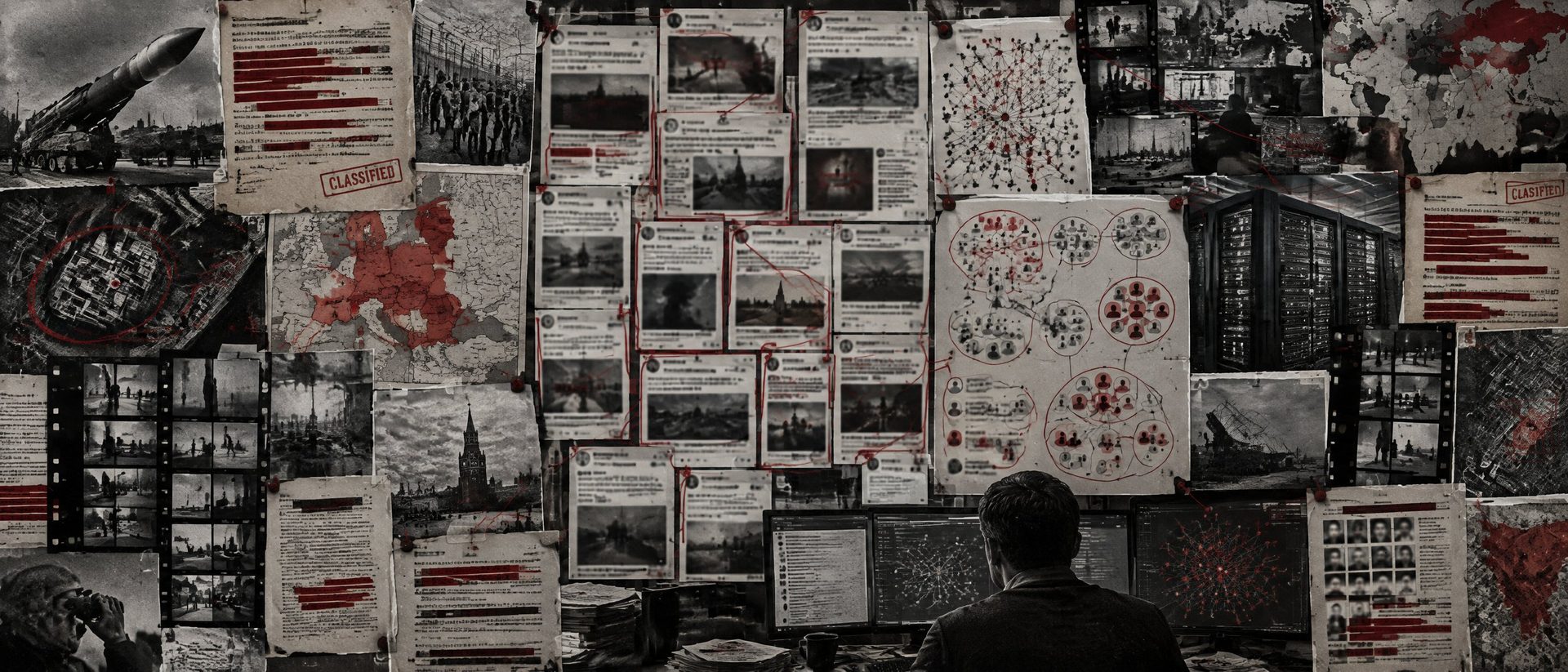
Then there were the speakers who were not who they said they were. From 2015 to 2017 Russia's Internet Research Agency ran pages on both sides. Its Blacktivist
Facebook page drew 11.2 million engagements. Its Back the Badge
ad, Community of people who support our brave Police Officers
, went out on 19 October 2016 and reached more than 1.3 million impressions. On Instagram it ran @pray4police
, with 127,853 followers, and @cop_block_us
, with 109,648. The Senate Intelligence Committee described the agency as simultaneously taking and attacking all sides of the arguments
. No finding shows that either American movement was created or run by it.
What it got right or wrong
The single most important document in this file cuts both ways, and both halves need to be said. On 4 March 2015 the Justice Department issued two reports on Ferguson.
The first concluded that Ferguson's police had a pattern or practice of breaking the First, Fourth and Fourteenth Amendments, and tied it to a drive for municipal revenue and to racial bias. That is a federal finding that a local government was violating its residents' constitutional rights as a matter of routine. The protesters were right that something was badly wrong in Ferguson.
The second report declined to charge Wilson. It called the accounts of a surrendering Brown, hands raised, inconsistent with the physical and forensic evidence
, and that the evidence did not show his use of force was objectively unreasonable
. The specific slogan was not supported. Jonathan Capehart wrote in the Washington Post that Hands up, don't shoot
was built on a lie
, and in the same column pointed to the department report to explain why Ferguson had exploded. Protesters were still chanting the line in 2020. Nothing in the record shows the 2014 chanters knew the account would fail; the fault lies in repeating it after the finding.
Labels did work ahead of evidence on every side. In December 2015, protesters at the Minneapolis police union's building carried a homemade sign: Blue by day, white by night. KKKops.
Days earlier the union's president, Lt. Bob Kroll, had called Black Lives Matter a terrorist organization
at a press conference. These are not the same kind of speaker: one is an unnamed protester's sign, the other a union president at a press conference. FRAME looked for an official movement or Democratic-campaign statement labeling police in the same way and did not find one. This page leaves the ledger uneven rather than pad it.
The 2020 Trump campaign brought paid advertising into it. Its TV ad You won't be safe in Joe Biden's America
had a narrator say The radical left-wing mob's agenda: Take over U.S. cities, defund the police
, and showed an unanswered 911 line with the question Who will answer the phone when you call 9-1-1?
A digital ad showed Biden saying Yes. Absolutely
under the words Defund the police?
. According to the AP's fact check, the question was about shifting part of police budgets elsewhere, and the edit dropped what he said next: that's not the same as getting rid of or defunding all the police
. Biden said he did not support defunding the police. Cutting an answer to make a man say the opposite is card stacking, and it would be the same if a Democratic campaign had done it. The foundation's own 2023 Defund the Police
ad is built differently: it calls for real systemic change that protects all communities, not just a wealthy, powerful few
and does not stage an unanswered emergency.
Money questions ran on both sides, and neither has produced a criminal finding in this record. For 2020 the BLM Global Network Foundation reported revenue of just over $90 million, with $21.7 million given out in grants. New York magazine reported in April 2022 that donated funds had bought a California property for roughly $6 million in October 2020. The foundation's answer was that the house served a fellowship and would be listed in its tax return; Cullors, executive director until May 2021, said it had been a refuge after threats. BLM Grassroots sued in 2022, alleging that Shalomyah Bowers, who led the foundation, had taken $10 million; Bowers denied it, and the case was thrown out in 2023. In October 2025 the AP reported that the Justice Department was investigating fraud allegations. No charge has been reported. The police-support side has its own file. Drawing on tax records, audits and internal papers, the Philadelphia Inquirer reported in 2025 that the city's Fraternal Order of Police Lodge 5, together with its Survivors' Fund, had spent $660,000 on events, funerals, flowers and gifts over twelve months ending September 2023. A 2026 Inquirer story said the lodge had sent the city bills that, by the paper's account, reached past the cost of funerals. The union rejects that description.
Start with what the federal government found
Start with what the federal government itself found: a city police department routinely violating speech, search-and-seizure and equal-protection rights. A movement that protests that is exercising the First Amendment against exactly the kind of power the Bill of Rights was written to limit. So is a group of officers that organizes to defend its members' reputations and families. Both are voluntary associations speaking under their own names, and both are owed the same protection.
Two places in this record call for the skeptical reading. First, the Blue Lives Matter statutes add a government occupation to a hate-crime law. Whether the state should raise penalties based on the victim's public employment is honestly contested; the libertarian question is whether the state should give its own agents a protected status in a law built around identity-based crimes. The record shows the laws passed by recorded votes. It does not show their effects.
Second, the foreign operation. The IRA did not argue in its own name. It posed as Black activists and as police supporters, and by a study the Senate committee quotes, first appealed to supporting veterans and police, or pride in race and heritage
and then posted content that intended to elicit outrage from these groups.
Americans have every right to say any of what those pages said. What they did not get was the knowledge of who was speaking. The remedy the record supports is disclosure: the platform disclosures and committee releases that later showed who ran the pages, not a government office deciding which slogan is allowed.
Its legacy
Open protest over police conduct is old. On 12 March 1965 demonstrators carried signs outside the White House reading Stop brutality in Alabama
and We demand the right to vote everywhere
, in their own names. The Senate committee also traced the older foreign habit: in 1984 the KGB sent fake Klan letters to the Olympic committees of African and Asian nations, and the committee treated the IRA's race-focused work as the newer form of that same focus. Across sixty years the line that matters is the signature. The 1965 demonstrators at the White House, Ferguson's protesters and the NYPD founders of Blue Lives Matter put their names to what they said. The St Petersburg pages hid theirs. For the same agency's work inside the 2016 election crowds, see the page on MAGA and the Resistance; for the FBI's own unsigned work against Black organizations a generation earlier, see the COINTELPRO page.
Three habits carry forward. Check any slogan that states a fact against the report, the full clip or the pledge text. Find out who operates any page that claims a community's voice. And when one phrase carries several meanings, ask the speaker which one is meant before scoring it.
Sources
- FRAME case study "Black Lives Matter and Blue Lives Matter: two slogans, their campaigns, and a foreign operation that posed as both," for the chronology, figures and quotations. propagandaarchive.org
- U.S. Department of Justice, Investigation of the Ferguson Police Department (4 March 2015). justice.gov
- U.S. Department of Justice, report on the shooting of Michael Brown (4 March 2015). justice.gov
- NPR, 17 March 2015, Capehart on "Hands up, don't shoot"; CNN, 30 May 2020, protesters' chant.
- Pew Research Center (2018), #BlackLivesMatter hashtag analysis; BLMGNF, "Herstory" and "What Defunding the Police Really Means"; African American Policy Forum, Say Her Name (2015).
- EBSCO Research Starters, Blue Lives Matter and All Lives Matter; The Marshall Project (2020), the thin blue line flag.
- NPR, 26 May 2016, Louisiana hate-crime law; HuffPost (2017), 32 bills in 14 states; Mason, Blue Lives Matter and Hate Crime Law (2022).
- CBS News, December 2015, Kroll remarks; Wikimedia Commons, "KKKops" sign photograph.
- Senate Select Committee on Intelligence, Volume 2: Russia's Use of Social Media (2019); House Intelligence Committee Democrats, IRA ads; Daily Beast, "Back the Badge" ad; Arif, Stewart and Starbird, Acting the Part (CSCW 2018).
- Journalist's Resource on "Defund the police" (Kaba, Ray); MPR News, 28 October 2020; CBS Minnesota; Ballotpedia, Minneapolis Question 2 (2021).
- UCSB American Presidency Project, Trump campaign release on "You Won't Be Safe in Joe Biden's America"; AP fact check via Seattle Times; CNN fact check.
- CNN (2021), BLMGNF 2020 finances; Snopes (2022), the property; NBC News (2022), the Grassroots lawsuit; PBS/AP (2025), the Justice Department investigation.
- Philadelphia Inquirer, 12 August 2025 and 11 June 2026, Fraternal Order of Police Lodge 5 finances.
- Library of Congress, Warren K. Leffler photograph of White House demonstrators, 12 March 1965.