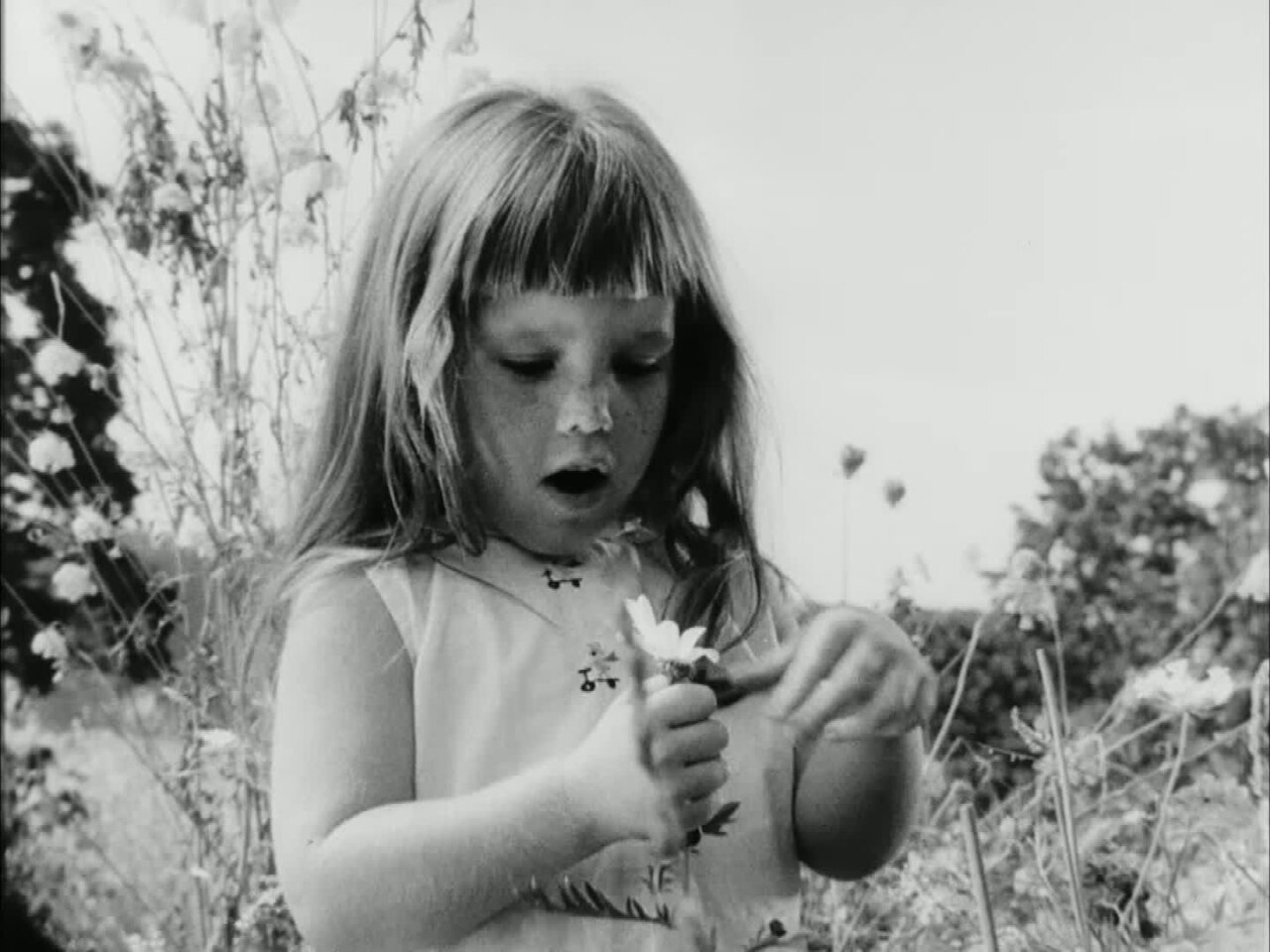
Peace, Little Girl, known as the "Daisy" ad, was a 1964 Lyndon Johnson campaign spot made by Doyle Dane Bernbach with Tony Schwartz. A girl counts daisy petals, a countdown takes over, and the screen cuts to a nuclear explosion. Goldwater is never named.
What the spot shows
A girl pulls petals from a daisy and counts them. A man's voice takes over with a countdown, and the picture cuts to a nuclear explosion. Then Johnson's own voice gives the moral. FRAME's record holds a single frame from the film and no full transcript, so this page quotes only the one line the catalog gives.
These are the stakes: to make a world in which all of God's children can live, or to go into the dark.
Who made it
This is campaign advertising, not government information. The maker line is the Lyndon B. Johnson presidential campaign (Democratic), with the agency Doyle Dane Bernbach and Tony Schwartz. The copy the archive cites is on Wikimedia Commons, retrieved 27 September 2026, and is described there as preserved from 35mm film in the Tony Schwartz Collection. Commons calls it public domain because it was published without a copyright notice.
The method
The archive tags the spot a fear appeal, and that is exact. The opponent, Barry Goldwater, is never named. No policy of his is stated, quoted, or argued against. The harm is implied by juxtaposition, and only one remedy is offered: vote for Johnson. A viewer is asked to feel the outcome first and supply the reasoning afterward.
Fair campaign criticism of a candidate's views on nuclear weapons was possible in 1964, and voters were entitled to hear it. This spot did not make that case. It made the viewer afraid and attached the fear to a ballot. That is legal, and it is protected political speech; a campaign may run it and an opponent may denounce it. It is still a manipulation of the audience, and calling it effective is not the same as calling it honest.
The war that followed the election produced its own official films; compare the Defense Department's Why Vietnam? of 1965, where the speakers are named and the argument, however one-sided, is at least stated.
Sources
- FRAME object record, Peace, Little Girl ("Daisy"), 7 September 1964. Lyndon B. Johnson presidential campaign; Doyle Dane Bernbach with Tony Schwartz. Wikimedia Commons, File:Daisy_(1964).webm, retrieved 27 September 2026. Rights as recorded: public domain (published without a copyright notice, per Commons).