What it said
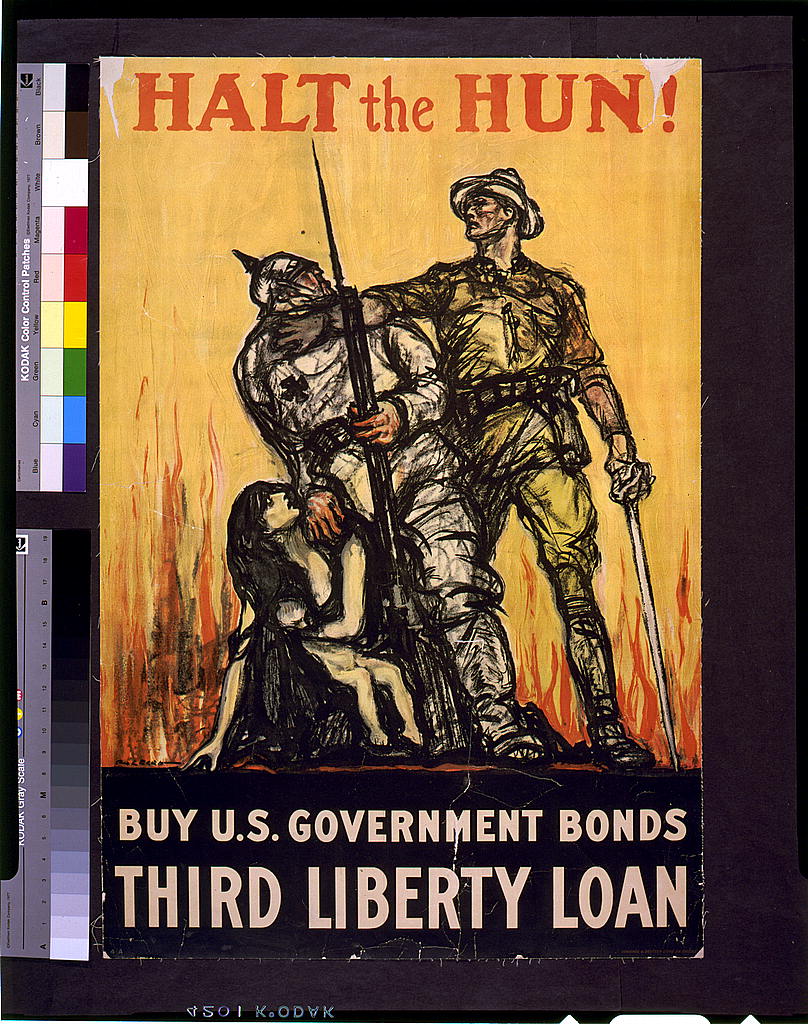
HALT the HUN!
BUY U.S. GOVERNMENT BONDS
THIRD LIBERTY LOAN
The picture, in the archive's description of the object, sets an American soldier against a German soldier in a spiked helmet who has seized a half-clothed woman holding a child, with flame behind them. The only action offered the viewer is a purchase.
Who made it and why
FRAME names the U.S. Treasury Department, Third Liberty Loan, artist Henry Raleigh, 1918. Library of Congress, LC-USZC4-2792. Public domain in the United States, published before 1931. Purpose on the record: fundraise. The Wilson administration's Treasury, under William G. McAdoo, ran the Liberty Loans. McAdoo told a San Francisco crowd in October 1917, in a line the New York Times carried on 13 October, that a person who refused to subscribe was "a friend of Germany." The poster is the same pressure in color.
What it got right or wrong
Germany was at war with the United States. Buying a bond was a real way civilians funded that war. Those two facts do not make the sheet true. "Hun" is a name, not a finding. The assault on a mother is a staged threat sitting directly over the price. Fear is the method: imagine this, then pay. The archive's case study of the Committee on Public Information notes that the same "Hun" label appears in the committee's "Spies and Lies" copy. The Treasury and the committee were different offices. The slur traveled.
Content note: the word on the poster is the evidence. It is quoted because it is what the government printed, not because it is a fit name for a people.
The constitutional and liberty angle
A bond is a loan. In form, a citizen could decline. McAdoo's speeches and this picture tried to make refusal look like aid to the enemy. That is coercion by reputation, not by a statute this poster cites. The Espionage Act was available for speech the Post Office and the Justice Department disliked. The loan drive worked the softer side of the same wartime state: shame, fear, and a public list of who had not paid. A republic can ask its people to finance a war they voted for, through Congress. It does not need to call the enemy's children animals to do it. The ask would have been cleaner without the slur.
Its legacy
The composition, protector against beast over a helpless family, is older than 1918 and did not end there. What is American about this sheet is the fine print that is actually honest: "Buy U.S. Government Bonds," Third Liberty Loan. The rest is a dare to skip the thinking. Halt the poster first. Then decide, with a number and a term, whether the loan is one you will make.
Sources
- FRAME object record, "Halt the Hun! Buy U.S. Government Bonds, Third Liberty Loan," 1918. Henry Raleigh for the Third Liberty Loan. Library of Congress, LC-USZC4-2792.
- William G. McAdoo, October 1917 speeches, as quoted on the FRAME Wilson administration page from the New York Times, 13 October 1917.
- FRAME case study of the Committee on Public Information, on the "Hun" label in "Spies and Lies."