In English or Spanish...It Means What It Says!, Berryman on Castro
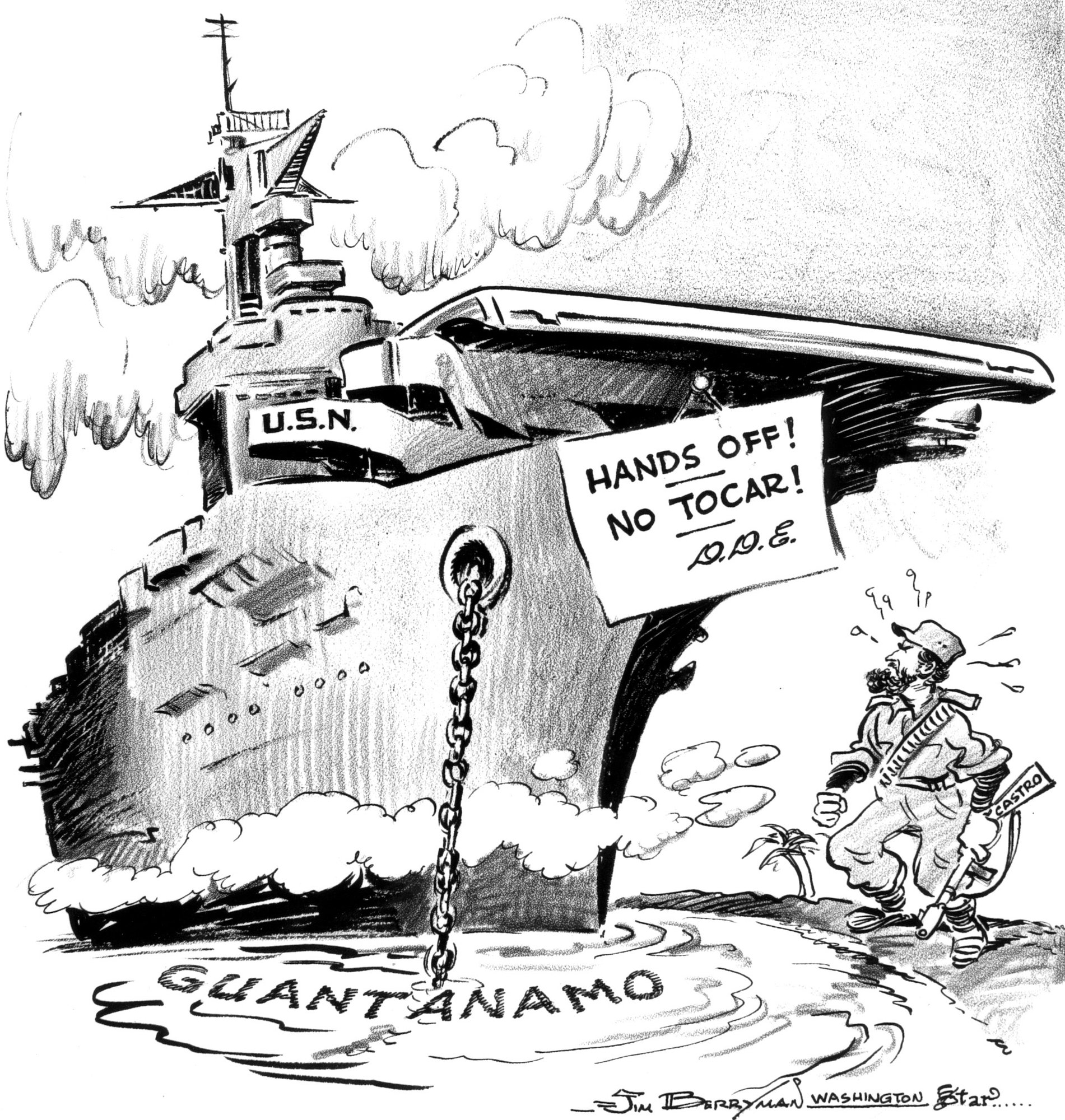
Jim Berryman's 3 November 1960 cartoon: a U.S. Navy ship marked "Hands off! No tocar! D.D.E." anchors at Guantanamo over a startled Castro. NARA NAID
Techniques named on the archive record
Fear appeal
Date
November 3, 1960
Made by
Washington Evening Star (cartoonist Jim Berryman)
Medium
Cartoon
Country
United States
Regime
Eisenhower Administration
NARA
NAID 5743286
Source
Identified Openly sourced: the speaker is who they say they are
Source
U.S. National Archives (NARA), Records of the U.S. Senate, Jim Berryman Political Cartoons , retrieved October 3, 2026
Source
Public domain (U.S. government work) Jim Berryman, Washington Evening Star. National Archives and Records Administration, Records of the U.S. Senate, 5743286 (NAID 5743286).
Object, image, and catalog record from the FRAME archive. Text on this page is CC BY 4.0. Image rights are as the archive records.
A Washington Evening Star cartoon by Jim Berryman, dated 3 November 1960. A large U.S. Navy ship looms over a startled bearded man whose rifle is labelled Castro; a sign on the ship reads "Hands off! No tocar! D.D.E." and its anchor chain drops into water marked Guantanamo (NAID 5743286).
What the cartoon shows
Scale carries the joke. The archive describes a large U.S. Navy ship looming over a bearded man in fatigues, who looks up startled; the name Castro is on his rifle. The ship carries a sign in two languages, initialled. Its anchor chain runs down into water labelled with the base's name.
U.S.N.
HANDS OFF!
NO TOCAR!
D.D.E.
CASTRO
GUANTANAMO
JIM BERRYMAN WASHINGTON STAR
Who drew it and where it is kept
Berryman drew it for the Washington Evening Star, and the original sits with his other political cartoons in the Records of the U.S. Senate at the National Archives, item NAID 5743286. The rights line in the record reads public domain; that is a fact about the archival holding and does not make the Star a government paper. FRAME classes the source as openly identified, the audience as the domestic public, and the event as the Cuban Revolution.
How to read it
FRAME tags it fear appeal through scale: naval force set against a small figure under a bilingual warning. The initials D.D.E., Dwight D. Eisenhower's, put the President's name on the warning, so the cartoon presents the message as his. Whether he ever said anything in these words, the archive does not record, and the title's claim that the sign "means what it says" is Berryman's.
The cartoon speaks to two audiences at once. The Spanish line is addressed to Castro; the English, and the newspaper, to Americans. It tells readers at home that their government will hold the base by force if it must, and it invites them to approve. A reader can agree that the base should be defended and still notice what the drawing does: it makes a foreign crisis into a test of resolve, with the outcome settled by the size of the ship.
FRAME object record, In English or Spanish...It Means What it Says!, 3 November 1960. Washington Evening Star (cartoonist Jim Berryman).
U.S. National Archives and Records Administration, Records of the U.S. Senate, Jim Berryman Political Cartoons, item NAID 5743286, retrieved by the archive 3 October 2026. Rights as recorded: public domain.