Tokio Kid, the 1942 plant-poster series
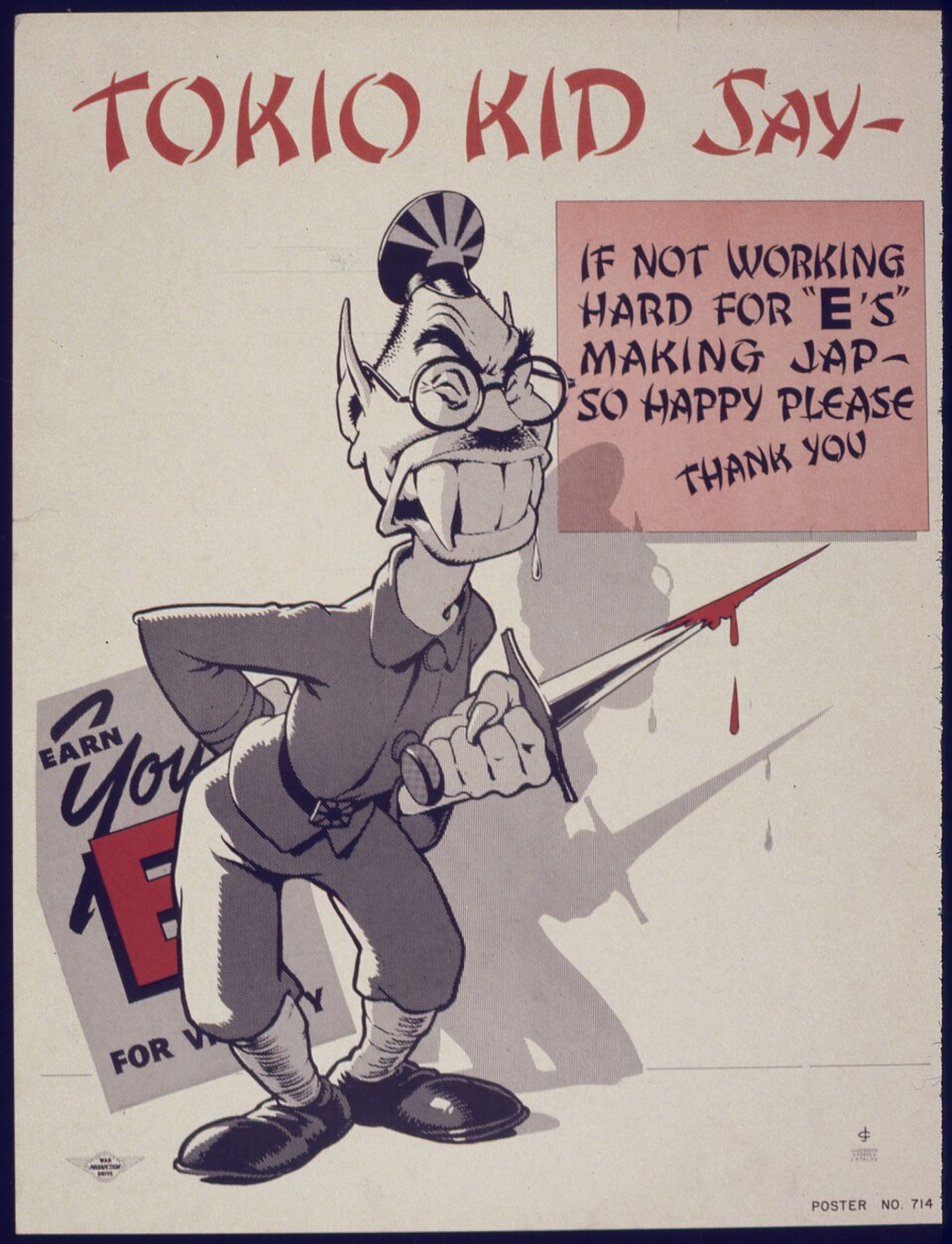
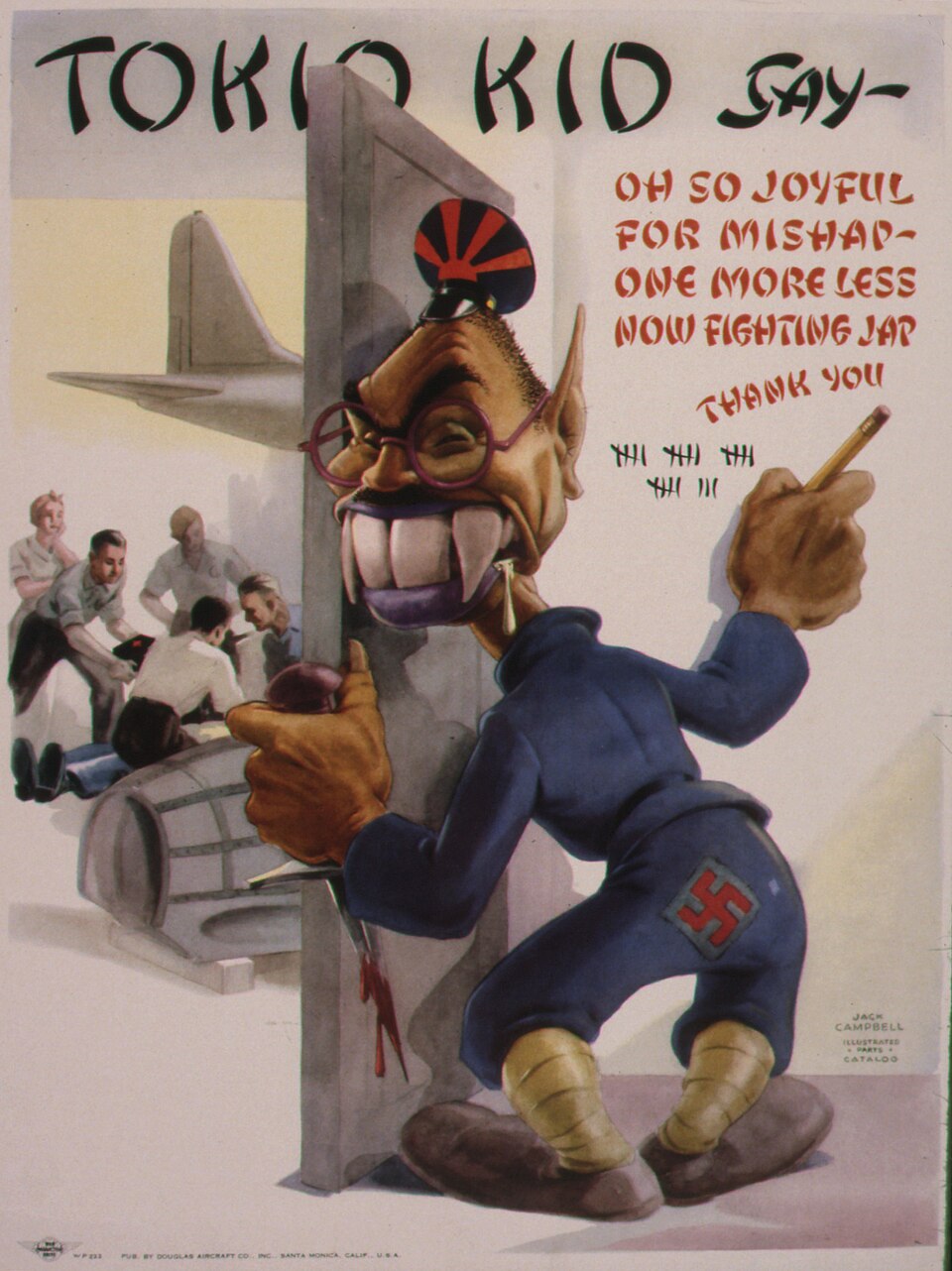
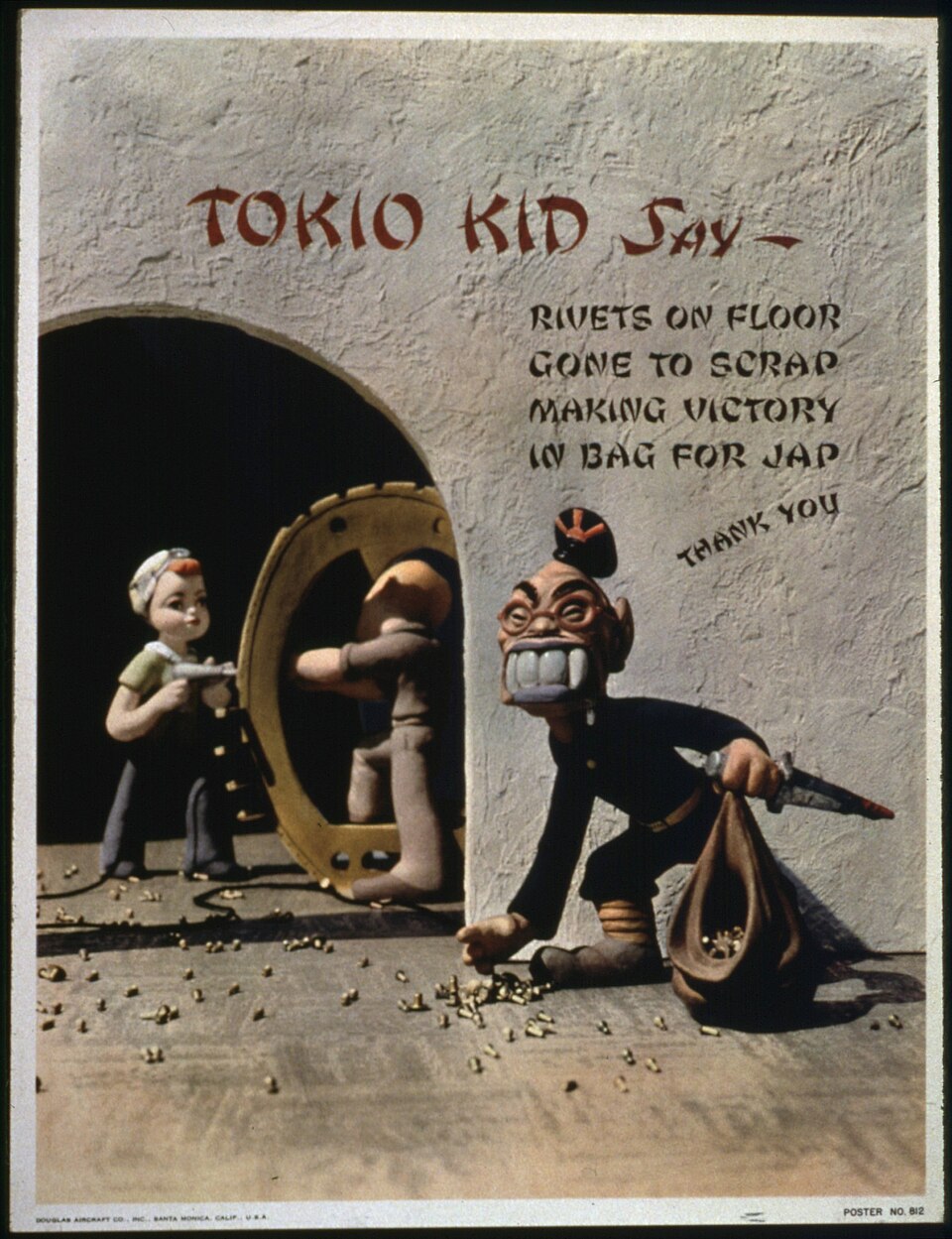
Tokio Kid is a 1942 plant-poster series that uses one caricature to scold workers about a production award, a mishap, and scrap. Three sheets in the National Archives are written up here: NARA 534594, 535321, and 533957.
The name on the sheets is "Tokio Kid," spelled that way, with an i. He is not a Japanese official and not a character from a Japanese poster. He is a figure American plants put on the wall in 1942 so a missed rivet or a lost shift would look like help for the enemy. Two of the three sheets print "Douglas Aircraft Co., Inc., Santa Monica." The third prints a War Production Drive emblem and does not otherwise name the issuer. Jack Campbell signed the mishap sheet. The same signature appears on a related conservation poster that is not in the Kid series.
The three sheets
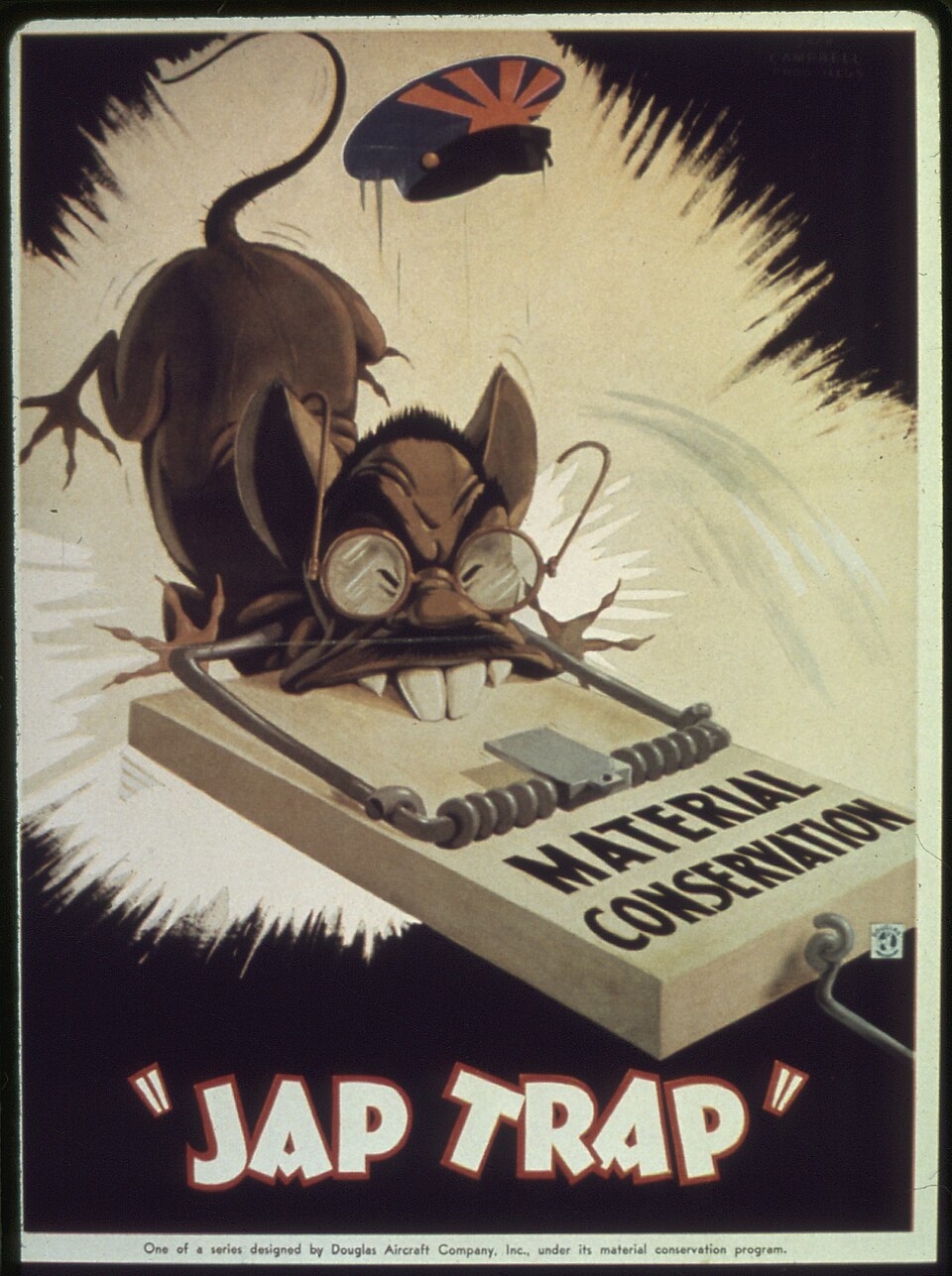
Poster no. 714 (NARA 534594) tells the floor to earn an "E" or make the figure happy. Oh So Joyful for Mishap (NARA 535321) treats an injury as the enemy's gain. Poster no. 812 (NARA 533957) puts dropped rivets in the figure's sack. A fourth Douglas sheet, "Jap Trap" (NARA 515862), uses a rat and a mousetrap for the conservation program. It is linked here because the plant and the artist overlap, not because the title says Tokio Kid.
State, people, citizens
The United States was fighting the Japanese empire. These posters do not draw a ministry, a ship, or a named commander. They draw a race, and they put a slur in the speech balloon. Japanese Americans are a third category the sheets never mention. In the same months, the Western Defense Command was posting exclusion instructions that did name ancestry. That record is separate: Japanese internment propaganda. Collapsing the empire, the people, and the citizens into one grin is the failure these plant sheets share.
The head topic, written after these pages, is anti-Japanese propaganda. Other titles are in the gallery.