US and UN Command messaging in the Korean War, 1950–1953
This hub gathers what the United States said during the Korean War, through the United Nations Command it led, through its information program in Asia, and in its own newspapers: safe-conduct passes, air-raid warnings, surrender and demoralization leaflets, posters for Korean and Asian readers, and cartoons for Americans at home.
Three kinds of American speaker are on these pages. The first is the military command in the Far East, which ran the war's leaflet and radio effort under the flag of the United Nations Command: the Far East Command, the Eighth Army in Korea, the Air Force's Air Resupply and Communications Service, and at least one Navy ship, USS Los Angeles. The second is the State Department's information program, soon the U.S. Information Agency, which printed posters about the war for Koreans and for readers across Asia. The third is the American press, which argued about the war at home with no one's permission. Every page rests on a FRAME archive record; the readings are this site's.
Over the line: passes, warnings, and offers
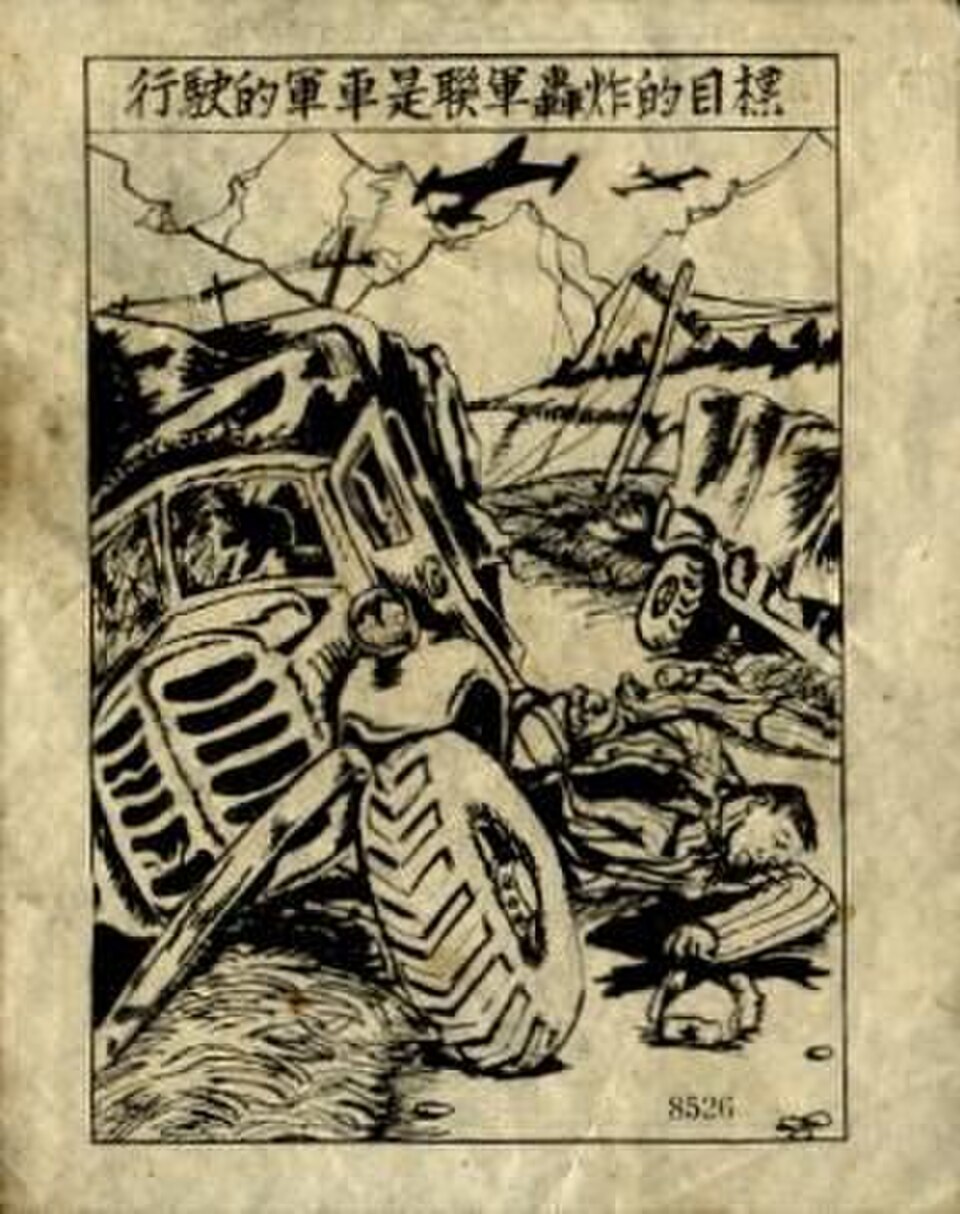
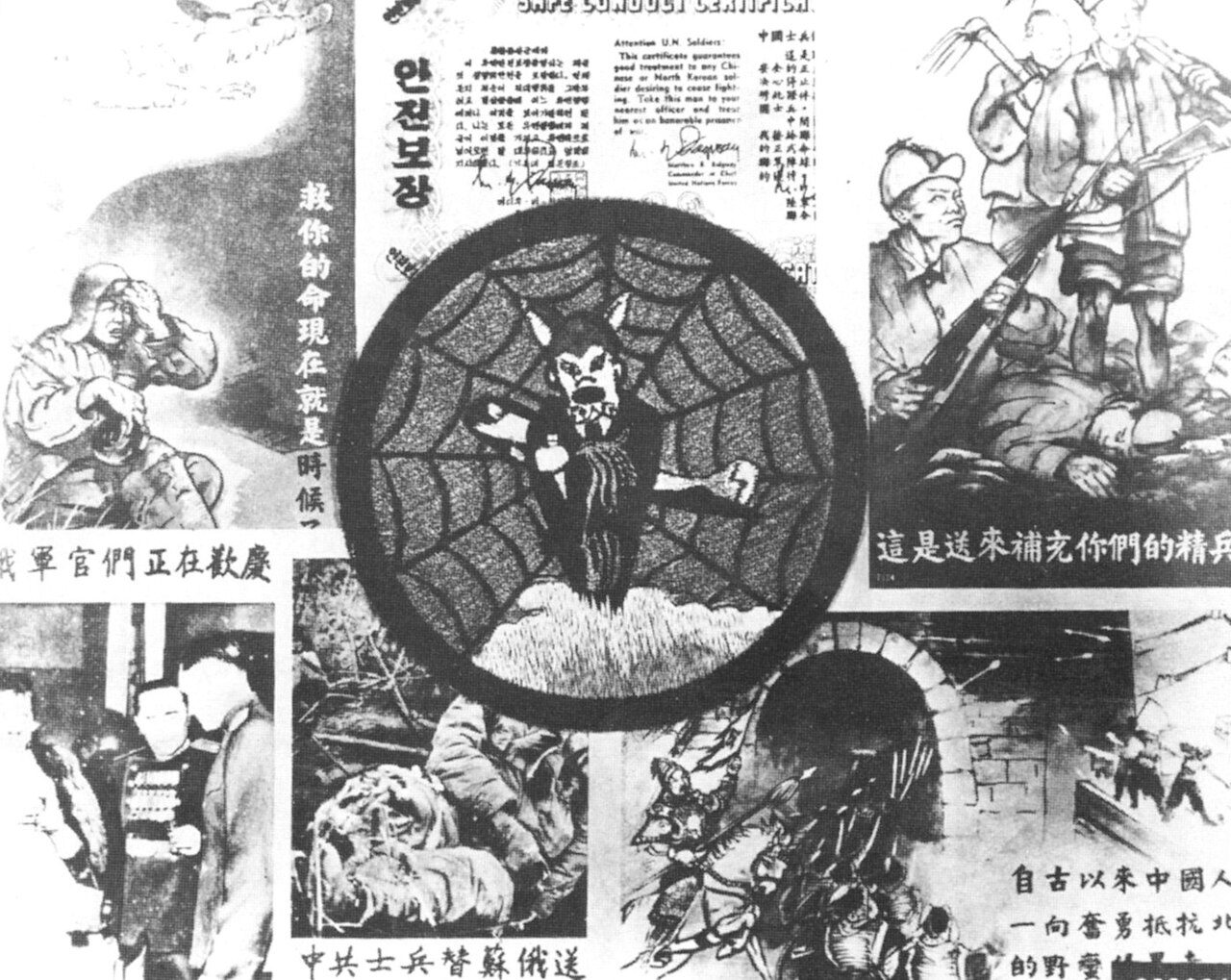
The most consequential leaflets in the set make promises. The ARCS montage preserves a bilingual safe-conduct certificate over Matthew B. Ridgway's printed name, telling UN soldiers to give any Chinese or North Korean soldier who stops fighting good treatment. Leaflet 8526 tells Chinese drivers that trucks on the road are being destroyed daily, then invites them to join the men who came over and are, it says, safe and well treated. In April 1953 a Far East Command leaflet over General Mark W. Clark's name offered $50,000 to any pilot who delivered a working jet, with landing instructions.
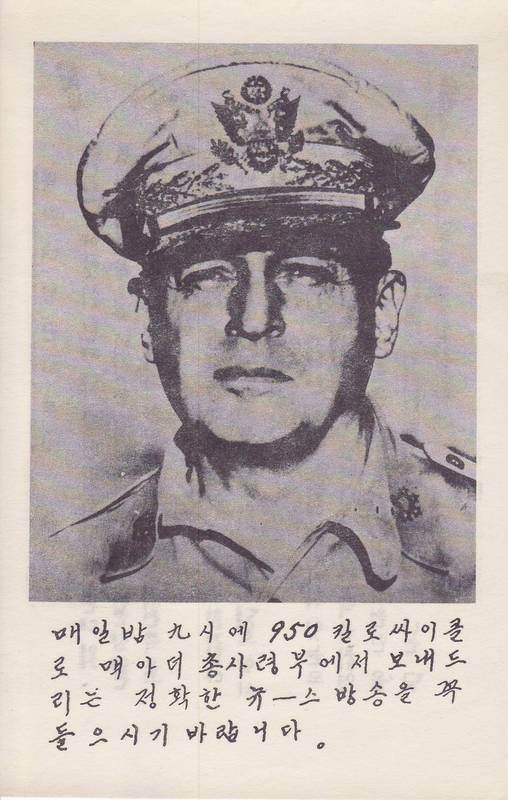
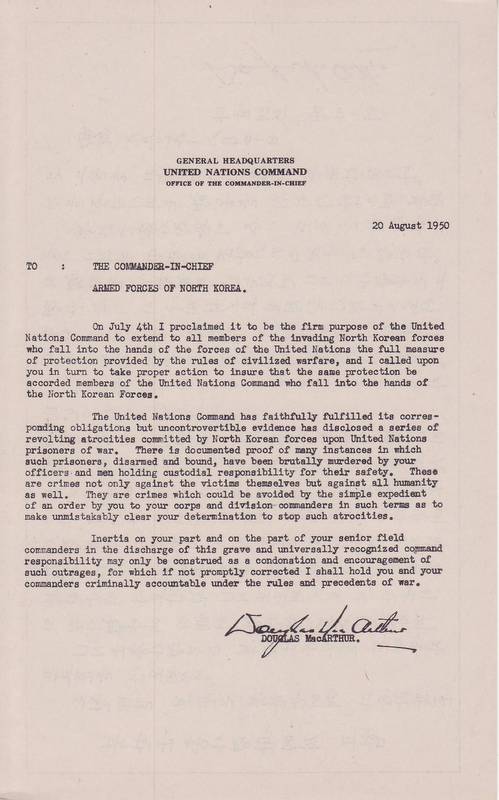
Other sheets warn. Leaflet 1020, the Pyongyang air-raid warning, tells the city's residents that military targets will be bombed within 48 hours and that they should leave. In August 1950 MacArthur's letter warned North Korea's commander-in-chief that he and his commanders would be held criminally accountable for the murder of bound prisoners. And one of the earliest sheets in the set simply points readers to the radio: a portrait of MacArthur above the time and frequency of his headquarters' nightly news.
Splitting the alliance
A large share of the leaflets argue one thing: that the man reading is dying for someone else. For North Korean troops, the someone is Moscow or Beijing. The Eighth Army drew Kim Il Sung as a Soviet-worked marionette and addressed the sheet by number to the 45th Division. A 1951 cartoon asks whether there is any need to choose death for the Soviet Union and Communist China. The same claim about the east front, that Chinese troops held the easier ground while Koreans died in the mountains under naval gunfire, appears in a 1951 leaflet credited to USS Los Angeles and again in leaflet 8321 of 1953. For Chinese troops, the someone is Moscow or their own officers. Leaflet 7230 draws Stalin ignoring Mao's plea for aid. Leaflet 6004 asks where the officers ran when the planes came.
Some sheets go home with the soldier. Leaflet 8724 shows a family at a table and blames the party for the separation. Leaflet 7255 does the same work with a cuckold's insult, a green turtle in a green hat.
Civilians and the supply line
Several leaflets were written for people who were not soldiers. Leaflet 1243 tells North Korean farmers that the party is squeezing their blood through the grain tax and orders them to hide their rice. Leaflet 8274 sets a porter with an A-frame under a sky of bombers and asks whether primitive methods can stand against scientific weapons. Leaflet 1321 draws a Confucian scholar before and after the Communists came, the second time bent under a load. A 1951 Army photograph from the Far East Command printing plant at Yokohama shows one way the sheets were delivered: a leaflet bomb whose record caption puts its load at 22,500.
Who signed, and who did not
Of the sixteen leaflets in the gallery, FRAME classes four as openly sourced: the radio sheet that names MacArthur's headquarters, the safe-conduct pass over Ridgway's name, the jet offer over Clark's, and the Navy's east-front leaflet. The other twelve carry a serial number and name no issuing office, and FRAME classes their source as blurred. The signed group includes the two sheets that make the clearest commitments, the pass and the reward. The unsigned group holds nearly all the sheets that insult, divide, or frighten, and one promise as well: leaflet 8526 pairs its threat with an unsigned assurance of good treatment.
That is a defensible military choice. A leaflet that looks like it came from the reader's own side can travel further. But promises are the part that bind, and it is to the command's credit that its best-known offers carried a commander's name. No record on this site shows whether the treatment matched the promise.
For Korea and for Asia
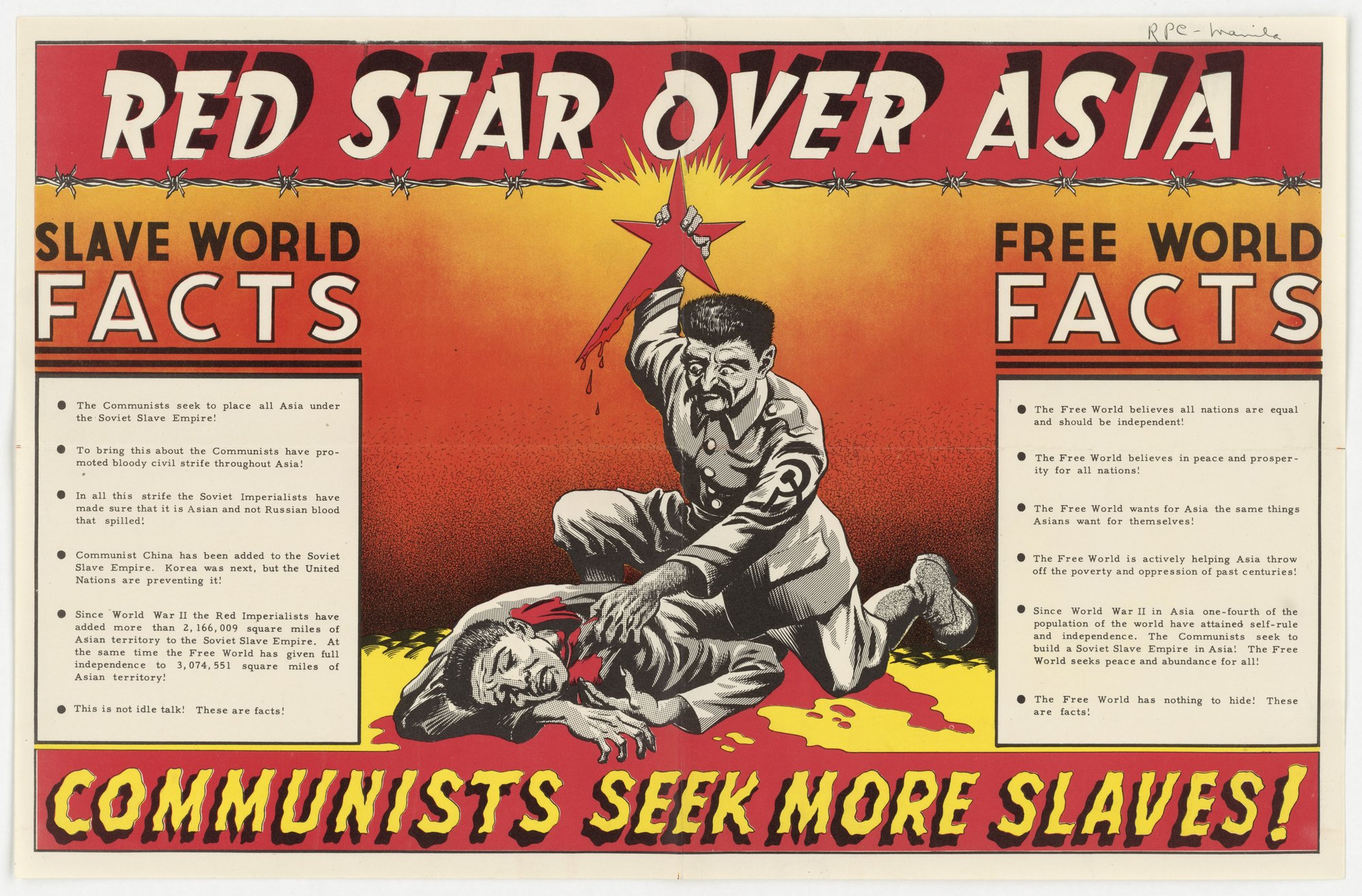
The State Department's information program, filed by the National Archives in its posters distributed in Asia, told the story of the war to allies. A Tagalog map poster, Korea: Under the Protection of the United Nations, lays a red octopus over the north and recounts the UN's answer in ten points. A Thai poster of May 1951 shows 44 countries pointing at Red China. When the Communist side charged in 1952 that the UN had used germ weapons, the program answered with a photo sheet; the gallery holds eight language editions, dated May and June 1952 in the National Archives file. The Korean edition sets the denials of Acheson and Trygve Lie against the charge and points to a Red Cross inquiry it says the accusers refused. For Korean readers in 1953 it printed photo sheets on a textile plant being rebuilt after bombing, on the Republic of Korea's army, and on the Voice of America's Korean service.
After the armistice the program kept the war on its walls. A Thai-language Korea Exhibit, dated 30 August 1954 in the archive, pairs the UN General Assembly's December 1953 resolution on atrocities against prisoners of war with survivors' testimony and photographs of the dead. Those sheets are in the gallery. Several of them show bodies.
At home
The archive holds no domestic U.S. government poster for this war that this site could find. The home-front voice in the set belongs to Jim Berryman of the Washington Evening Star, whose cartoons are kept with the Senate's records. In September 1950 he set the Labor Day holiday toll against the war's casualties to that date, 6,886. In November 1951 J. Public sat bewildered among headlines asking who was running the war. In 1953 he drew Senator Taft's proposal to abandon UN allies if the truce talks failed, the ordinary citizen giving blood for wounded UN soldiers, and, in a cartoon dated 27 July 1953 and labeled "Korean armistice," Uncle Sam praying that it meant peace.
From Korea to Vietnam
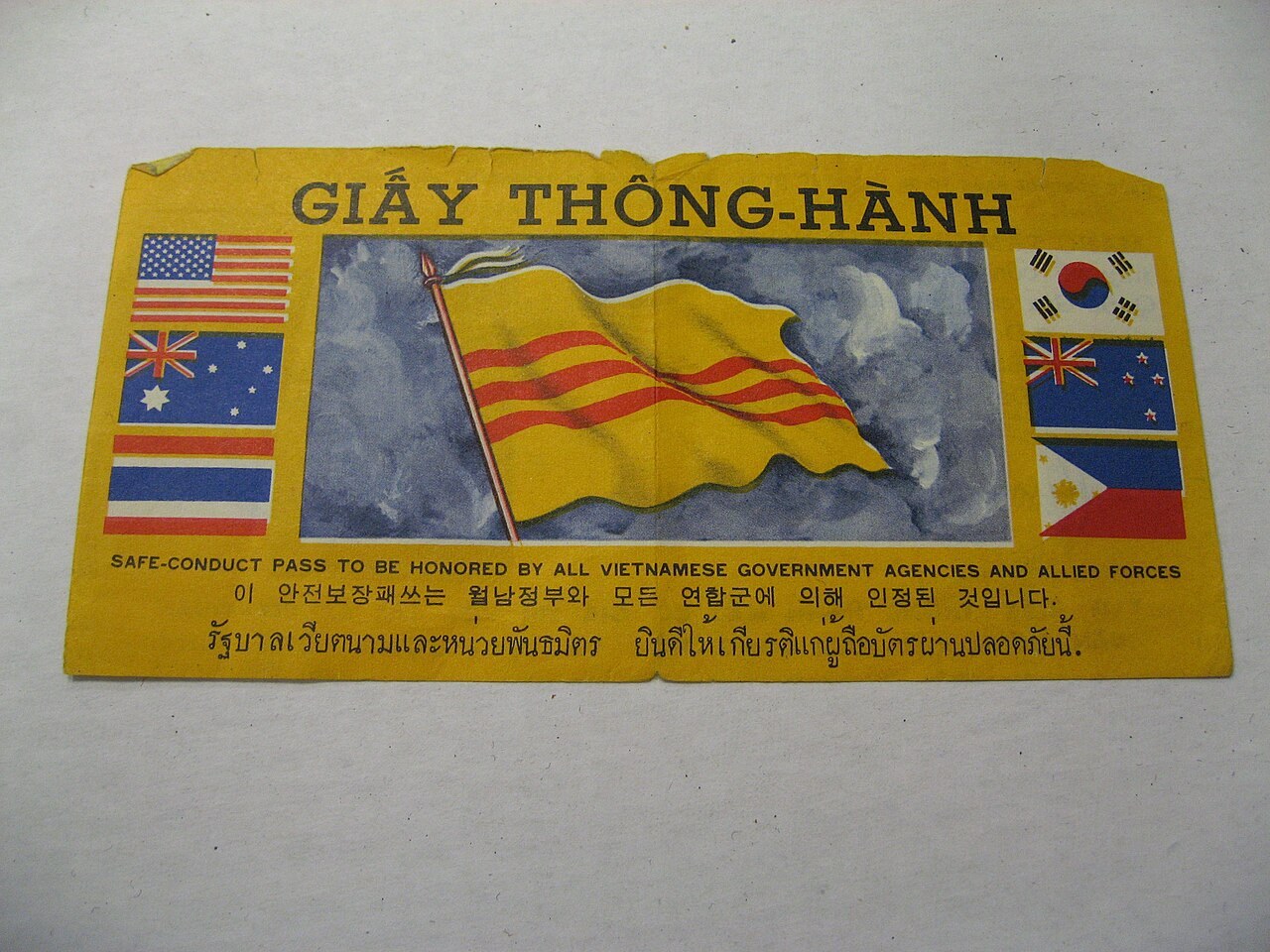
The Vietnam War messaging hub picks up the same tools a decade later. The safe-conduct pass returns as the seven-flag pass of the Chieu Hoi program. The cartoon that blames a foreign patron returns, with Mao in Stalin's place. The unsigned sheet returns too, now with a covert unit writing as a resistance league that did not exist, which goes a step past anything in the Korean set. Korea itself appears in the later set: Saigon's JUSPAO printed posters such as The Marines of Korea Bring Protection and Help for Vietnamese readers. The line runs back as well as forward: the 1945 "I cease resistance" leaflet made the safe-conduct promise to Japanese soldiers.
How this site reads the record
Three points are honestly open, and on each the site takes the reading that favors limits on power. First, a warning is only as humane as the freedom to act on it. The Pyongyang leaflet and the "hide your rice" leaflet both ask civilians to do something dangerous under a government that might punish them for it; the leaflets give no sign their writers weighed that. Second, a promise in writing binds the side that wrote it, which is why the signed passes matter more than the clever cartoons. Third, the information program's posters were often accurate in their particulars and one-sided in their selection. That is ordinary for wartime publicity. Citizens of the government that printed them are entitled to read them as advocacy and to ask what was left out.
The same standard runs the other way. An offer of safe conduct, a deadline before a raid, and a reward for a defecting pilot are among the least violent things a military can do. So is a cartoonist asking readers to give blood and leaving the choice to them.
What this hub does not cover
North Korean and Chinese leaflets are outside this site's scope. The prisoner-of-war repatriation dispute, the treatment of prisoners on either side, and later claims about "brainwashing" are not discussed, because no record in the archive snapshot or on this site covers them, and this page will not summarize them from memory. Sheets credited only to the South Korean government are not in the gallery. The privately fronted, CIA-funded campaign of the same years for Eastern Europe is in the Crusade for Freedom case study, and the wider poster program abroad is at U.S. Information Agency posters abroad.
 United StatesKorean War leaflets, posters and cartoons
 United StatesMacArthur radio-news leaflet (1950)
 United StatesMacArthur letter on prisoners (1950)
 United StatesARCS Korea leaflet montage (1951)United StatesLeaflet 8526, trucks as targets (1951)
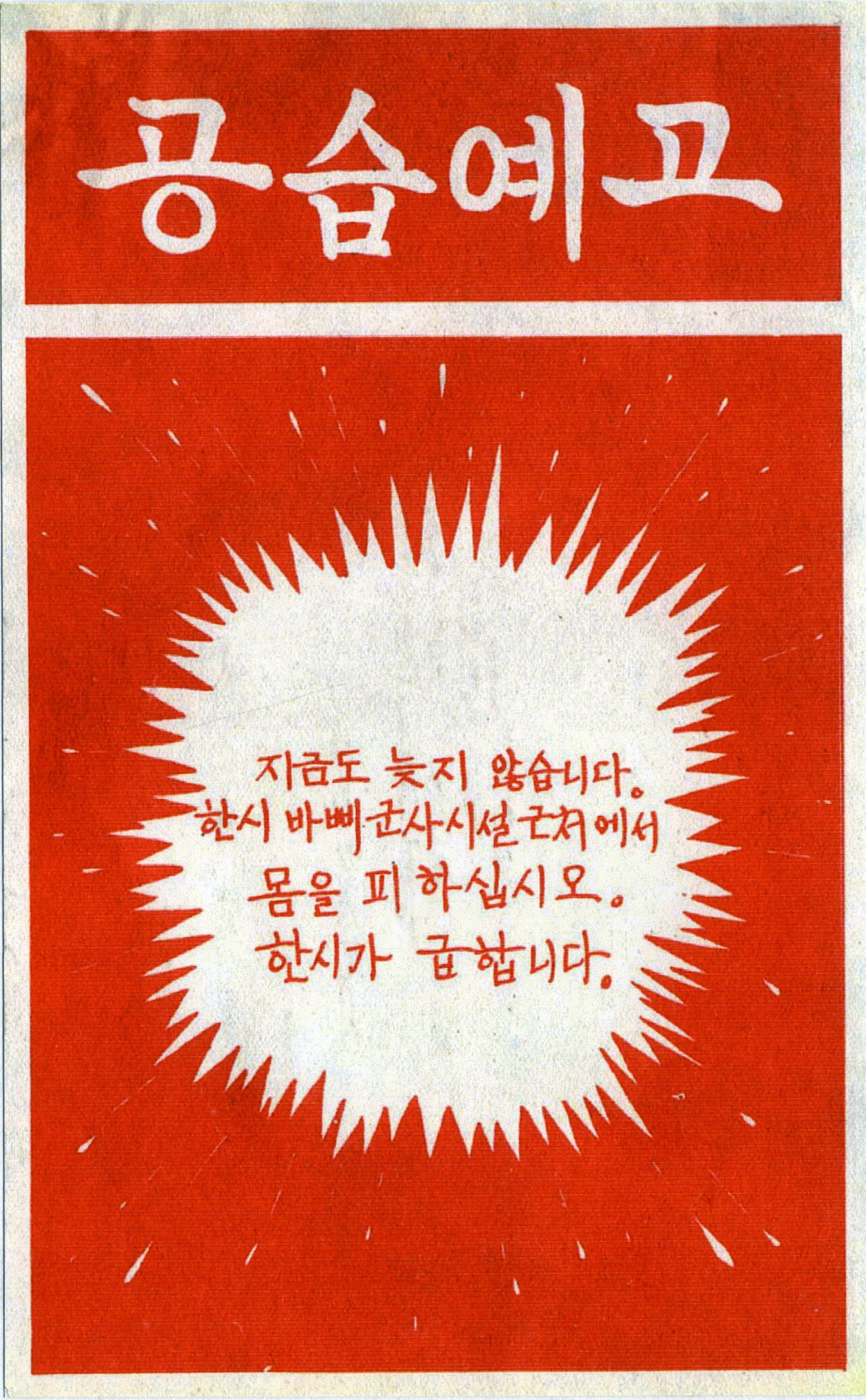 United StatesPyongyang air-raid warning (1951)
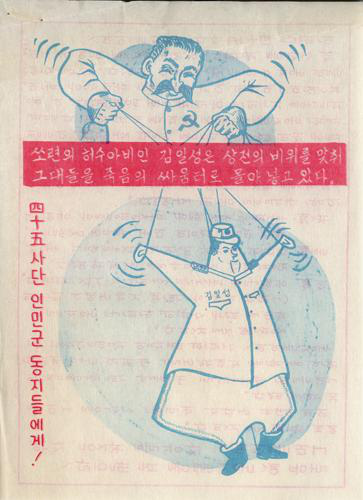 United StatesKim Il Sung marionette leaflet (1951)
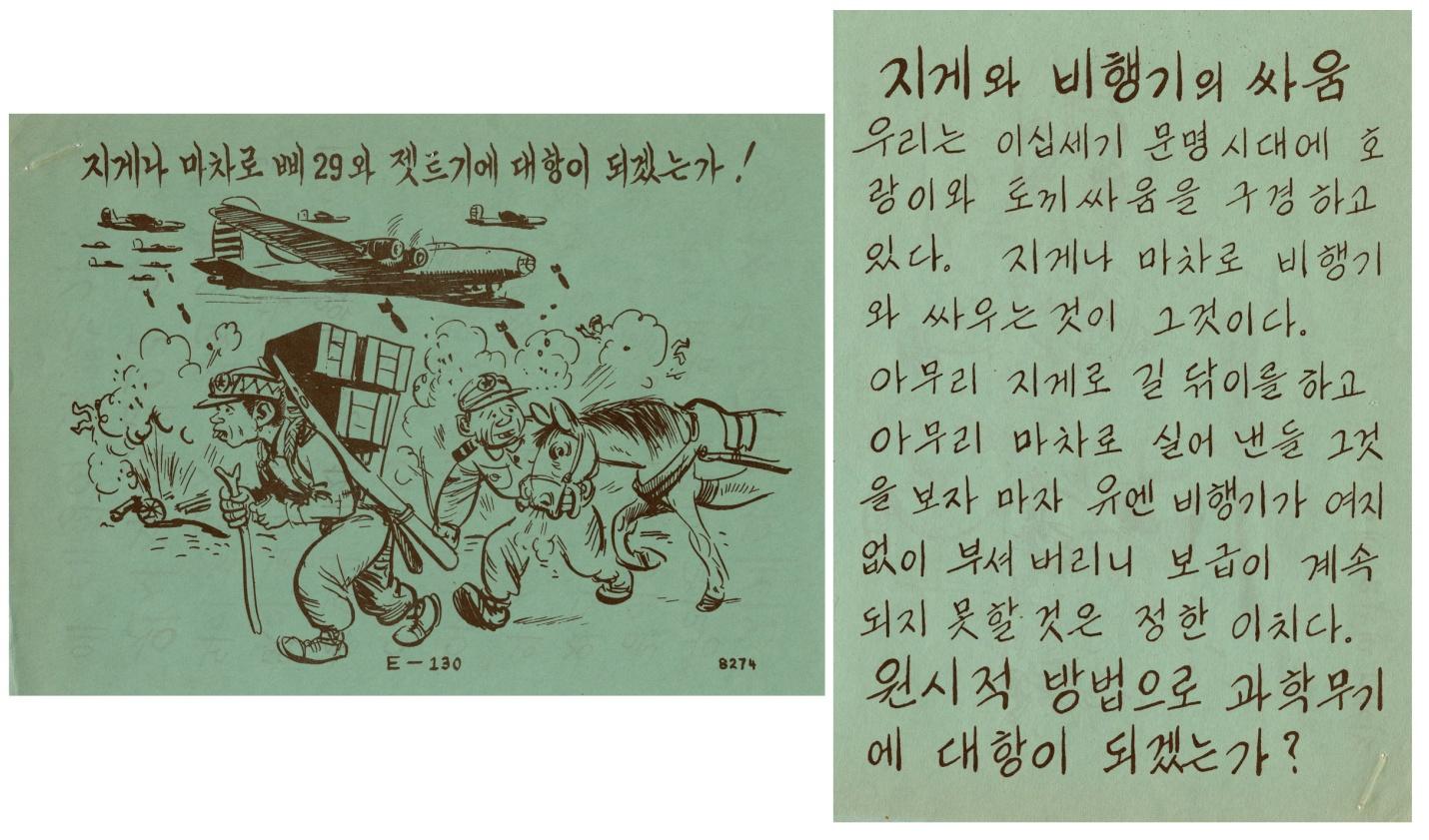 United StatesLeaflet 8274, A-frame against B-29 (1952)
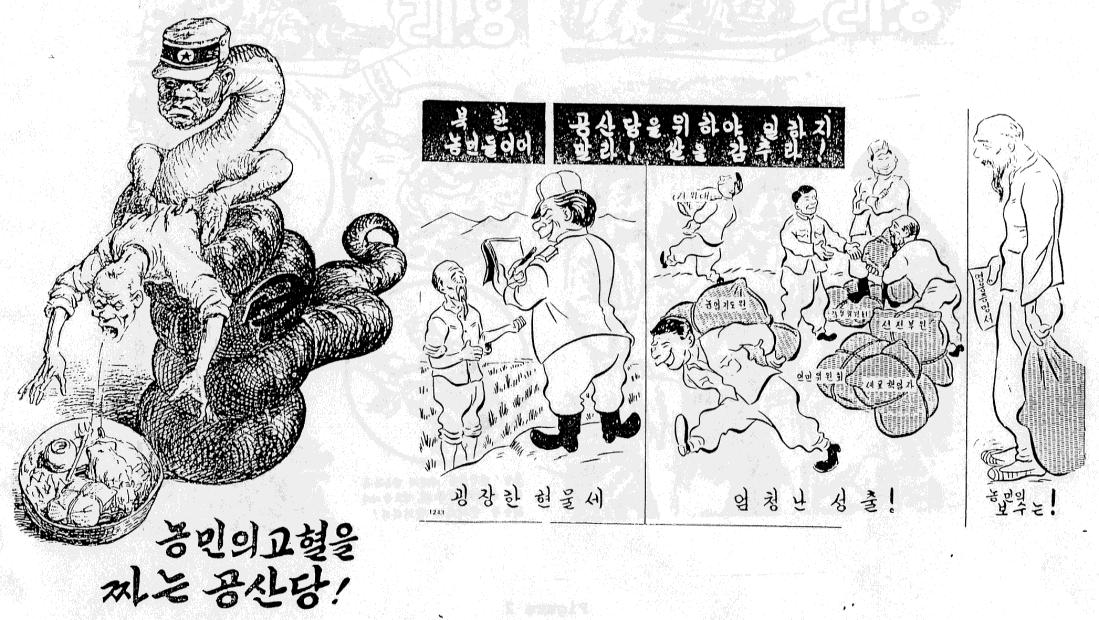 United StatesLeaflet 1243, the farmers' levy (1952)
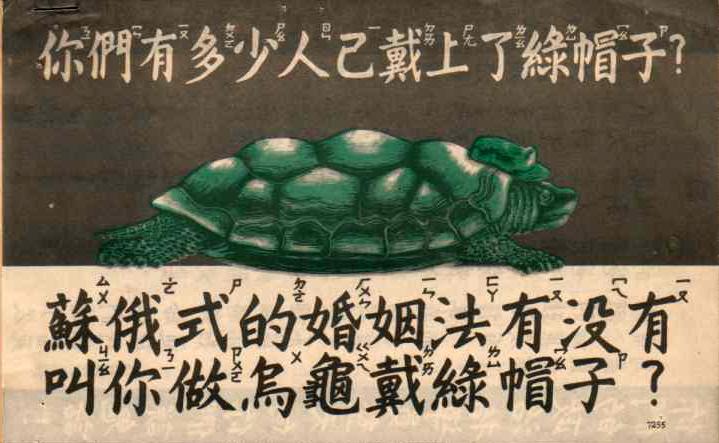 United StatesLeaflet 7255, the green hat (1953)
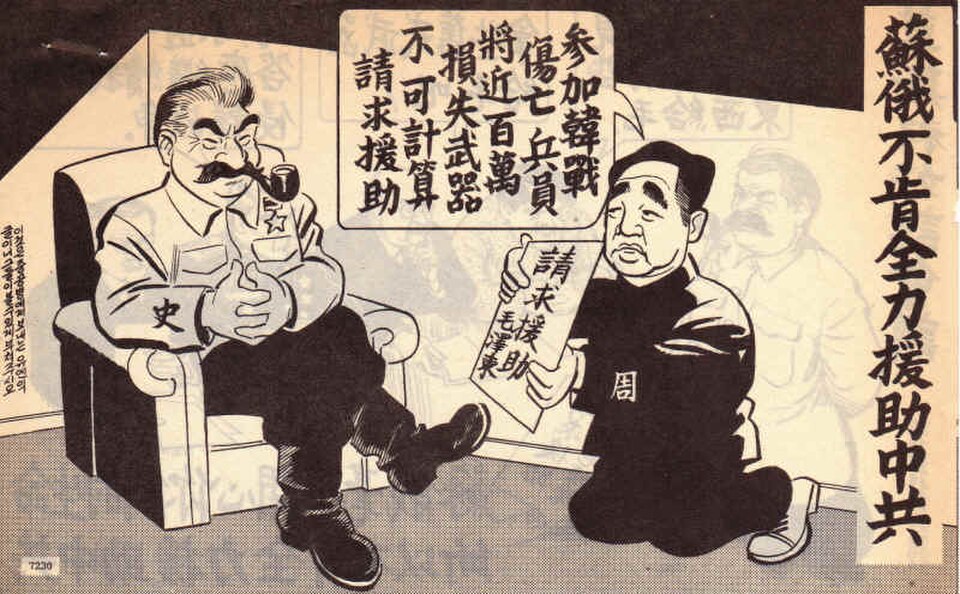 United StatesLeaflet 7230
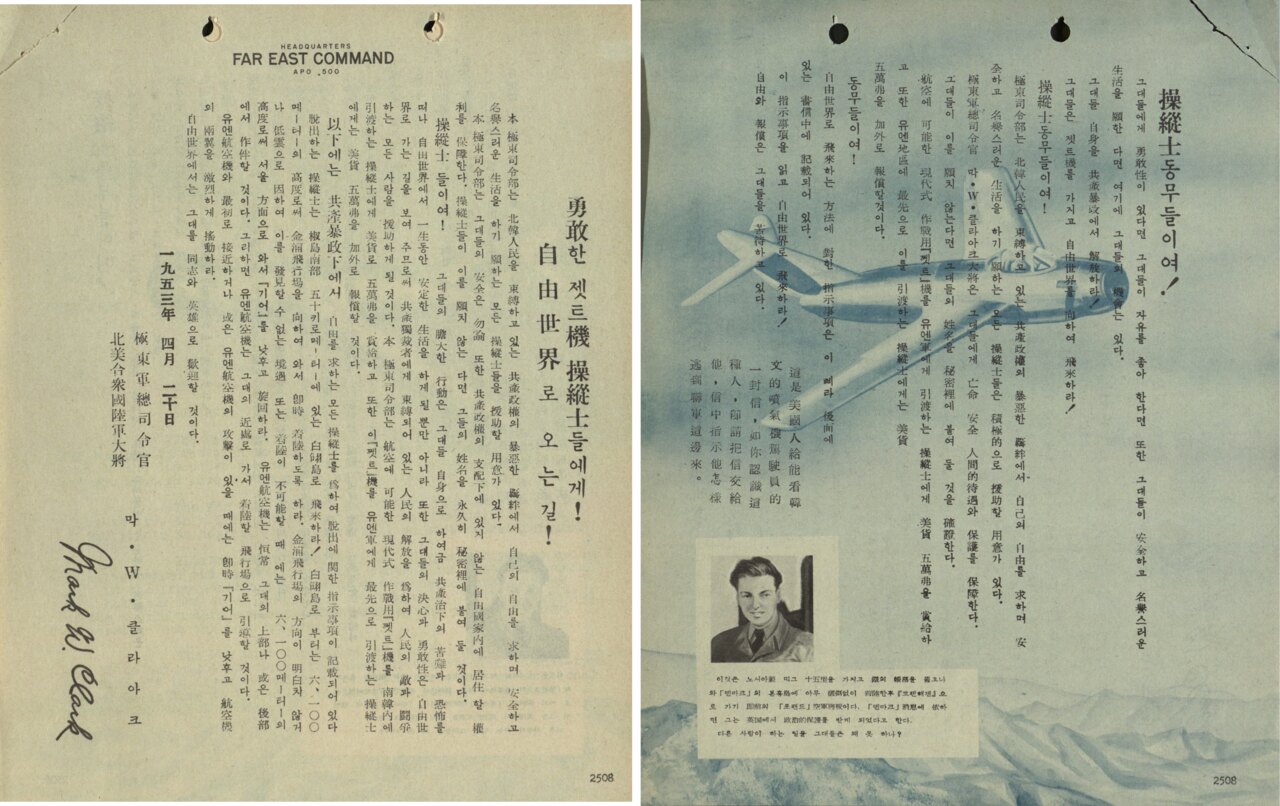 United StatesJet pilot reward leaflet
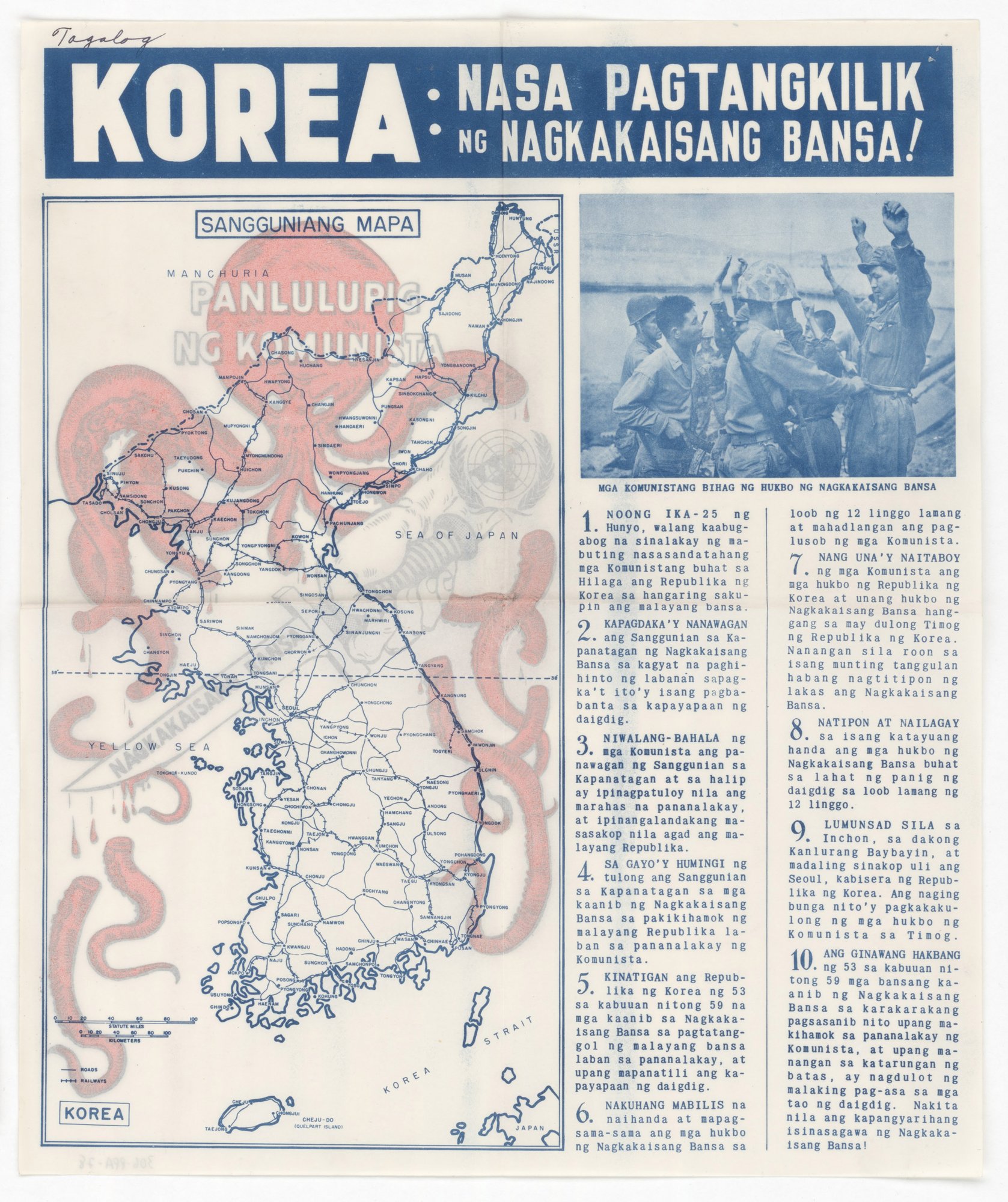 United StatesKorea under UN protection, Tagalog sheet
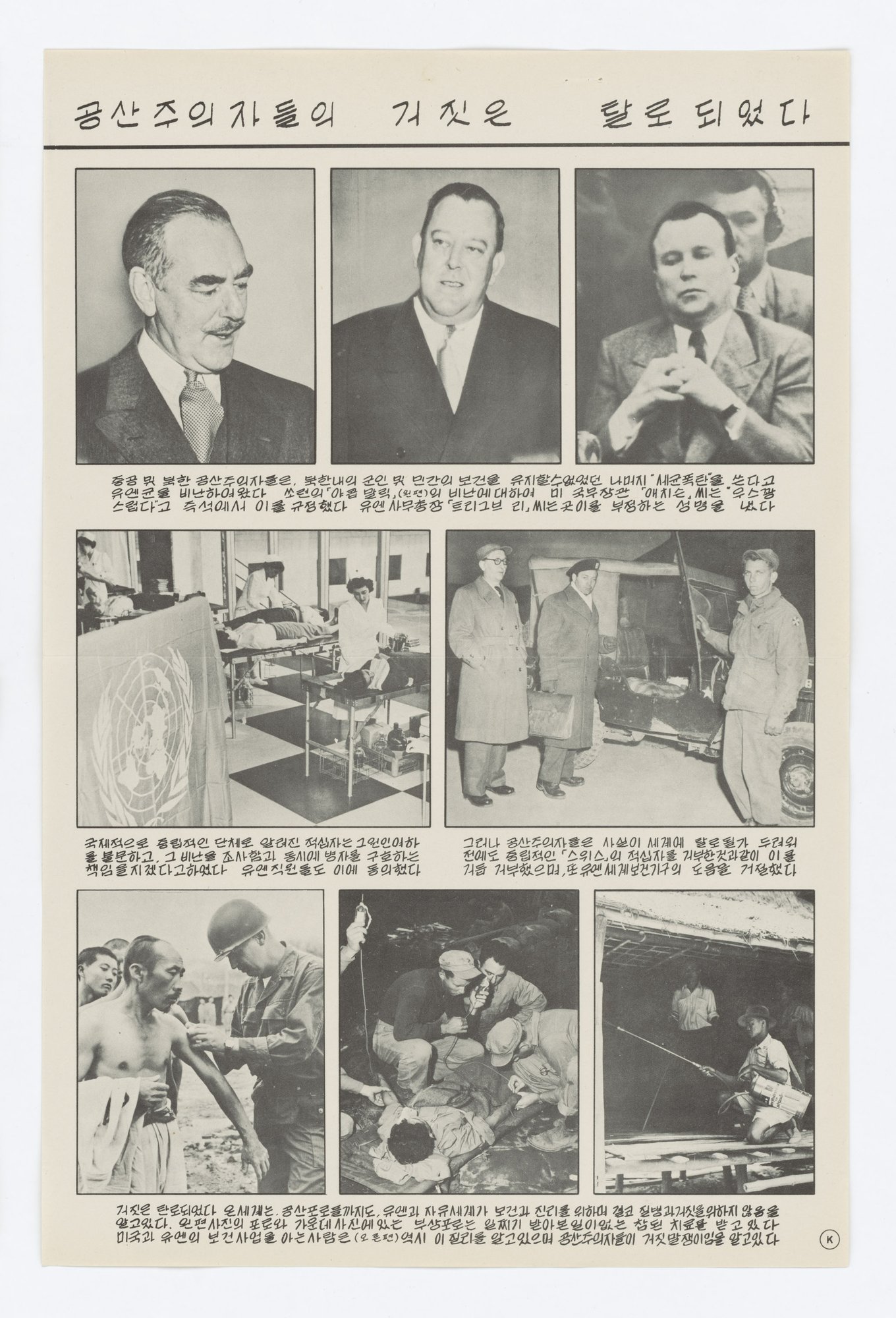 United StatesGerm warfare rebuttal, Korean (1952)
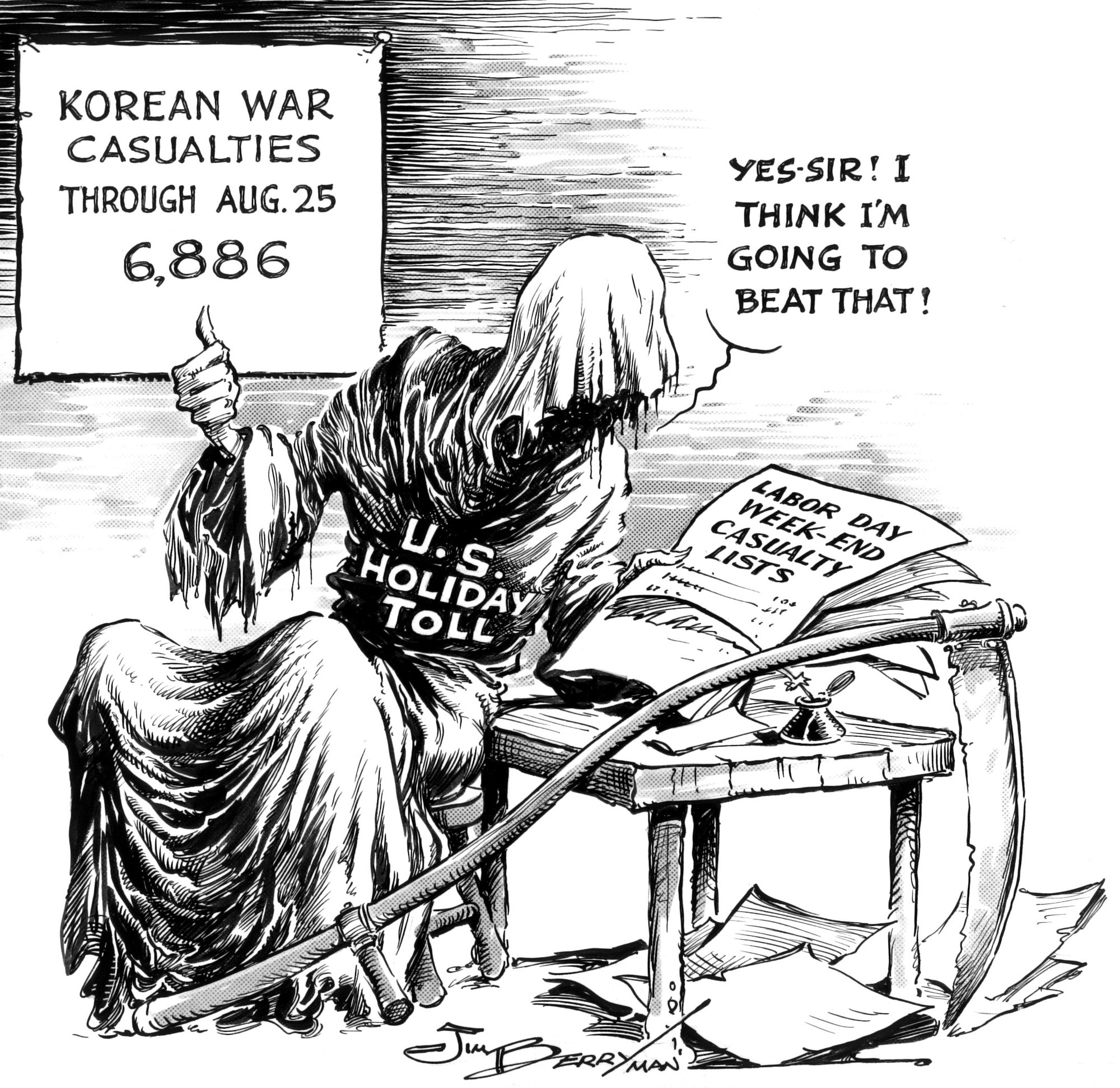 United StatesHoliday Toll vs. Korean War casualties (1950)
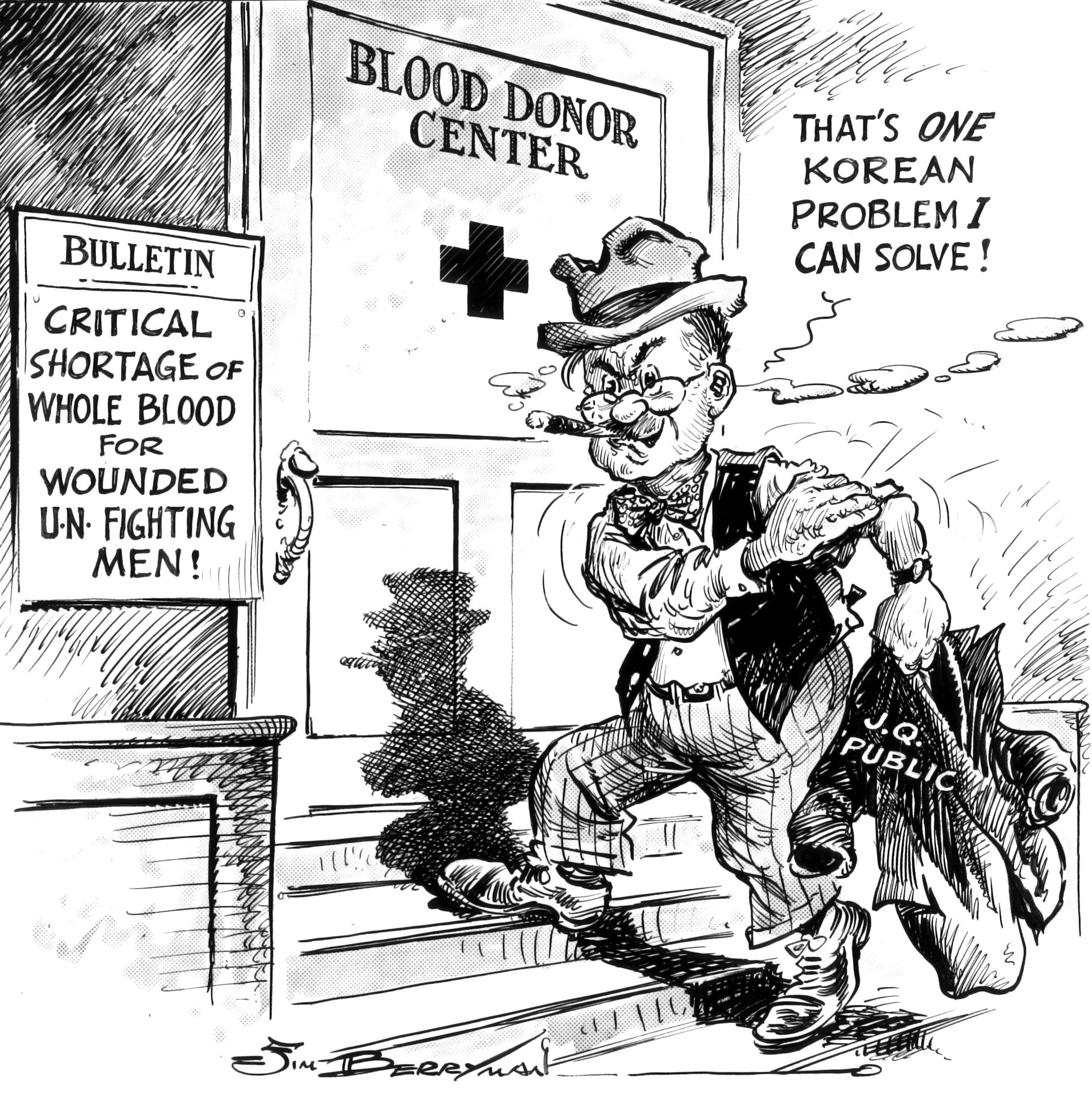 United States"One Korean problem I can solve" (1953)
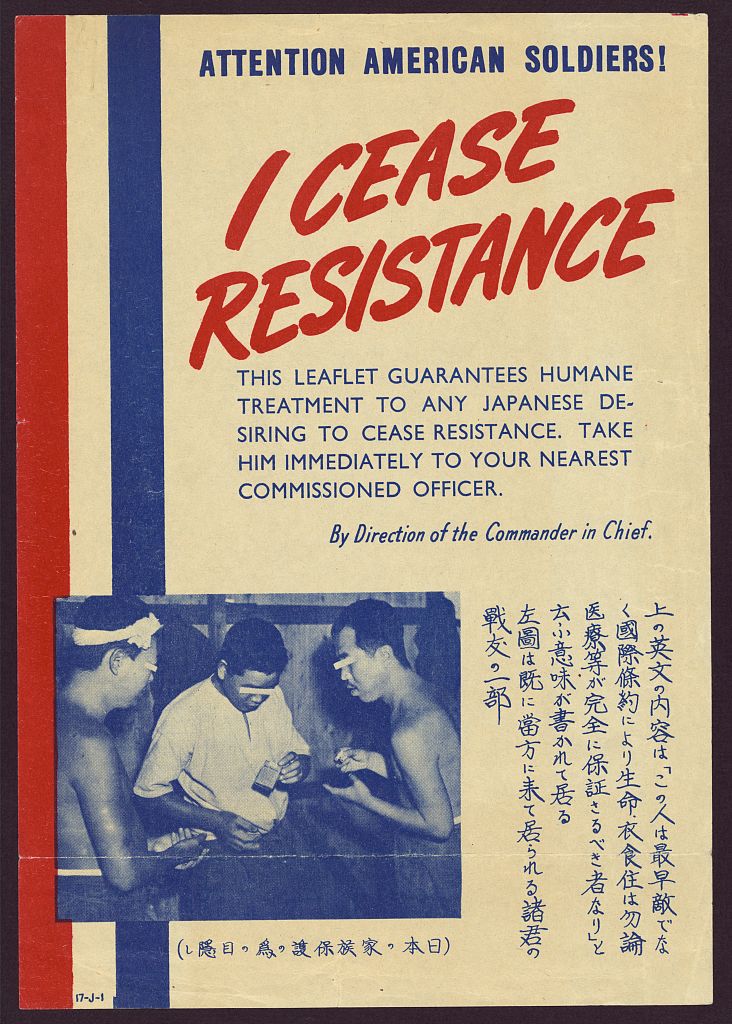 United StatesI Cease Resistance (1945)
 United StatesSafe-Conduct Pass (seven flags)
 United StatesVietnam War messaging, 1954–1975
 United StatesUSIA overseas posters
 United StatesAmericans were asked to chip in for a private radio. Their government was already paying for it.