World War II war bonds and war stamps, 1941–1946
During the Second World War the Treasury asked Americans to lend the government money, in bonds bought at a bank or through a payroll deduction and in stamps bought a quarter at a time. This hub gathers the sheets that asked, from the Defense Bonds of 1941 through the numbered War Loans and the Victory Loan to the savings bond posters of 1946, with the records' own words on what was voluntary and what was counted.
A war bond was a loan. The buyer paid the Treasury now and was repaid later with interest, and one 1943 poster, My Promise to You, prints the terms: redeemable after 60 days, $4 back for every $3 held ten years. Everything else on the nearly two hundred sheets in this set the government and its private partners printed to sell those loans was persuasion, and the persuasion ranged from a plain list of terms to a racial caricature. This hub reads that range with one question in view, the one the records themselves keep raising: how voluntary was a voluntary loan?
The gallery has 193 sheets from the FRAME snapshot, one card for each title, in date order. The pages below take up the ones this site has written about.
Defense Bonds, War Bonds, Savings Bonds
The issuing office changes name across the records. The earliest sheets credit the Treasury's Defense Savings Staff and sell Defense Bonds and Defense Stamps; Fighting Dollars for Fighting Men shows a worker holding a Postal Savings card "for the purchase of United States Defense Savings Bonds." The bond pictured on My Promise to You is a $25 Defense Savings Bond issued in June 1941. Among the sheets dated 1942, the Treasury office named most often is the War Savings Staff, and the product is War Bonds; in 1944 and 1945 it is the War Finance Division, whose WFD codes sit at the foot of many sheets. After the war the word drops out: the Treasury's Back Your Future of 1946 sells "U.S. Savings Bonds." Several sheets the archive dates 1941 already use the wartime names; the cards keep the archive's date, and this site does not re-date them.
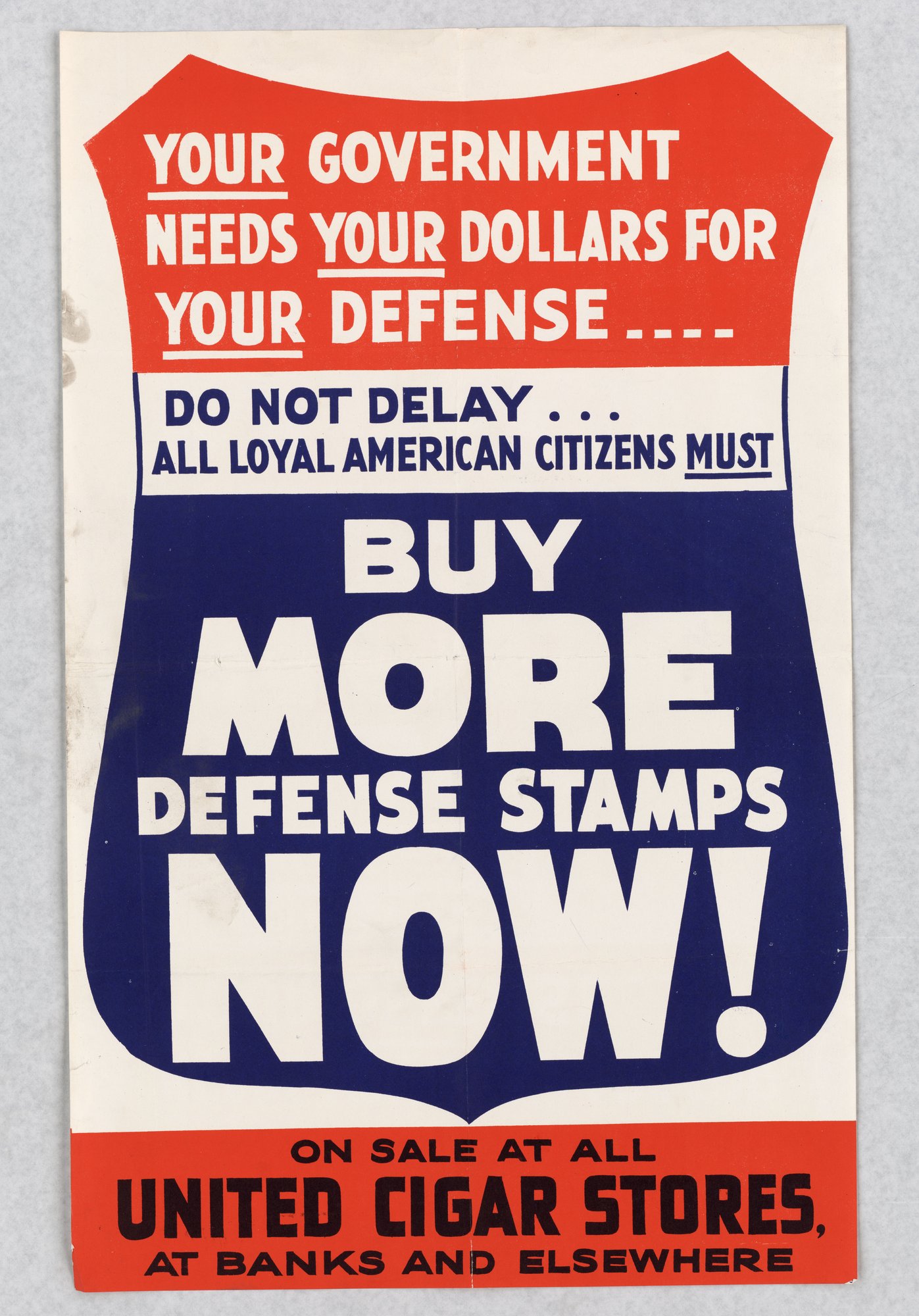
The early retail sheets show how the stamps reached ordinary buyers. Buy More Defense Stamps Now!, sold at United Cigar Stores and banks, told readers that "all loyal American citizens must" buy. No issuer is printed on it, and the word "must" had no law behind it that any record here shows.
The numbered War Loans
The Treasury also sold in numbered drives. A 1943 Office of War Information cartoon by Charles Alston, "Back the Attack with Bonds!!", draws the first three as swords. The archive's sheets follow the sequence:
- Second War Loan: Right in Der Fuehrer's Face (1942), a fist with "2nd War Loan" on it.
- Third War Loan: Back the Attack! The 3rd War Loan Is On! (1943), and a sheet that reproduces a $100 Series E bond made out to "John Doe, Everywhere, U.S.A."
- Fourth War Loan: Buying a Bond Is No Sacrifice, distributed by the Office of War Information for the Treasury, and Let's Get This Shield Up, a card asking households to put a "We bought extra war bonds" shield in the window.
- Fifth War Loan (1944): Back the Attack! Buy More Bonds and the blank Our quota is $___.
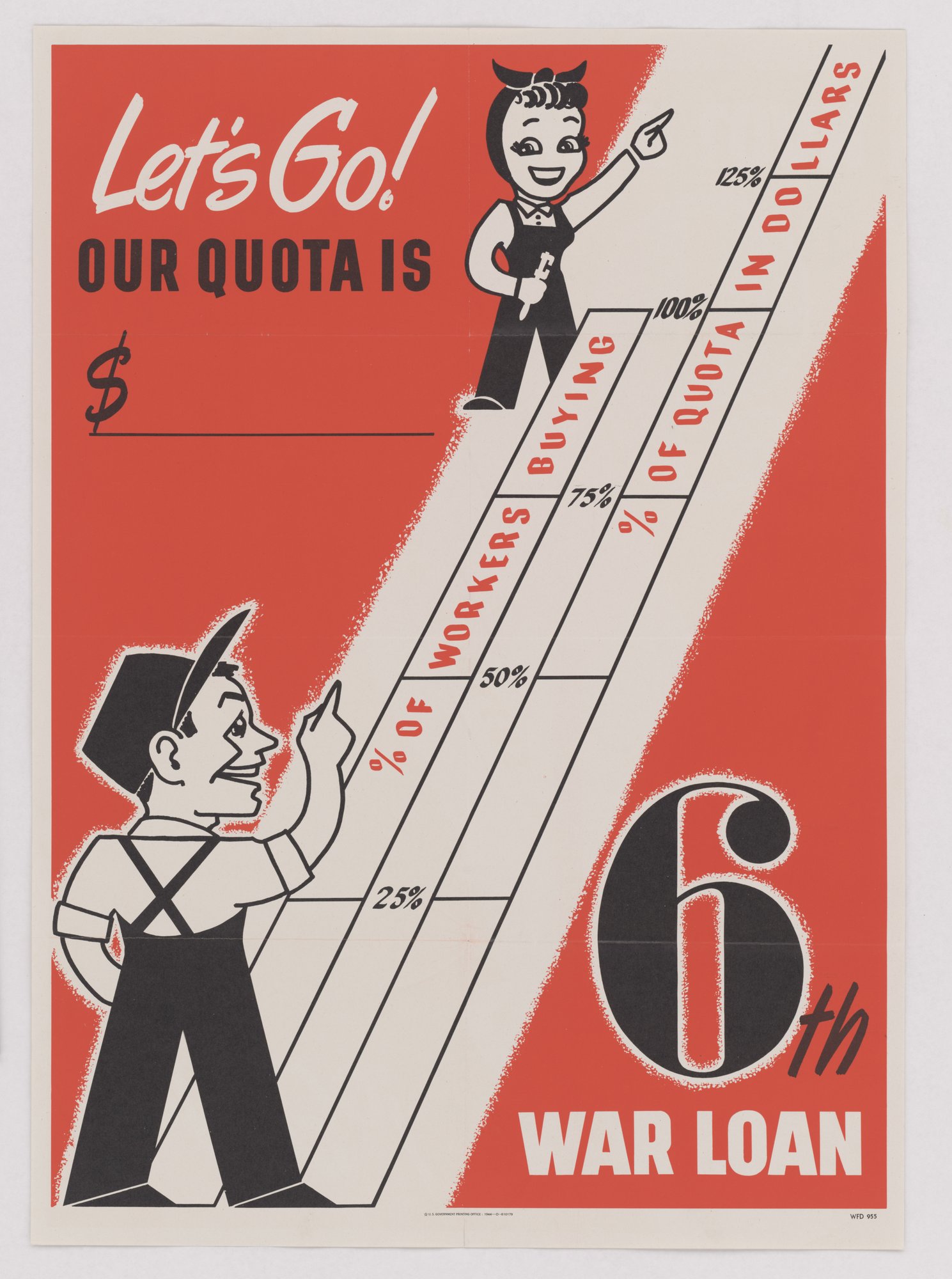
- Sixth War Loan (1944): His War Is Over.. Yours Isn't! and the quota form Let's Go! Our Quota Is $___.
- Seventh War Loan (1945): the flag-raising poster signed by Graham Kaye, and C. C. Beall's Now, All Together, painted, its caption says, from the Associated Press photograph of the Marines at Iwo Jima.
- Victory Loan (1945): Buy your extra bonds here and Hasten the Homecoming, reproduced from a Norman Rockwell cover.
No record in the snapshot names a First War Loan sheet of its own or an Eighth War Loan, and this page does not supply them.
Payroll savings and the ten percent
The steadiest pitch was not a drive but a deduction. Aim to Win (1942) and Bonds or Bondage both print the formula "everybody, every pay day, 10%." A 1942 government chart, Extent of participation in payroll savings plans, estimates that the number of workers with deductions rose from 0.7 million in December 1941 to 23.3 million in October 1942, and that participants were then putting aside 7.7 percent of pay, still short of the poster norm.
In 1943 the Treasury enlisted the two senior commanders. Admiral Ernest J. King told readers they were "not asked to give but merely to lend 10 percent," and General George C. Marshall said "we must do it to the full as does the soldier who lays down his life." Both sheets print the workers' reply for them ("Yes Sir, Admiral"; "Yes sir, General"), and both call the payroll plan voluntary.
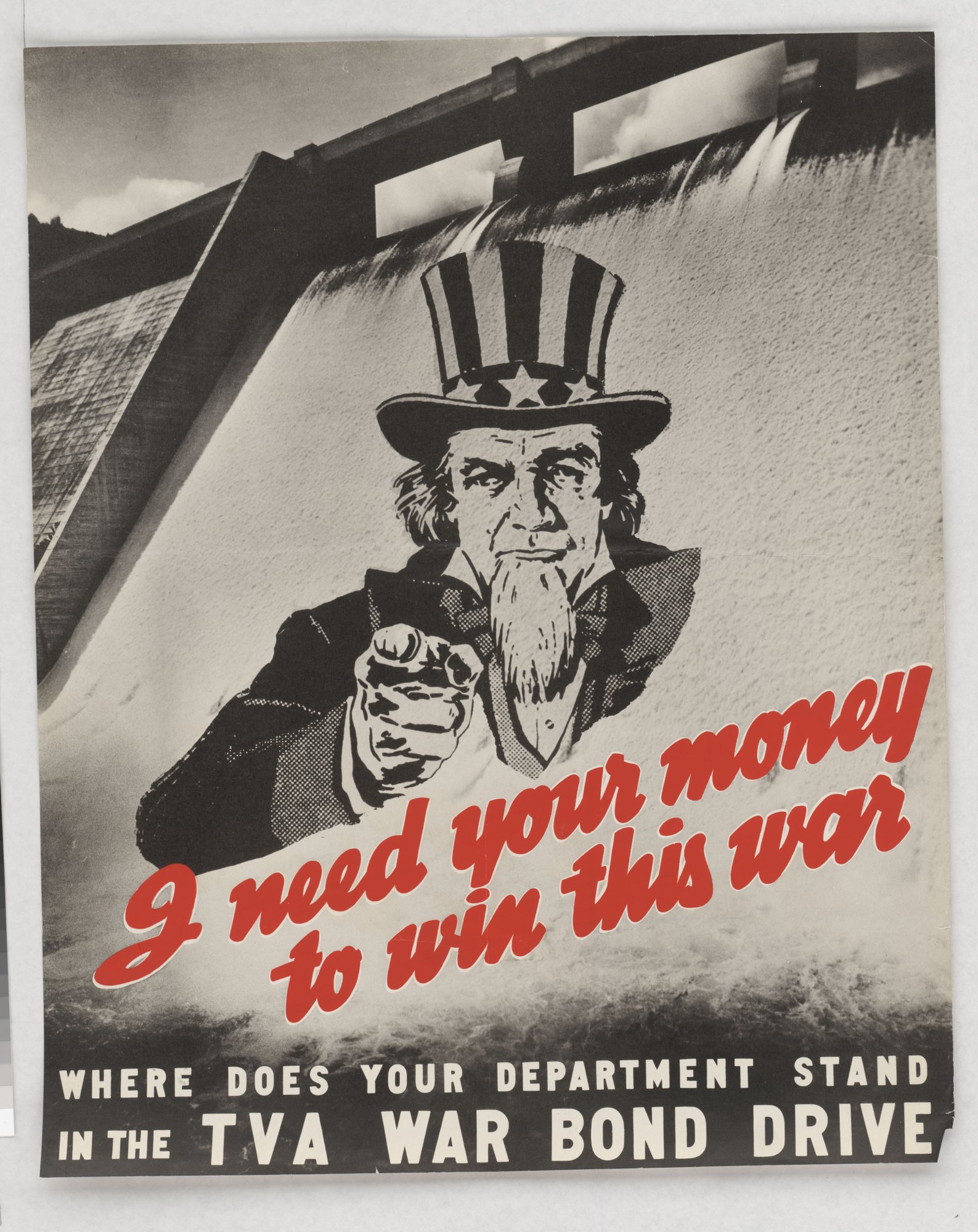
The workplace was where the counting happened. The Treasury's 1942 war bond score chart gave each firm blank rows for the "% of employees enrolled." Bethlehem Steel's sheets told its workers to "see your Foreman for details of Purchase Plan." A Tennessee Valley Authority poster asks "Where does your department stand in the TVA War Bond Drive". By 1944 the quota posters left a blank for the local dollar target and charted the share of workers buying, up to 125 and 150 percent.
The reasons the sheets gave
Most sheets argue from the war: a soldier to back, a child to protect, a debt to the dead. A Boy Died Last Night, reproduced for the Army's Sixth Service Command, reprints a newspaper editorial about an airman dead in the desert. Others argue from the buyer's own interest. Give $3, Get $4 states the return, and Double-Duty Dollars pairs bombers today with refrigerators tomorrow. One makes an economic case: Help Control Inflation says "more money than goods" means rising prices, and asks for "every dollar possible."
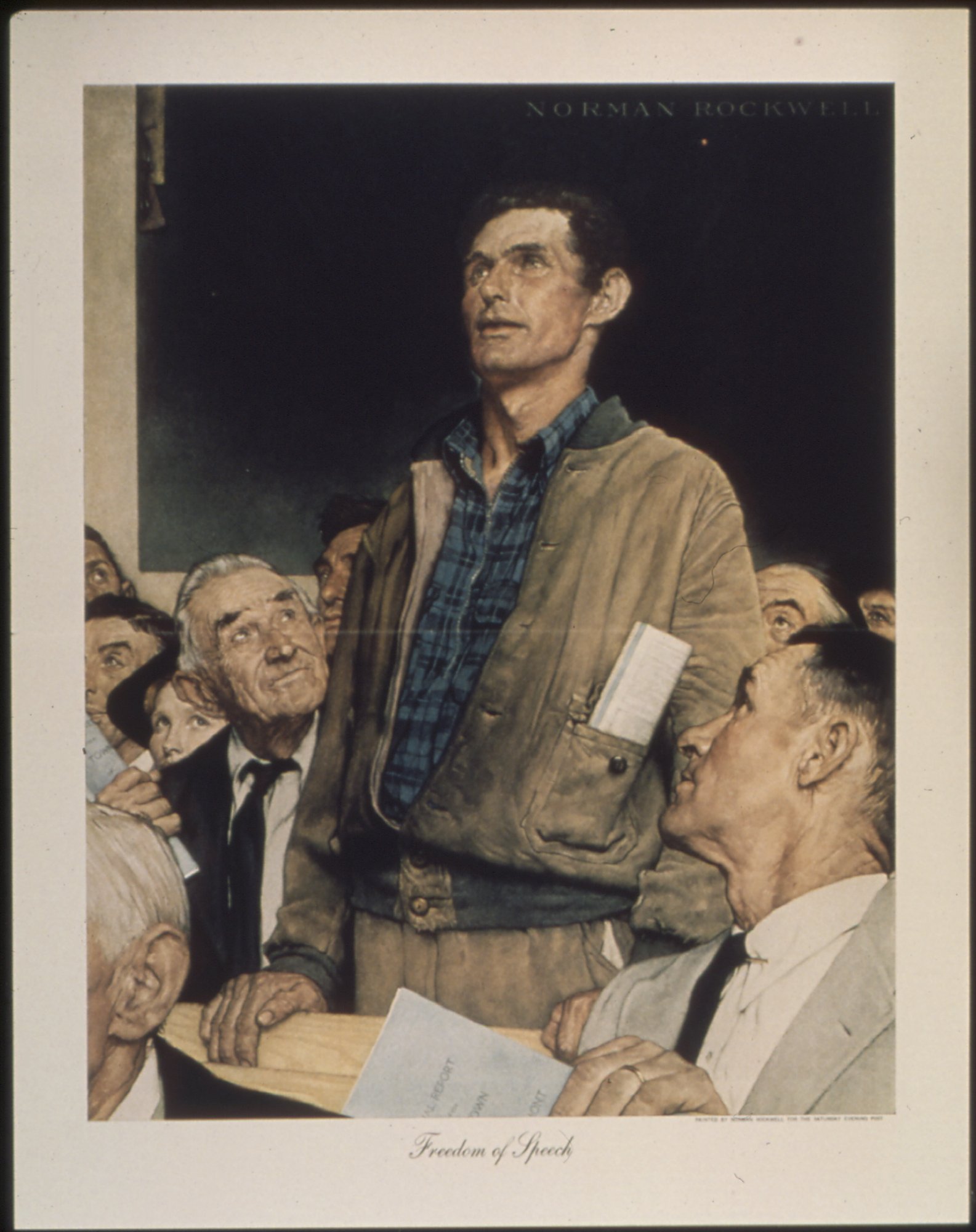
The Office of War Information carried the bond message into its own series. Its sheets of Norman Rockwell's paintings add "Buy War Bonds" under Freedom of Speech and Freedom of Worship (see Four Freedoms posters and the essay on Rockwell's Freedom of Speech). Charles Alston's OWI cartoon artwork profiles the North Carolina Mutual leader C. C. Spaulding as an "investor in government securities." Late in the war the verb changed from buy to hold: Nest eggs won't hatch (1944), 85 Million Americans Hold War Bonds (1945), and a 1946 Resolution "that every American buy and hold U.S. Savings Bonds."
Stamps, schools and children
War stamps let people lend in small amounts. A liquor-industry sheet using Al Capp's Li'l Abner, Git Mad!, says "a 25¢ war stamp buys 12 bullets." The Treasury's Schools-at-War program turned classrooms into sales points. Abbott Laboratories published a run of paintings "as a contribution to the Treasury's Schools-at-War program." The 1943 Jeep Campaign asked schools to finance 20,000 jeeps by December 7th, and promised a Treasury citation to each school that certified its success. In 1945 the War Finance Division's Newspaper Boys' Section offered a felt "U.S. War Stamp Agent" shoulder patch to carriers who sold stamps.
Children were sold to, and children were made the sellers. The records show citations and badges and no penalties. A reader can still ask how voluntary a purchase is when it is made in front of a class that is keeping score.
Industry, banks and stores
Much of the set came from private sponsors working beside the Treasury. The War Stamp Council of the liquor and wine industries printed Knock Off a Japanazi and Git Mad!. Texaco, Bethlehem Steel, the Association of American Railroads, F. W. Woolworth, Skouras Theatres, Liggett's drug stores, the credit-union insurer CUNA Mutual, and local banks all appear as sponsors in the gallery. The site's Roosevelt administration essay notes that Henry Morgenthau's Treasury ran the bond drives and that the advertising industry's War Advertising Council put government themes into commercial space; the case study on Rex Stout's Writers' War Board lists bonds among the campaigns advertisers carried. No bond sheet in the snapshot prints the council's name, so the gallery cannot show which sheets it handled.
The services sold to their own people as well. The Navy asked sailors to register a Navy War Bond allotment, and Fleet Admiral Nimitz urged "all Navy personnel" to save. The Army's Buy Bonds the G.I. Way, by Al Capp, prices a G.I. bond at $7.50 and "worth $10.00 at matoority."
The enemy on the bond sheets
Content note: this section quotes slurs as the sheets printed them. Many bond posters sold the loan by drawing the enemy, and the sheets aimed at Japan were often the crudest. The liquor-industry sheets coined "Japanazi." A Navy sheet quotes Admiral Halsey: "Navy men who buy War Bonds help break the Japs today without being broke tomorrow." Buy This Man a Hari-Kari Kit, for Pearl Harbor Day 1944, itemizes a ritual-suicide kit, $75.00 in all, beside a caricatured soldier with bared teeth. The words are kept because they are the record. They were wrong, and they were wrong in the same years the government was holding Japanese American citizens in camps. The site's anti-Japanese propaganda hub follows that thread, and the anti-Nazi hub covers the sheets aimed at Hitler's government.
Voluntary or not: how this site reads the record
The records support two statements at once. The bond was a voluntary loan on stated terms, and the Treasury and its military spokesmen called the payroll plan voluntary in so many words. The campaign also measured participation by firm, department, school and nation, posted quotas in blank for local use, put shields in windows, and in at least one retail sheet called buying a duty of loyalty. The archive's records show no fine, firing, or prosecution of anyone who declined, and this site does not claim one.
Where the point is open, the site takes the reading that favors the person over the drive. A loan the lender can call in after 60 days is a free contract. A chart that shows co-workers who has signed is pressure inside that free contract, and a card that says loyal citizens "must" buy is wrong on its face. Borrowing by asking, with the terms on the poster, treats the citizen as a lender; My Promise to You and Give $3, Get $4 did that. The Office of War Information hub and the case study on its domestic branch cover the agency that distributed many of them.
What this hub leaves out
The gallery leaves out sheets in which bonds are one item among many: the Office of Economic Stabilization's seven-key price posters, the Army's "Margie" series on soldiers' deposits, and general home-front and conservation posters. The Treasury's 1941 tax savings note poster is a different security and is not included. The First World War's Liberty Loan and War Savings Stamp sheets are in the snapshot but outside these years. No sales totals are given here beyond what the sheets themselves print.
 United StatesWar bond and war stamp posters
 United StatesBuy More Defense Stamps Now!
 United StatesI Need Your Money (TVA bond drive)
 United StatesFreedom of Speech
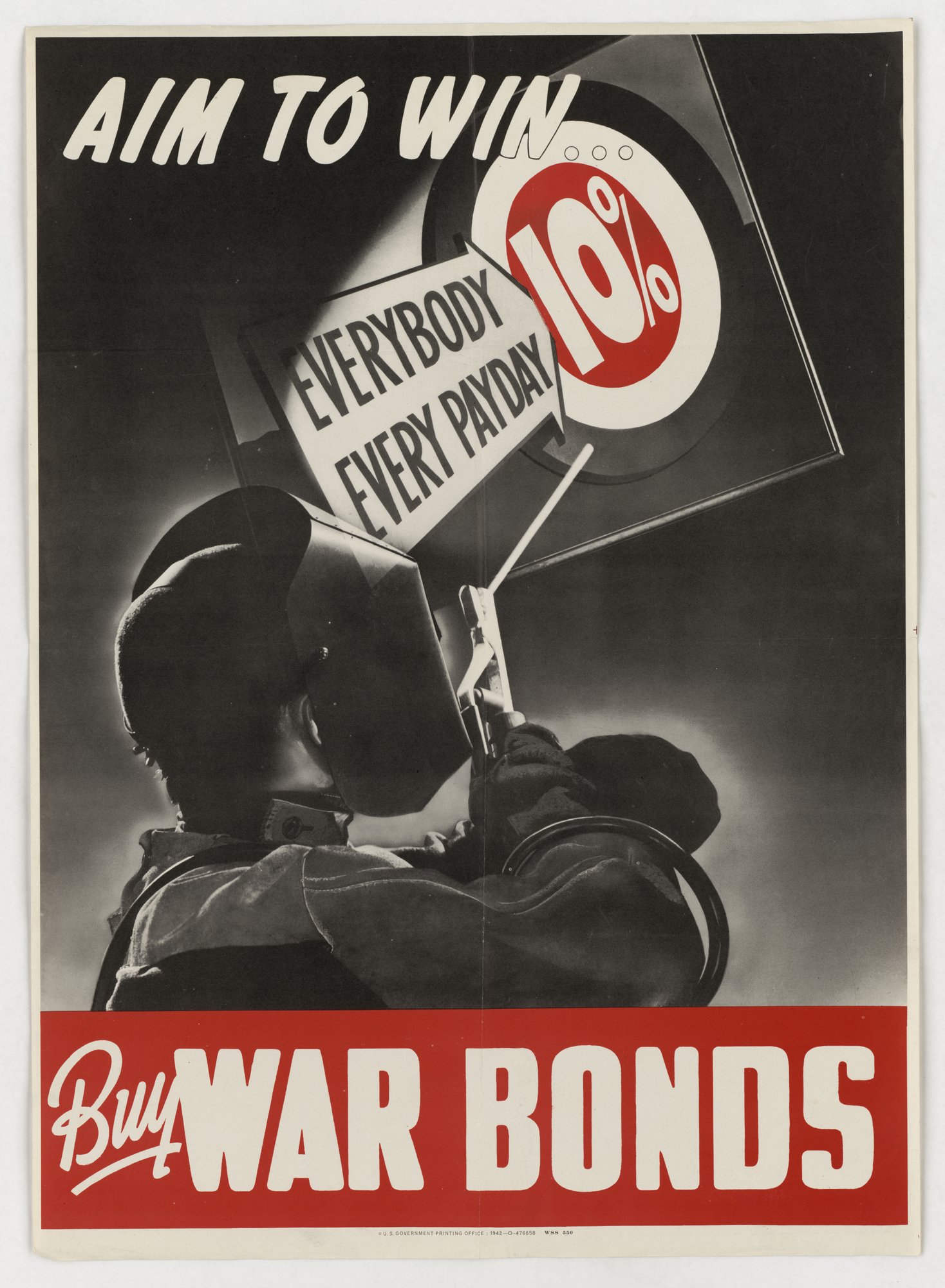 United StatesAim to Win, 10% Every Payday
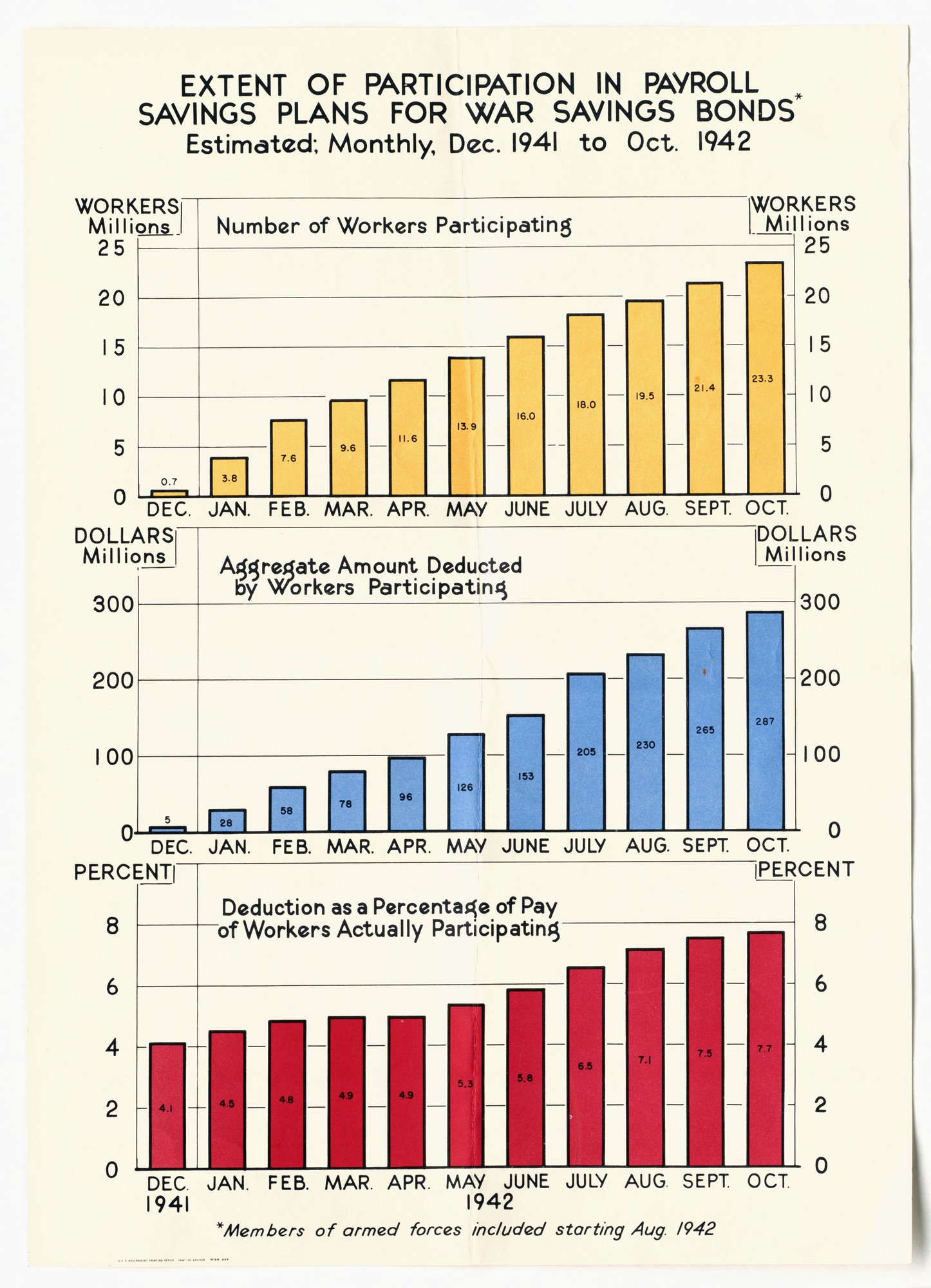 United StatesPayroll savings participation chart, 1941–42
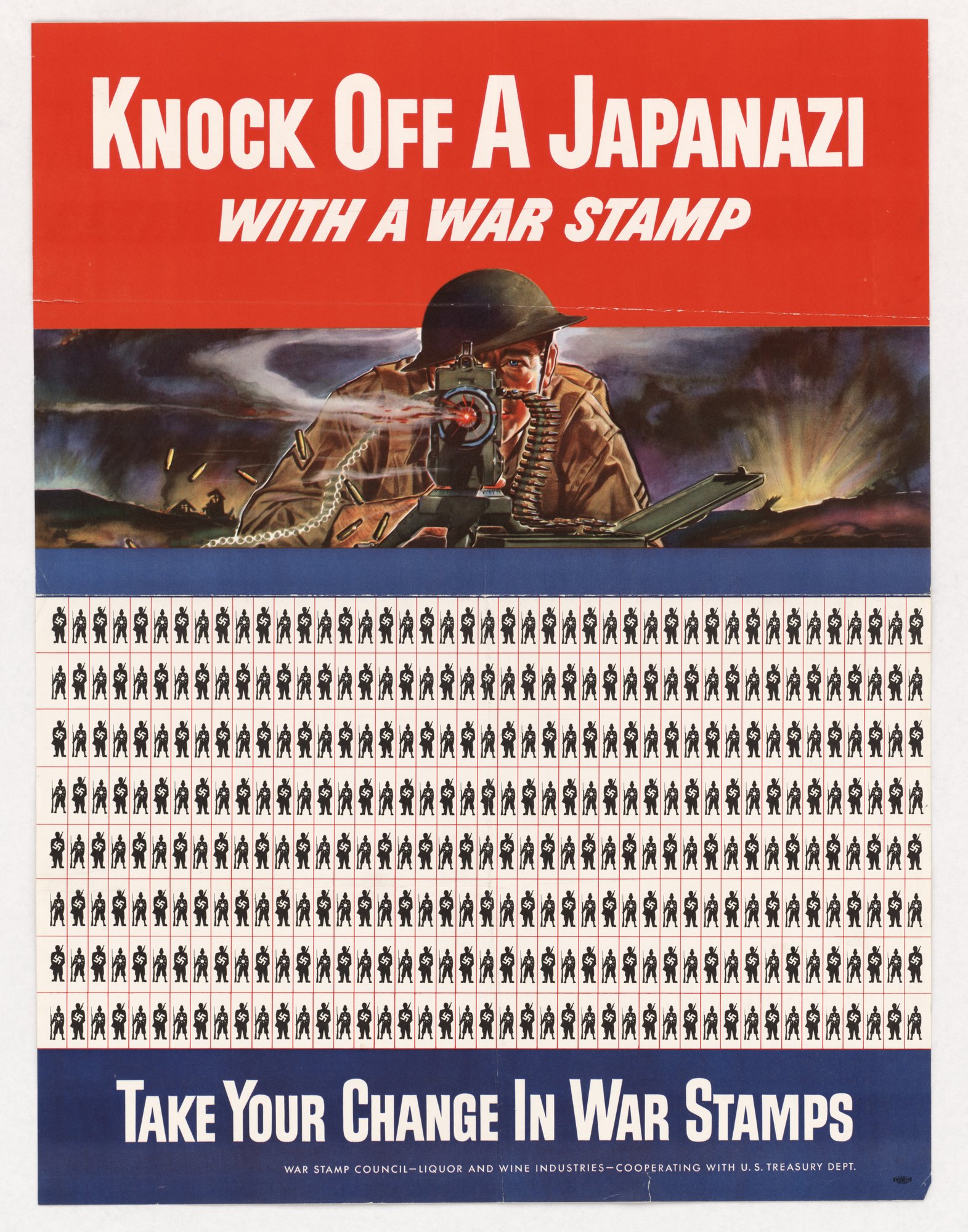 United StatesKnock Off a Japanazi
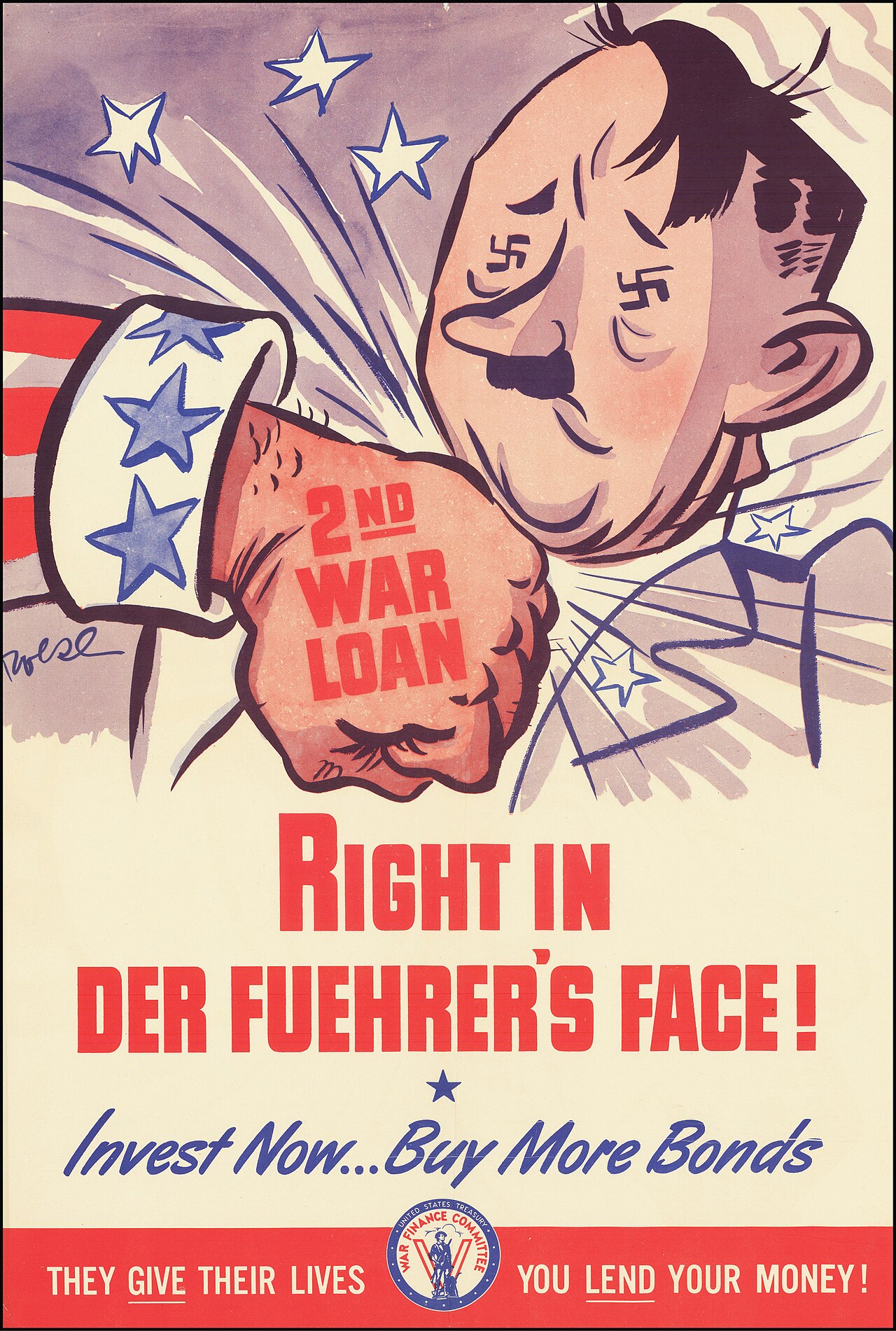 United StatesRight in Der Fuehrer's Face
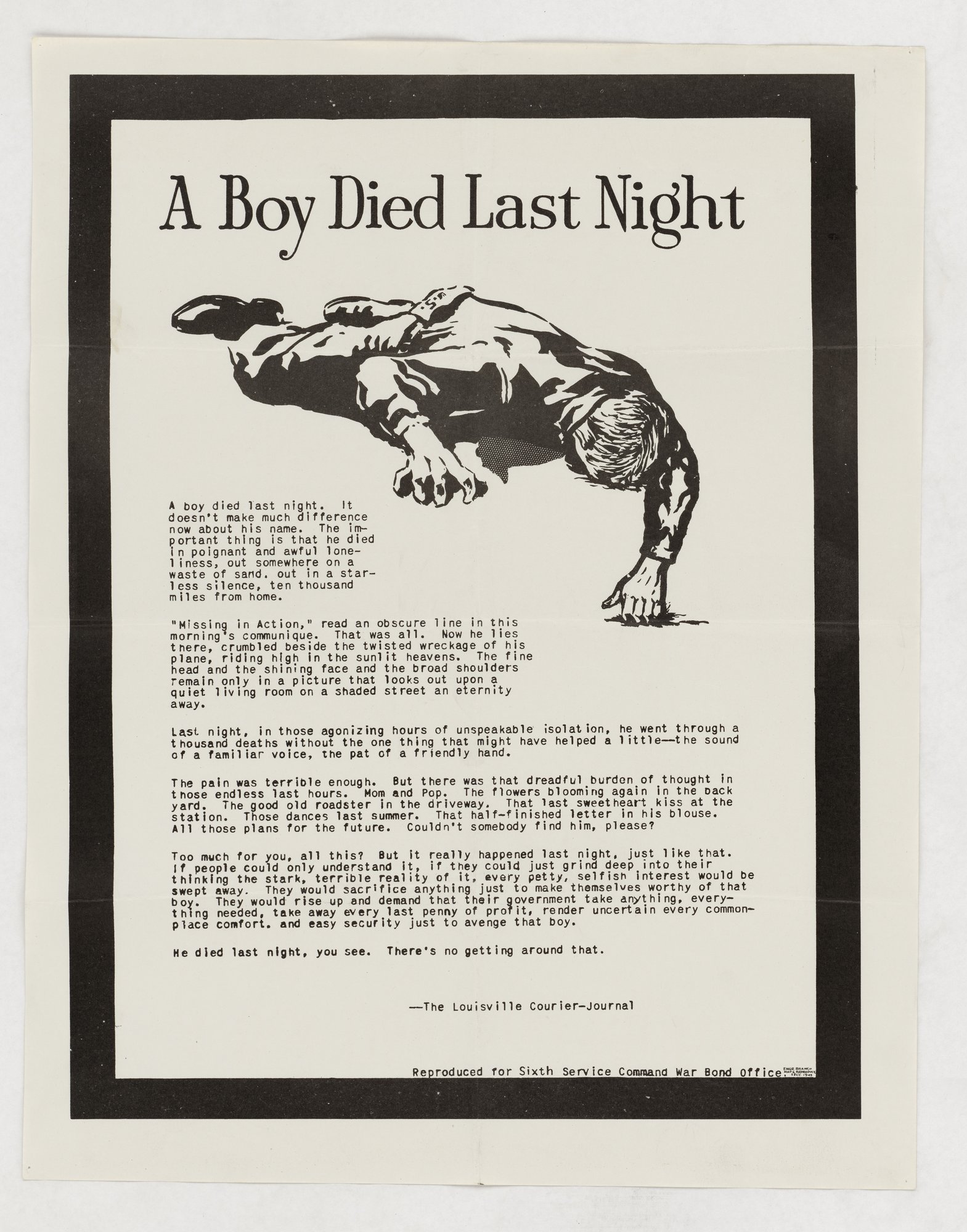 United StatesA Boy Died Last Night
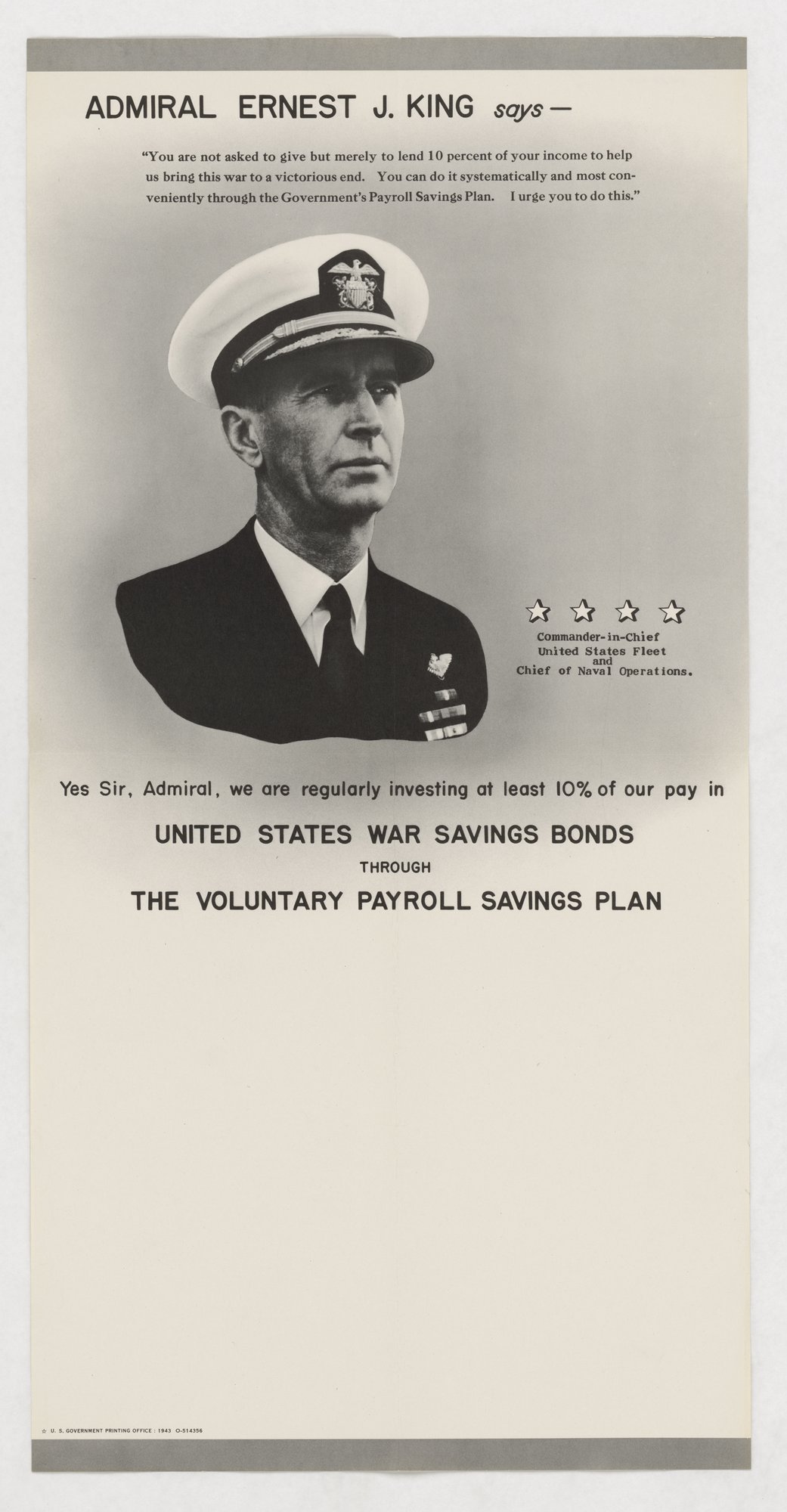 United StatesAdmiral Ernest J. King Says
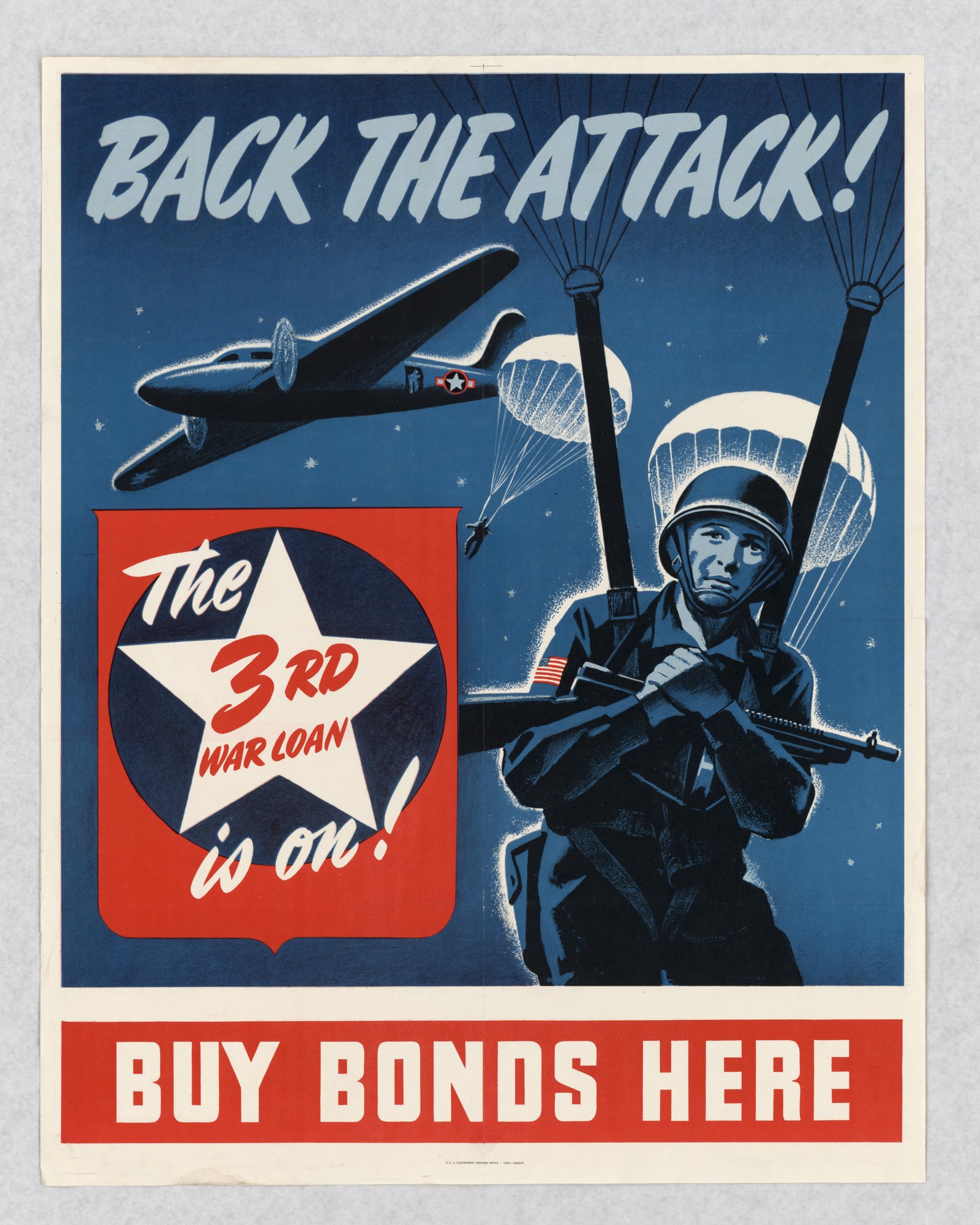 United StatesBack the Attack! 3rd War Loan
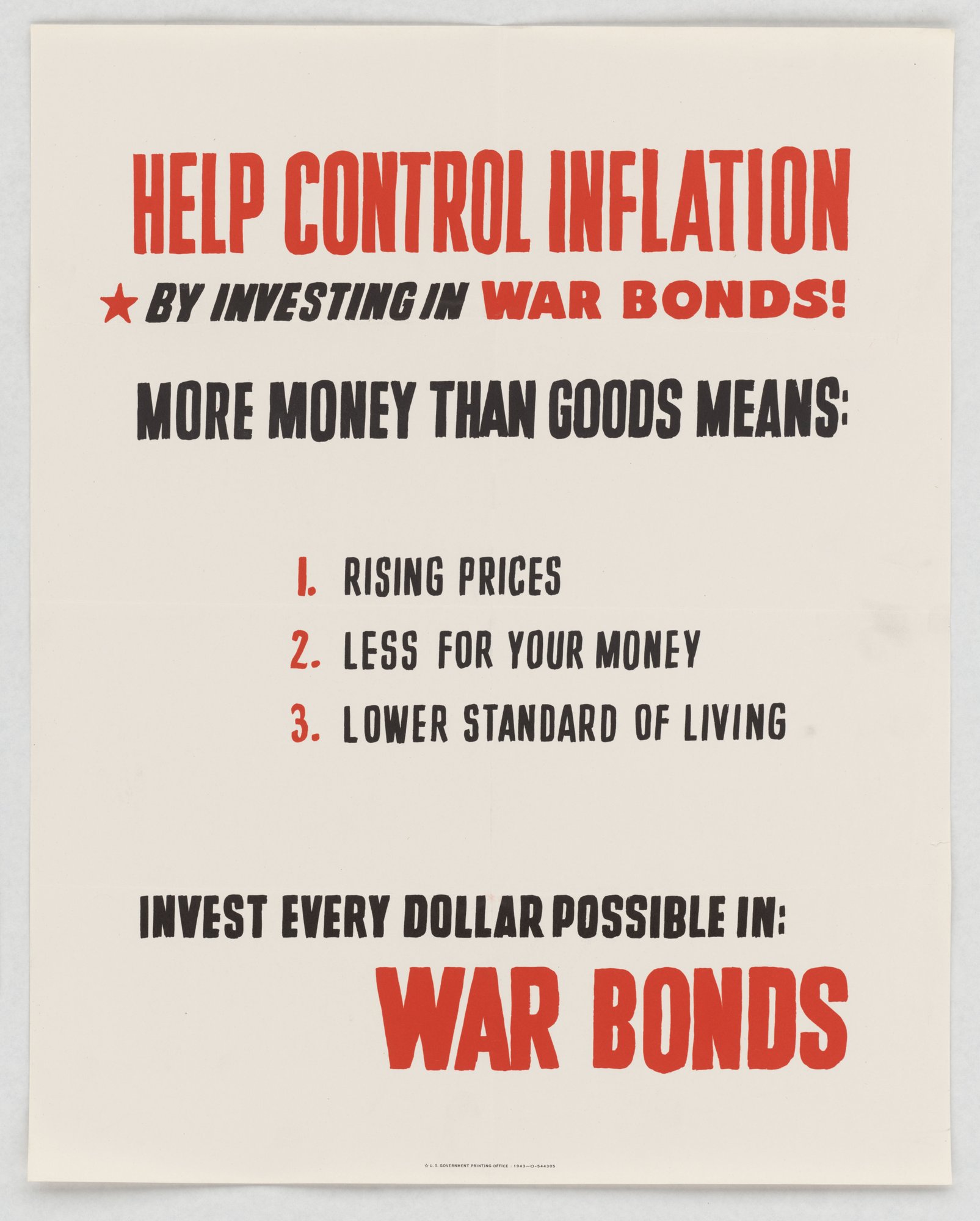 United StatesHelp Control Inflation by Investing in War Bonds!
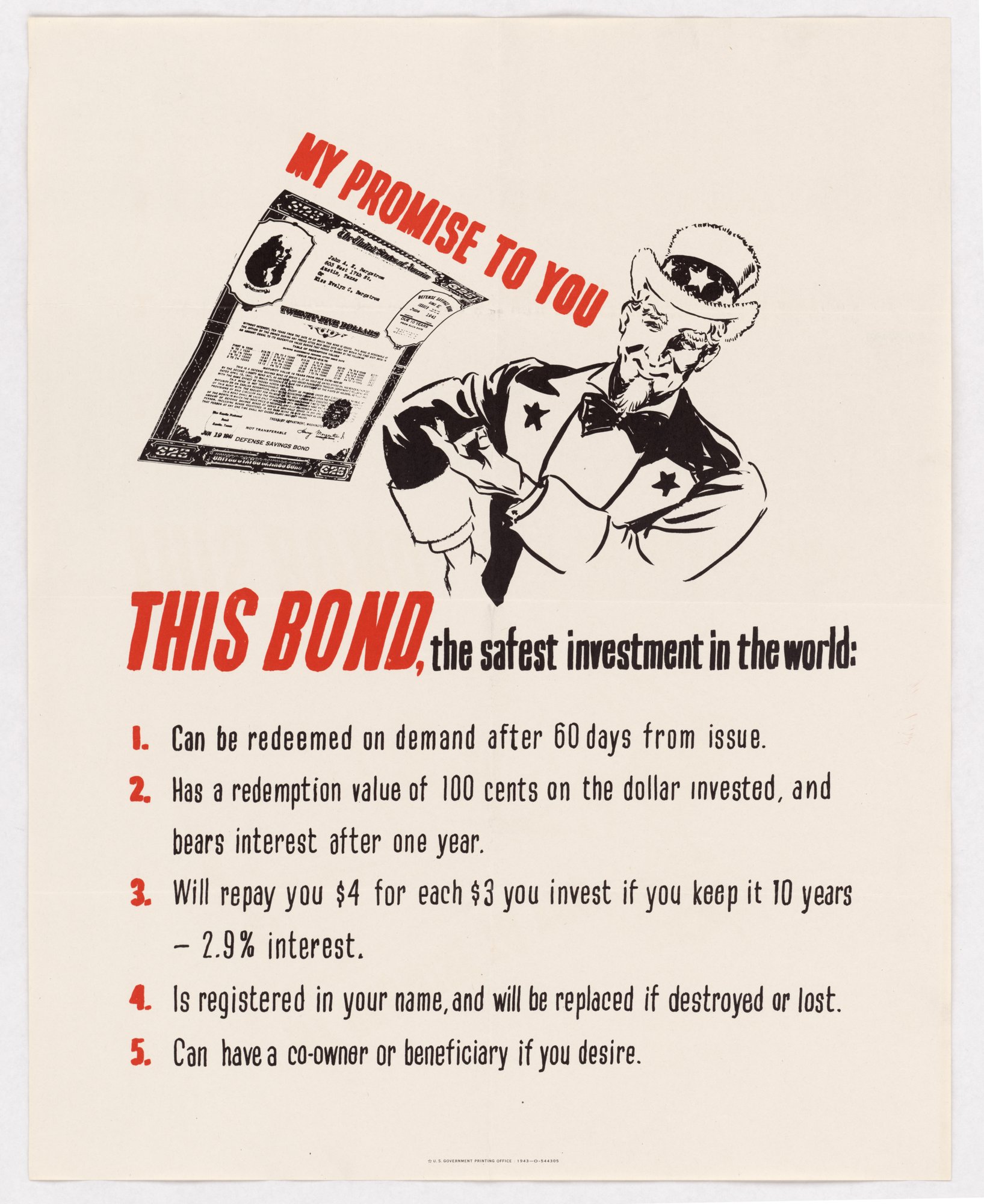 United StatesMy Promise to You, the bond's terms
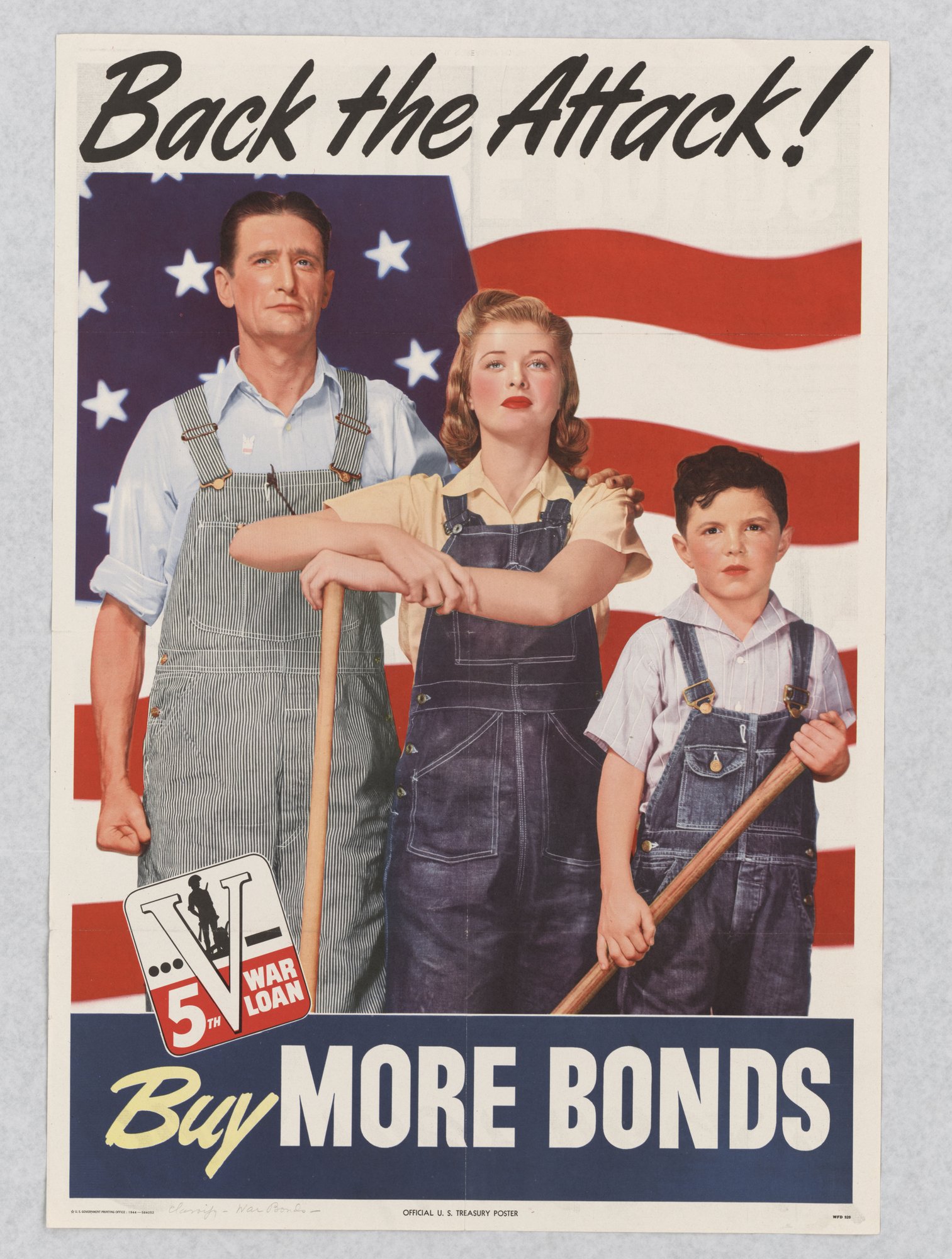 United StatesBack the Attack, 5th War Loan
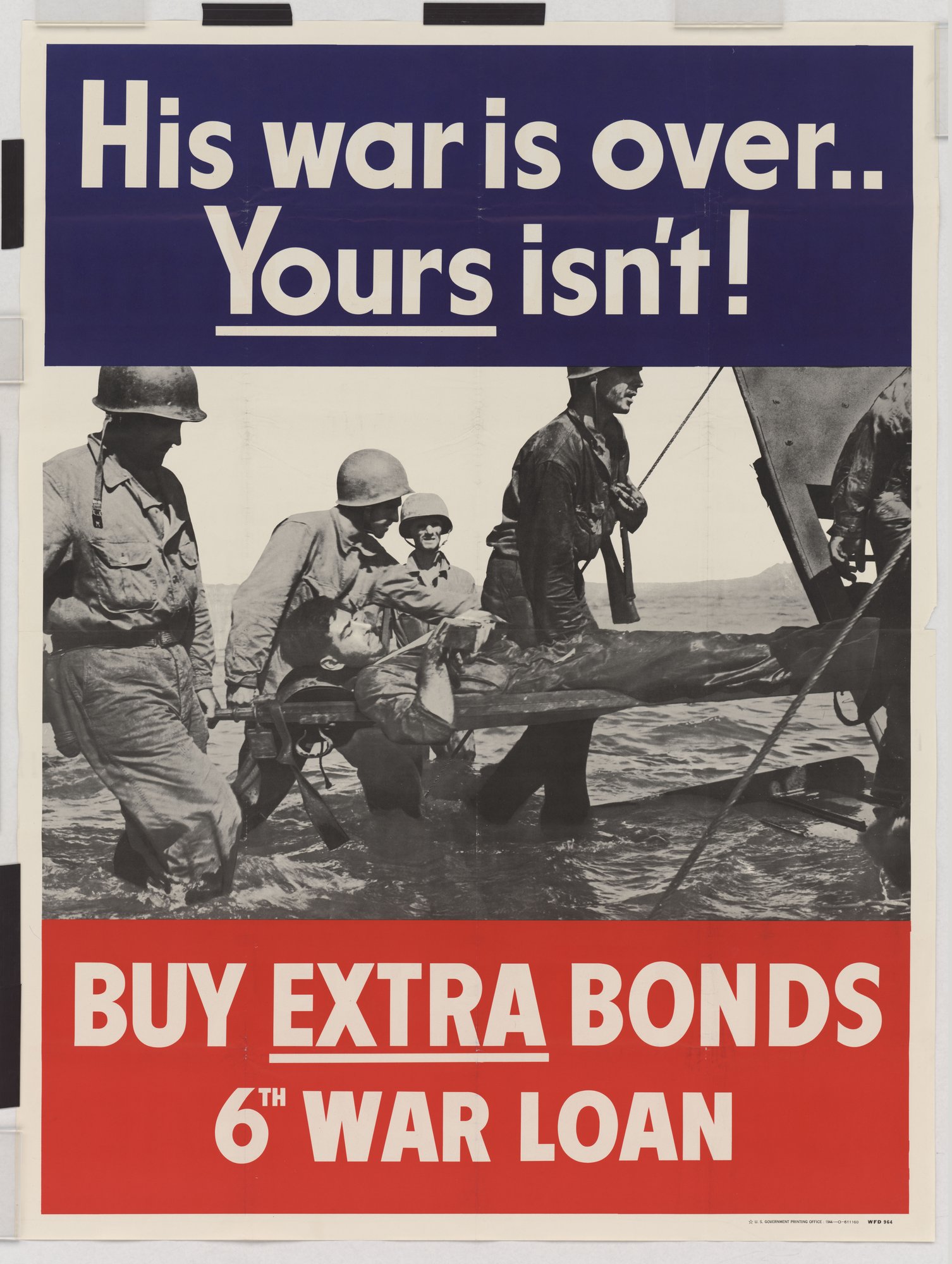 United StatesHis War Is Over, 6th War Loan
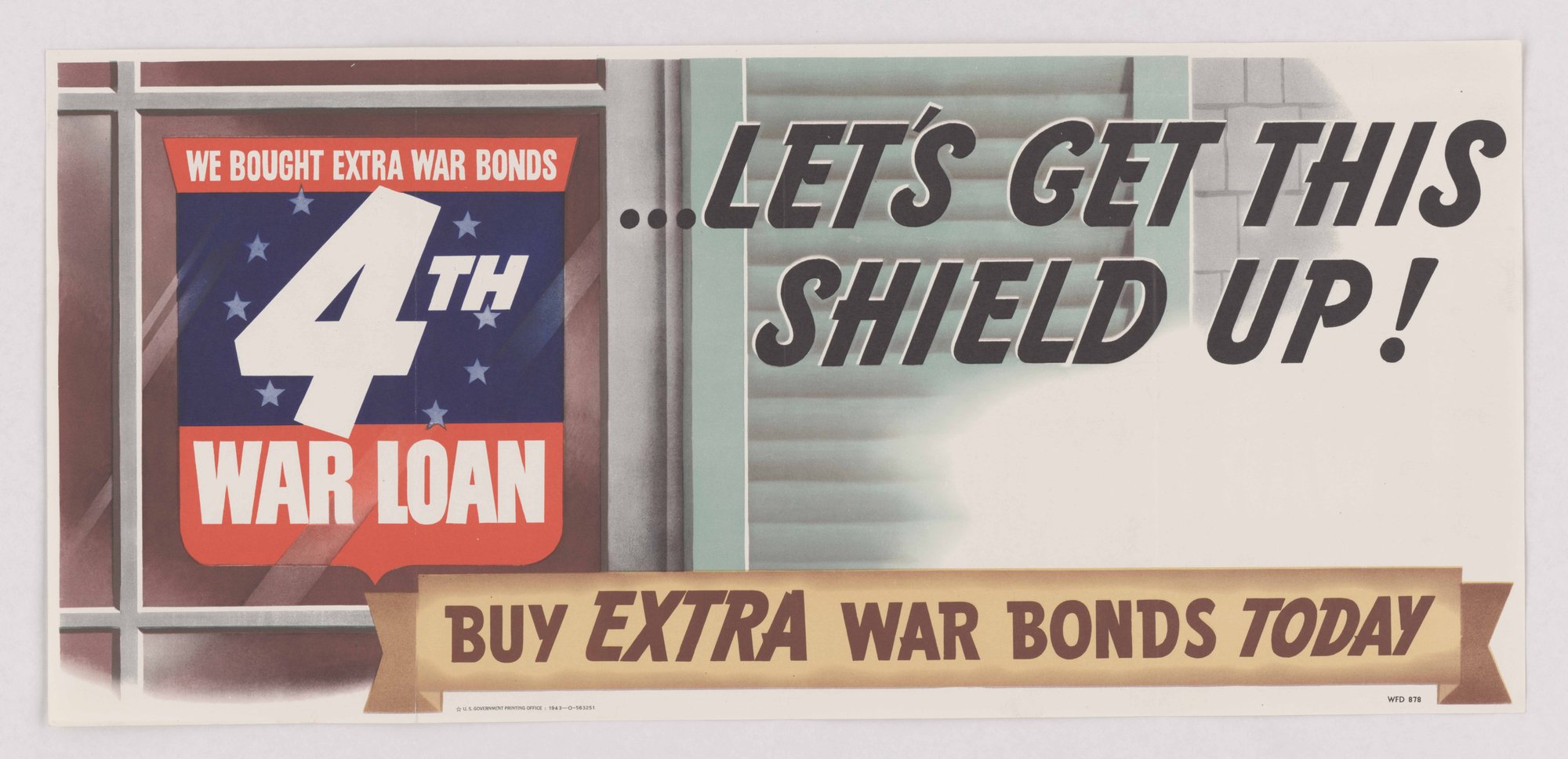 United StatesLet's Get This Shield UpUnited StatesLet's Go! Our Quota Is $___ (6th War Loan)
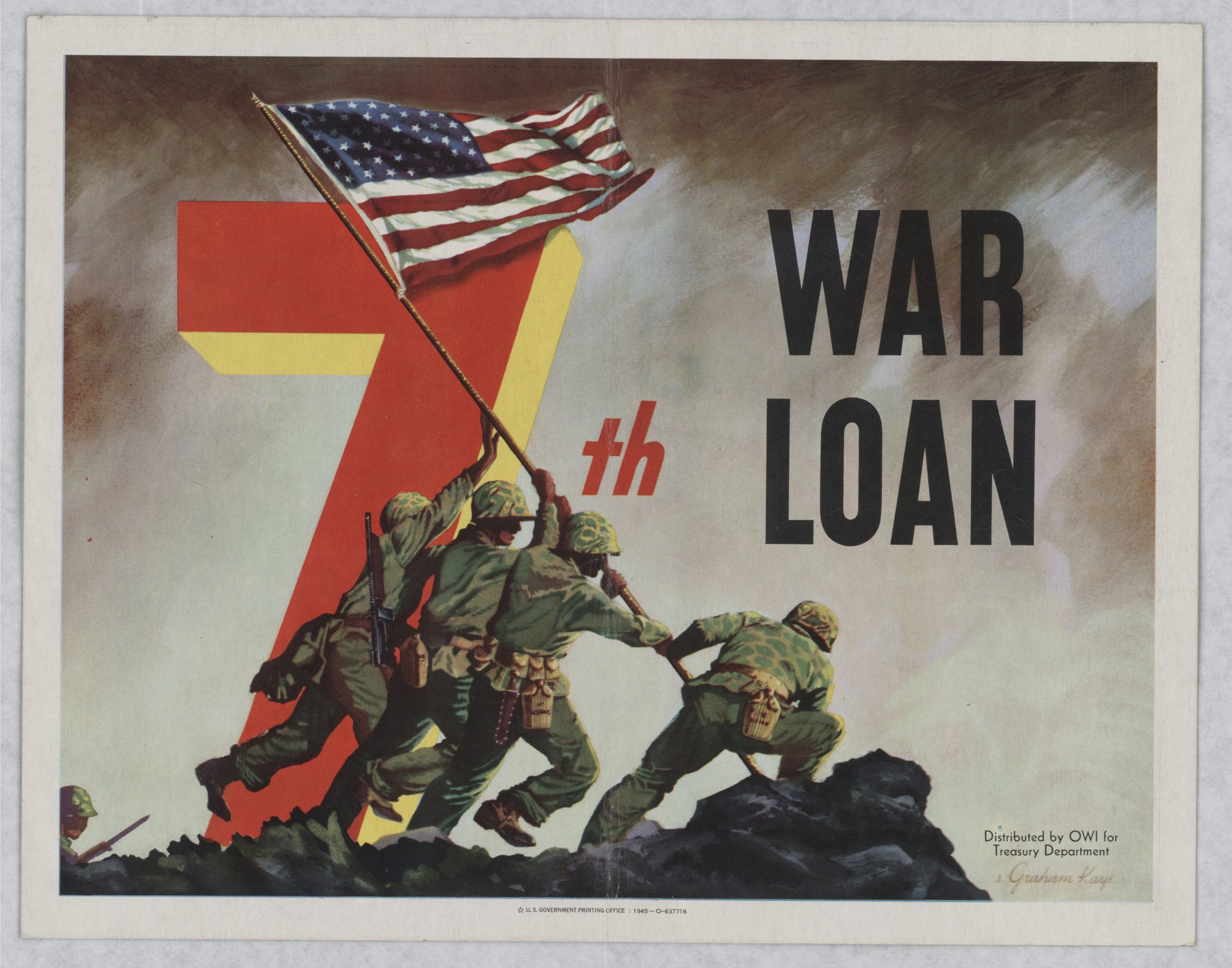 United States7th War Loan flag raising
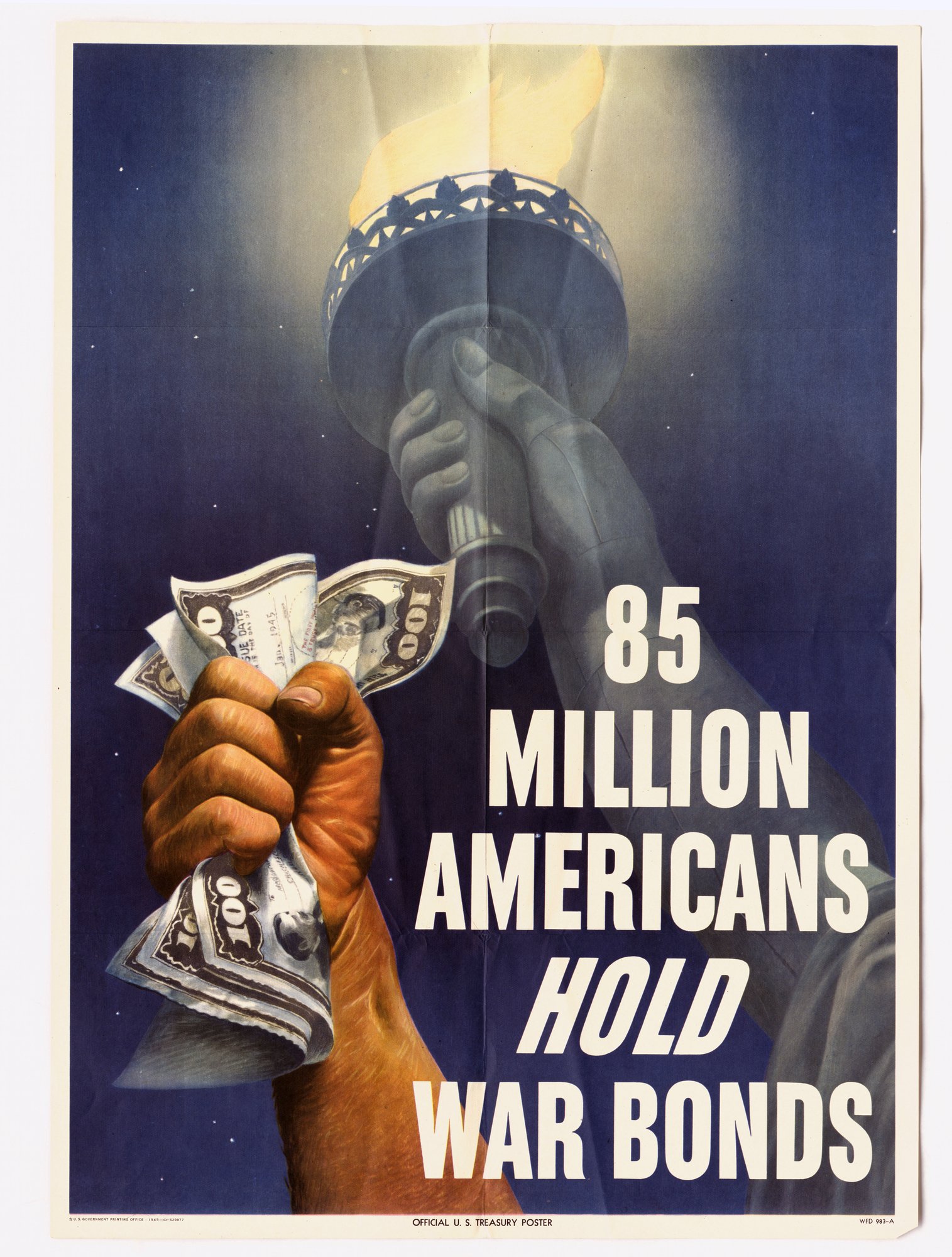 United States85 Million Americans Hold War Bonds
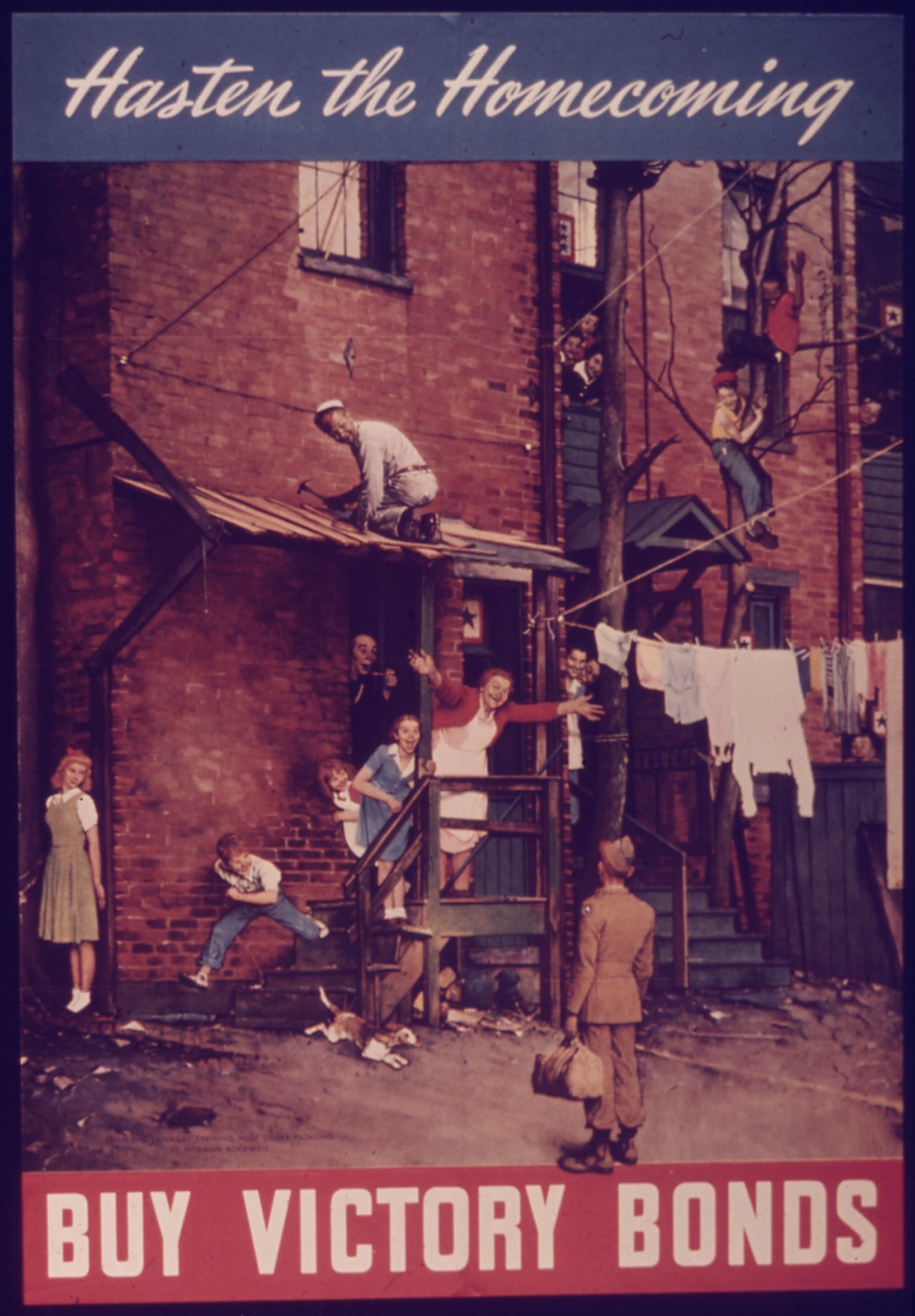 United StatesHasten the Homecoming
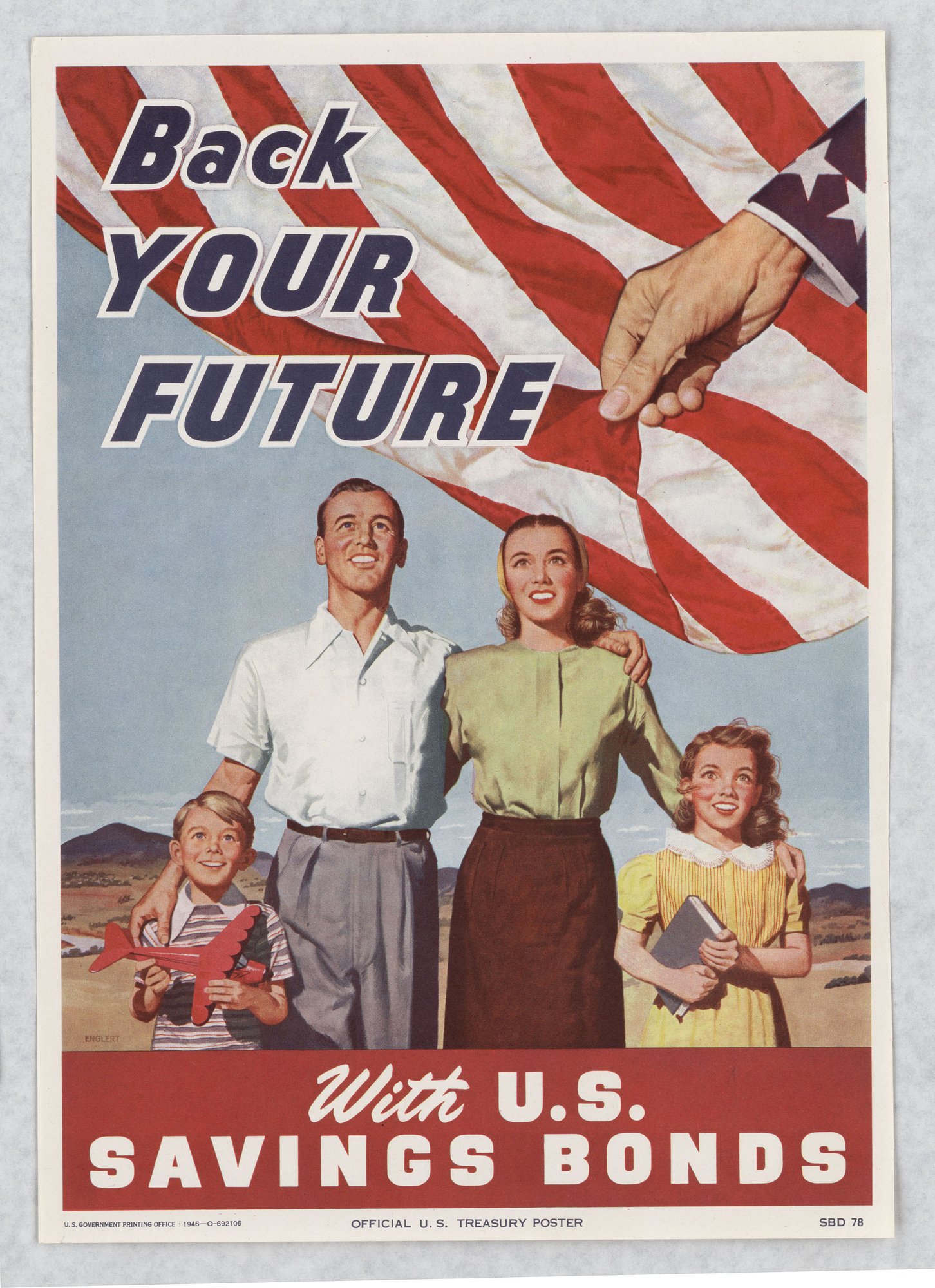 United StatesBack Your Future (1946)United StatesFour Freedoms posters
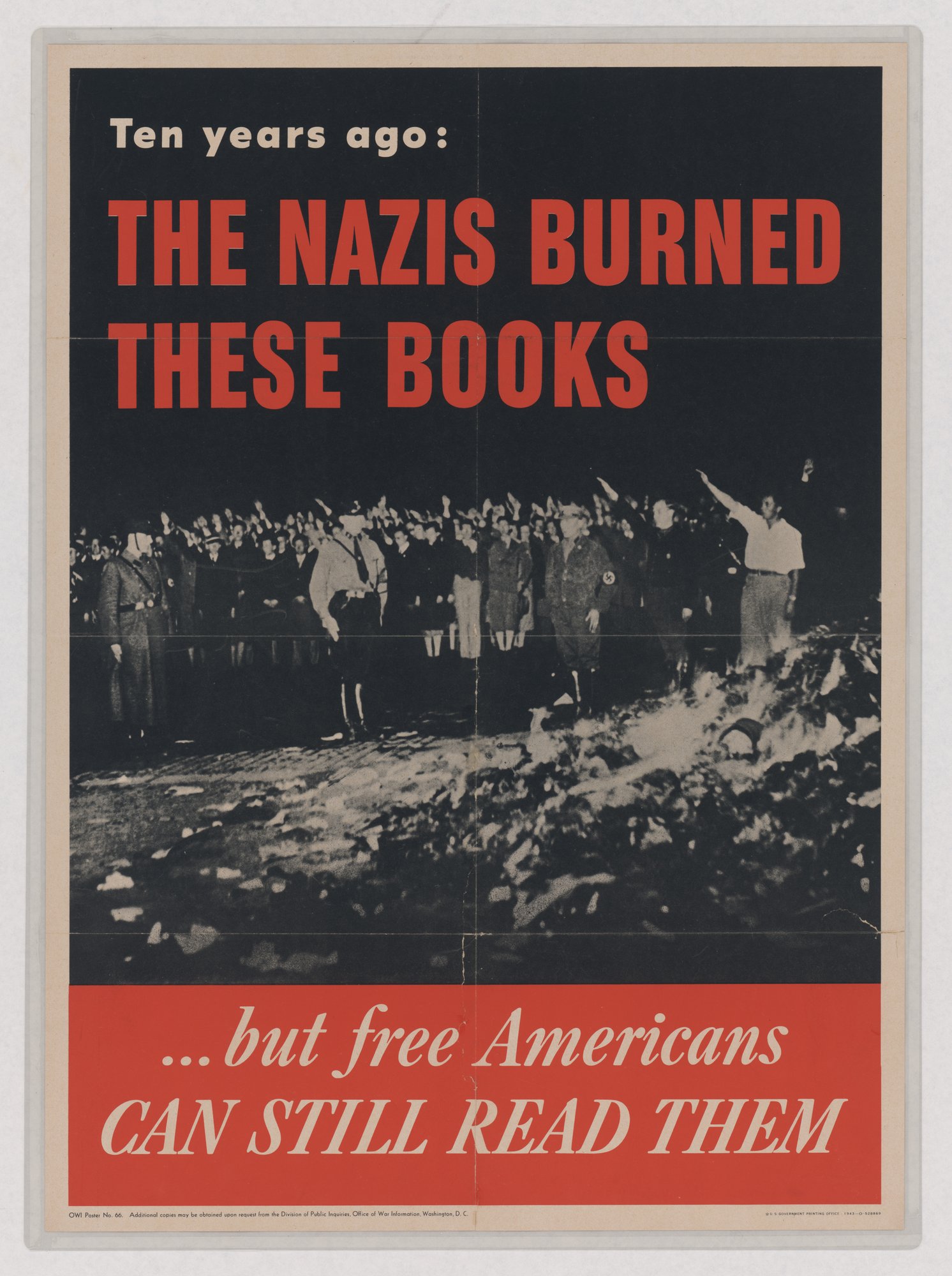 United StatesOffice of War Information
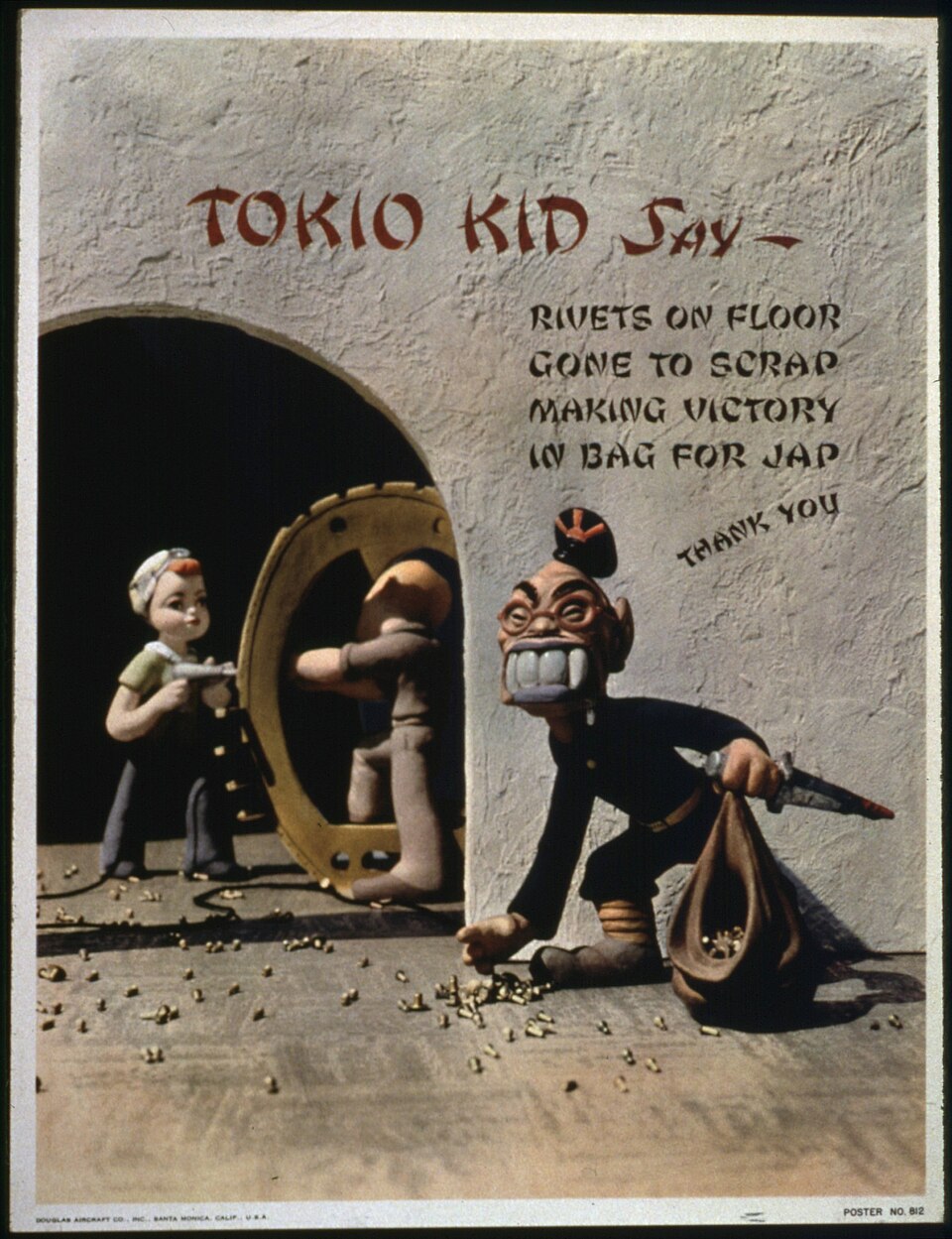 United StatesAnti-Japanese propaganda
 United StatesElmer Davis was hired to inform the country. Congress and his own writers revolted.
 United StatesFamous bylines, a federal subsidy, and a novelist who told Americans to hate
 United StatesRoosevelt administration, 1933–1945