US public health messaging, 1917–1969
Federal health posters from the FRAME snapshot, from a 1917 Agriculture notice against rats to the health sheets the U.S. Information Agency and JUSPAO printed for Asia and the Middle East in the 1950s and 1960s. Venereal disease, malaria, tuberculosis, sanitation, nutrition and blood donation, with a 207-sheet gallery and the essays on this site.
For half a century the federal government asked Americans, and later people abroad, to take care of their bodies: get a blood test, screen a window, x-ray a chest, eat from seven food groups, give blood. Most of these posters were advice, and much of the advice was sound. Some of them also blamed, shamed or caricatured, and a few spoke abroad in a voice that hid who was speaking. This hub gathers what the FRAME snapshot holds from those campaigns and reads each era by the same test: what the sheet asked, whom it blamed, and whether the reader was left free to say no.
Where to start
The gallery has 207 sheets dated 1917 to 1967. The Public Health Service and its parent agency, the Federal Security Agency, made 57 of them; the U.S. Information Agency and its State Department predecessors 30; the Joint U.S. Public Affairs Office (JUSPAO) in Saigon 27; Agriculture and the War Food Administration 20; the Army and the Navy 12 each. Sixteen name no issuing office; most of those carry a Government Printing Office imprint. Two private bodies whose posters sit in the same National Archives file are included and labeled as private: the American Social Hygiene Association and the American Red Cross.
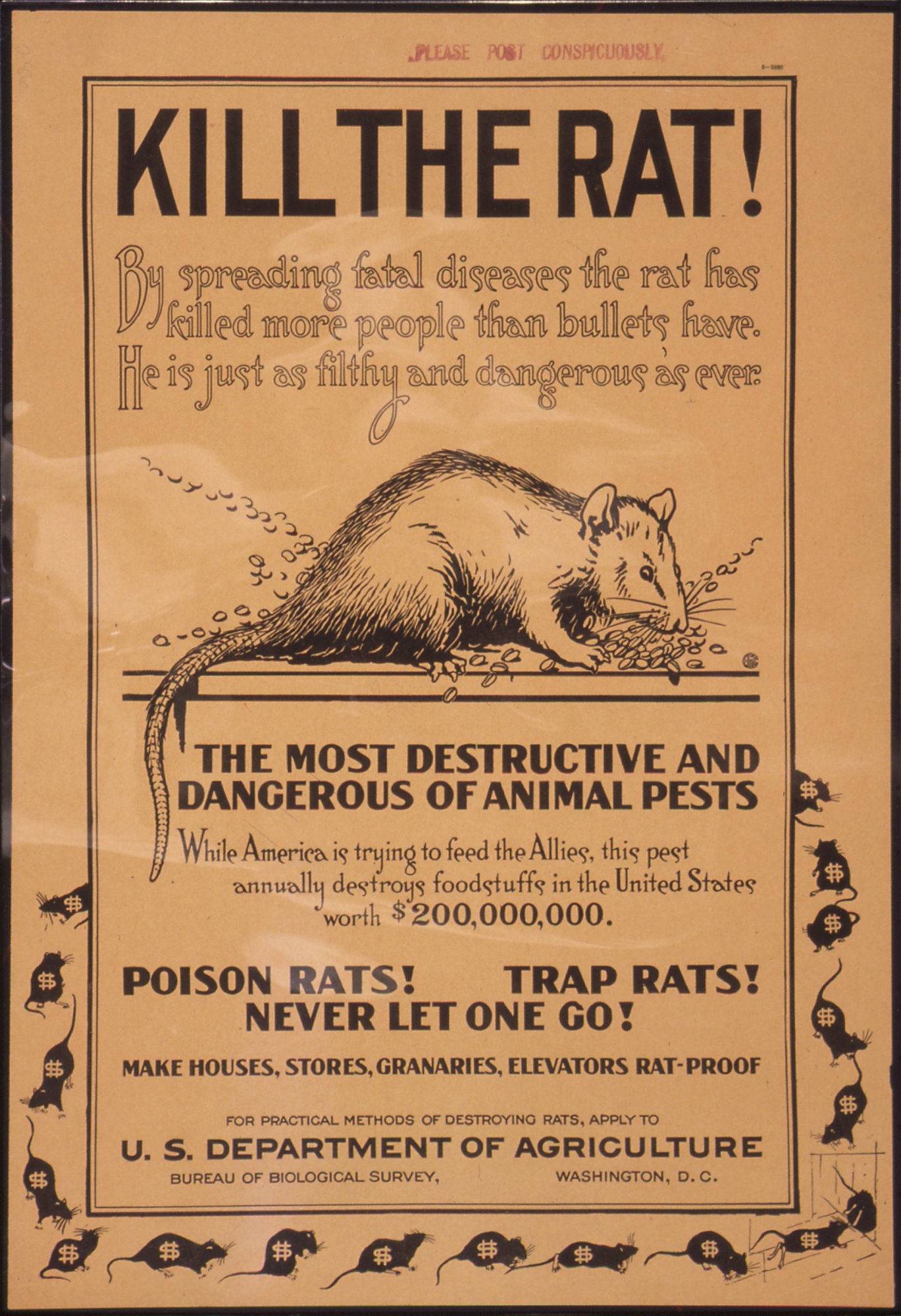
The record is thin at both ends. Before 1941 the snapshot holds two 1917 Department of Agriculture notices, Kill the Rat! and one on tuberculosis in hogs, and three Children's Bureau posture charts. No poster about the 1918 influenza is in the snapshot, and this page does not describe that epidemic's messaging from memory. Most of the set comes from 1941 to 1946.
Venereal disease: test, treat, and blame
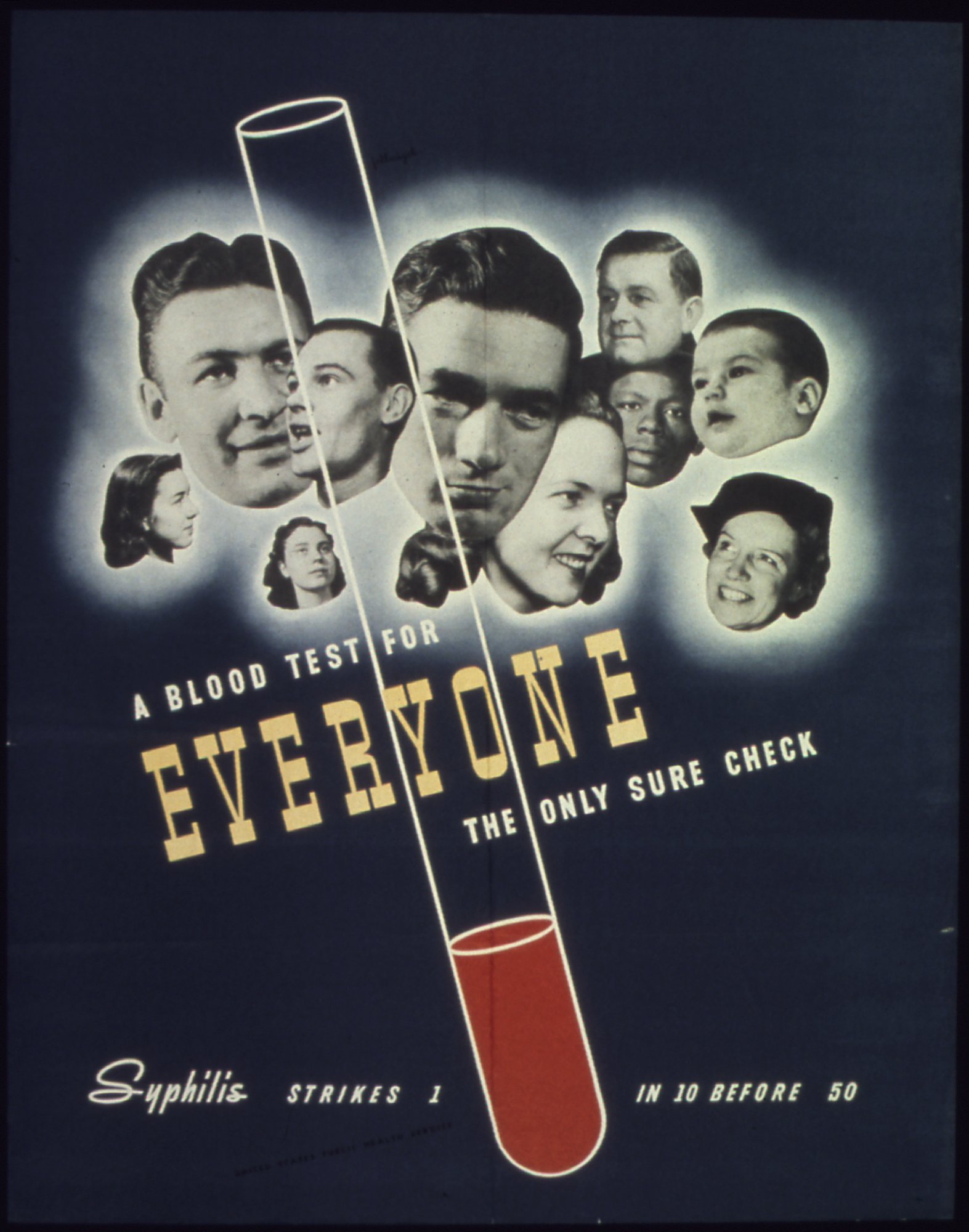
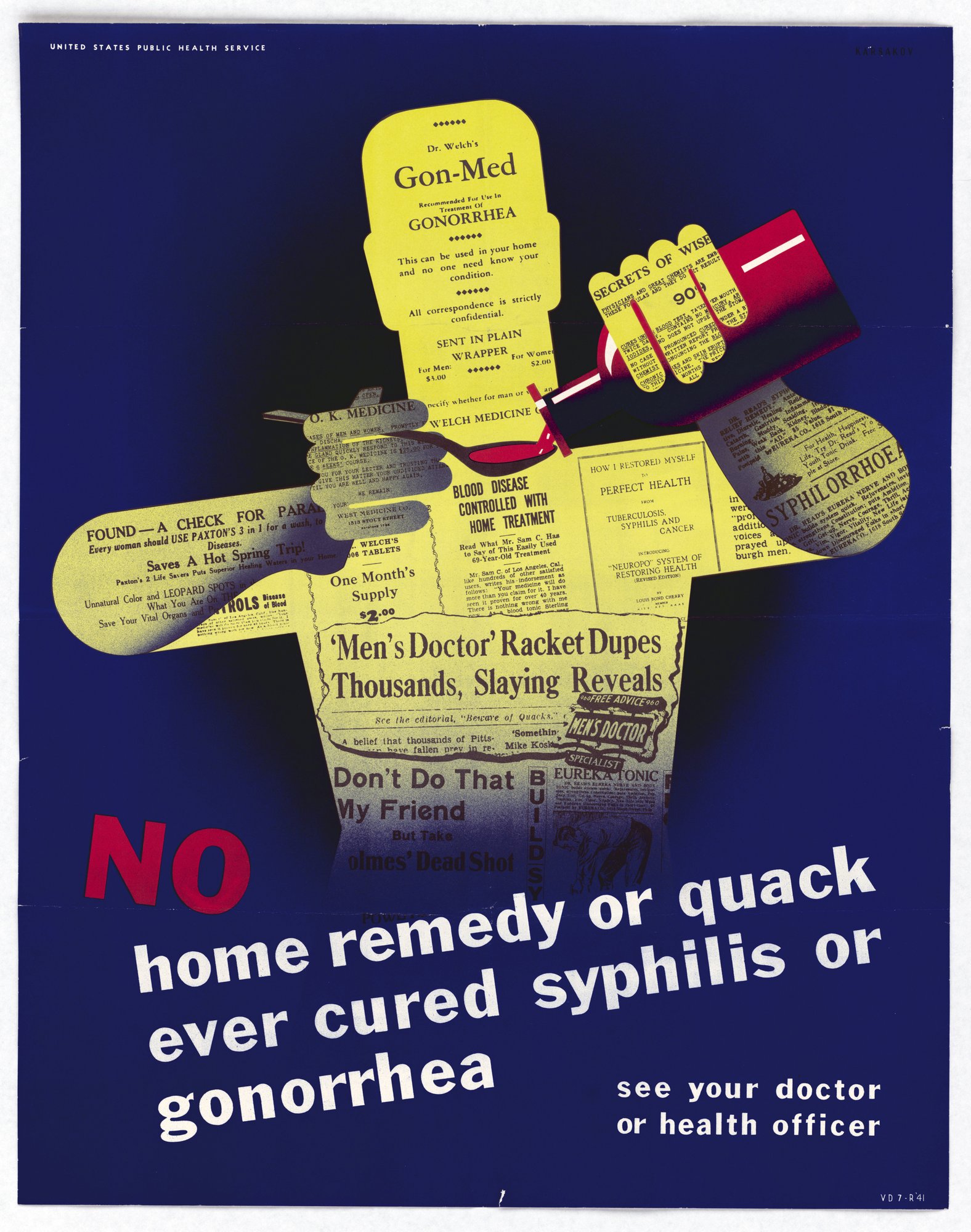
Syphilis and gonorrhea, with malaria, are the two largest subjects in the set, about thirty sheets each. The Public Health Service's own sheets mostly asked for a test or a doctor. A Blood Test for Everyone shows a crowd of faces, one of them a Black man and one a baby, under "the only sure check." No Home Remedy or Quack Ever Cured builds its figure out of patent-medicine advertisements, and the comic strip Sneaky and the Professor runs a fake cure out of camp. A Karsakov sheet numbered VD-17 asked couples to get blood tests before marriage; it asks, and the record does not say whether any state required it.
Other sheets found someone to blame, and almost always the same someone. She May Look Clean—But lists "pick-ups" and "good time" girls; Easy to Get paints a woman against a brick wall at night; Prostitution Spreads Syphilis and Gonorrhea tints one woman green in a red glow. The Social Hygiene Association went further, with a cartoon of a woman lettered "Venereal Carrier" titled "Saboteuse." The men in these sheets are the ones at risk; the women are the risk. That is a one-sided account of a disease passed in both directions, and the government put its name to some of it.
The services wrote for men who were going to take liberty whatever a poster said. The Army and the Office of War Information's 1943 sheet, "Fight... Syphilis and Gonorrhea," says "If exposed, use prophylaxis." The Navy's Bureau of Medicine and Surgery ran a numbered VP series of cartoons, among them I Should Have Gone to the Pro Station, a sailor in a dunce cap, and by 1946 Penicillin for Gonorrhea Works 95 Times Out of 100. The association's Still at the Top of the Sick List charts Army rates over a hospital ward.
Malaria at home and in the war zones
At home the Public Health Service explained and instructed: the life history of the parasite in a laboratory chart, then a run of cartoons by Margo and others, including Keep Out Malaria Mosquitoes, about screens, sprays, and paris green dusted on ponds. For troops the War Department and the Navy turned the mosquito into an enemy. "Fight the Peril Behind the Lines" says the mosquito knocks out more men than the enemy, with no figure printed. Don't Strip Tease for Anopheles makes the point with a towel.
Some went further than a joke. The Navy's NAVMED 141 series drew the mosquito and the Japanese enemy as a pair: Man-Made Malaria gives the insect a caricatured Japanese face beside sound advice on draining ruts and shell holes, and a companion sheet sets "Japs casualties one" against "Malaria casualties eight." The slur is quoted because the sheet printed it. Putting a racial caricature on an official medical form was wrong. The drainage advice beside it was right, and both facts belong in the record.
Tuberculosis, rats, flies and water
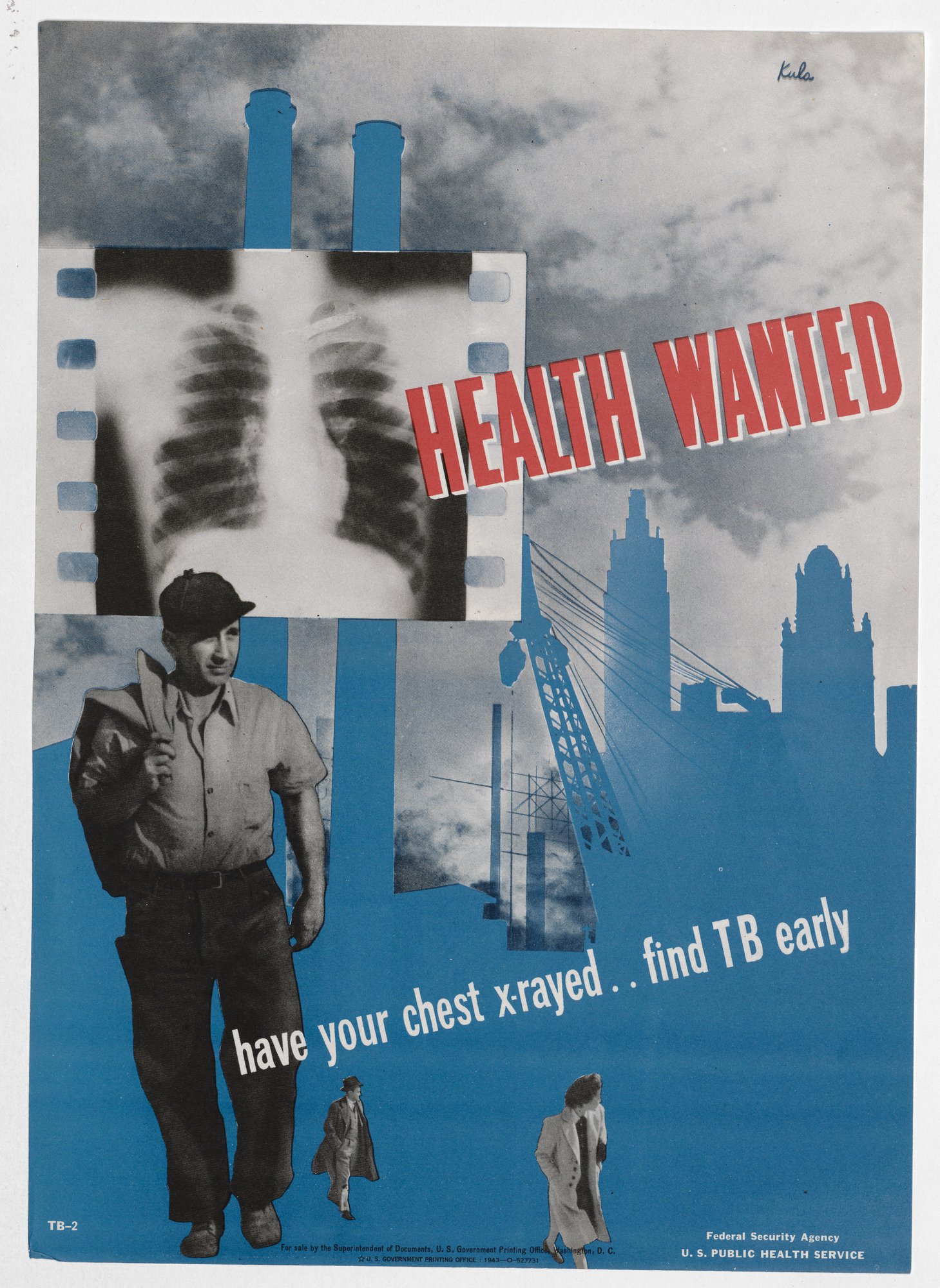
The tuberculosis sheets are the calmest in the set. Health Wanted (TB-2) and its companion TB-3 ask readers to have a chest x-ray, which TB-3 calls having "your picture taken"; both were offered for sale to the public through the Superintendent of Documents. The 1917 Agriculture notice on hogs told farmers to pasteurize milk fed to swine. Rats and flies drew the louder sheets: Kill the Rat! says the rat "has killed more people than bullets have," and the Public Health Service's Saboteur dressed the same animal in the vocabulary of the war. Army posters told soldiers to drink only approved water, bathe every day they could, and not wreck the latrine.
For war workers the Public Health Service drew two cartoon series, one man and one woman. His nine "keeps him on the job" posters cover sleep, clean clothes, dental care, a mask and regular check-ups. Hers, Jenny on the Job, covers low heels, lifting, meals and the restroom. The tone is friendly and practical. The argument underneath is the war's: health matters because absence costs production.
Food and the Basic 7
The Department of Agriculture's Basic 7 wheel divides food into seven groups around a walking family and ends, "In addition to the Basic 7... eat any other foods you want." In 1943 the War Food Administration reused it in a set of "lunch that packs a punch" sheets, one per group. The 1941 Make America Strong set asked communities to sponsor school lunches and teach family food needs, and one of its sheets warns of "danger when people tire too easily." Charles Alston's OWI cartoon "A well fed nation is a fighting nation" put the same message on a Black farm family. None of these sheets forbids a food. They set a floor and leave the rest of the plate to the family.
Blood and plasma
The blood posters are the Red Cross's, and they ask for blood for the armed forces. "Now Dedicate Your Blood to a Man Overseas!" reproduces a Mead Schaeffer painting of a wounded soldier with a plasma bottle hung from a rifle, and shows a sample label for a donor to sign. Lives Saved by Plasma was a news sheet for local papers, framed by quotations from the Army and Navy surgeons general. The government's own contribution in the set is a portrait: the Office of War Information's profile of Dr. Charles Richard Drew by Charles Alston, which names Drew as director of the first Red Cross blood bank for the armed forces.
Health sheets for audiences abroad
The first American health posters for foreign readers in the snapshot are six 1943 malaria sheets for Nicaragua, credited to the Servicio Cooperativo Interamericano de Salud Pública and Nicaragua's health directorate and printed by the U.S. Government Printing Office. Síntomas del Paludismo runs from chills to a coffin. The archive's Office of the Coordinator of Inter-American Affairs posters are about the war, not health, and the records do not explain how the cooperative service was set up; this page does not fill that gap.
After the war the U.S. Information Agency carried health into its poster program. A 1952 Burmese sheet gives the dimensions of a clean pit latrine. The 1953 U.N. Day set in Japanese covers malaria drainage, BCG and a cattle vaccine. In Jordan two 1957 posters spoke jointly for the Ministry of Health and the American Operations Mission, as in Destroy the Insects That Carry Disease. A CARE milk poster for the Philippines credited its 13,000 tons to "the people of the United States." Iran's Progress of Iran No. 57 reported, in FRAME's unverified machine translation, that in some regions the share of people ill with malaria fell from about ninety percent to five. FRAME classes the wall newspaper's sponsor as "blurred." Latin America had the Alliance for Progress public health sheet and Upper Volta Food for Peace.
In South Vietnam, in sheets the archive catalogues from 1965, the JUSPAO printing section turned out health sheets for the Saigon government: Cholera, bathing a child with soap, diseases spread by feces, and the Health Ministry's Do Not Spit. Others were about medical care as a message: a Navy medical specialist in Quang Ngai, a girl's cleft lip repaired, Korean, Spanish and Iranian medical teams. Health was also an argument in the information contest itself. In 1952 the State Department's information program answered the charge that UN forces had used germ weapons in Korea; the Korean edition quotes Dean Acheson calling it ridiculous.
How this site reads the record
Three points are honestly open, and on each the site takes the reading that limits coercion. It is a reading, not a finding of the archive.
First, compulsion. Nearly every sheet here asks. A test, a screen, an x-ray, a meal, a pint of blood: the reader could decline, and the posters say nothing of fines or orders. The military sheets are the exception in form, since a soldier's hygiene was not a private choice, and even there several of the Navy's venereal-disease posters assumed adults who would make their own decisions, and pointed them to a remedy. Coercion in the name of health is documented in another part of this site: the state sterilization programs in A blue ribbon at the fair, a scalpel at the state colony.
Second, blame. A health campaign works better when it names the disease than when it names a kind of person. The sheets that drew women as carriers, and the Navy sheets that put a Japanese face on a mosquito, taught a prejudice along with a precaution. They were wrong to do so, and the better sheets in the same file show it was not necessary.
Third, voice. At home nearly every sheet names its office or carries a Government Printing Office imprint. Abroad the voice is sometimes shared and sometimes blurred: a Nicaraguan service on a GPO sheet, a Jordanian ministry beside an American mission, an Iranian-sounding newspaper in an American file. Health aid is among the easiest foreign programs to defend. The public it served had the same claim as any other to know who was talking.
Later comparisons
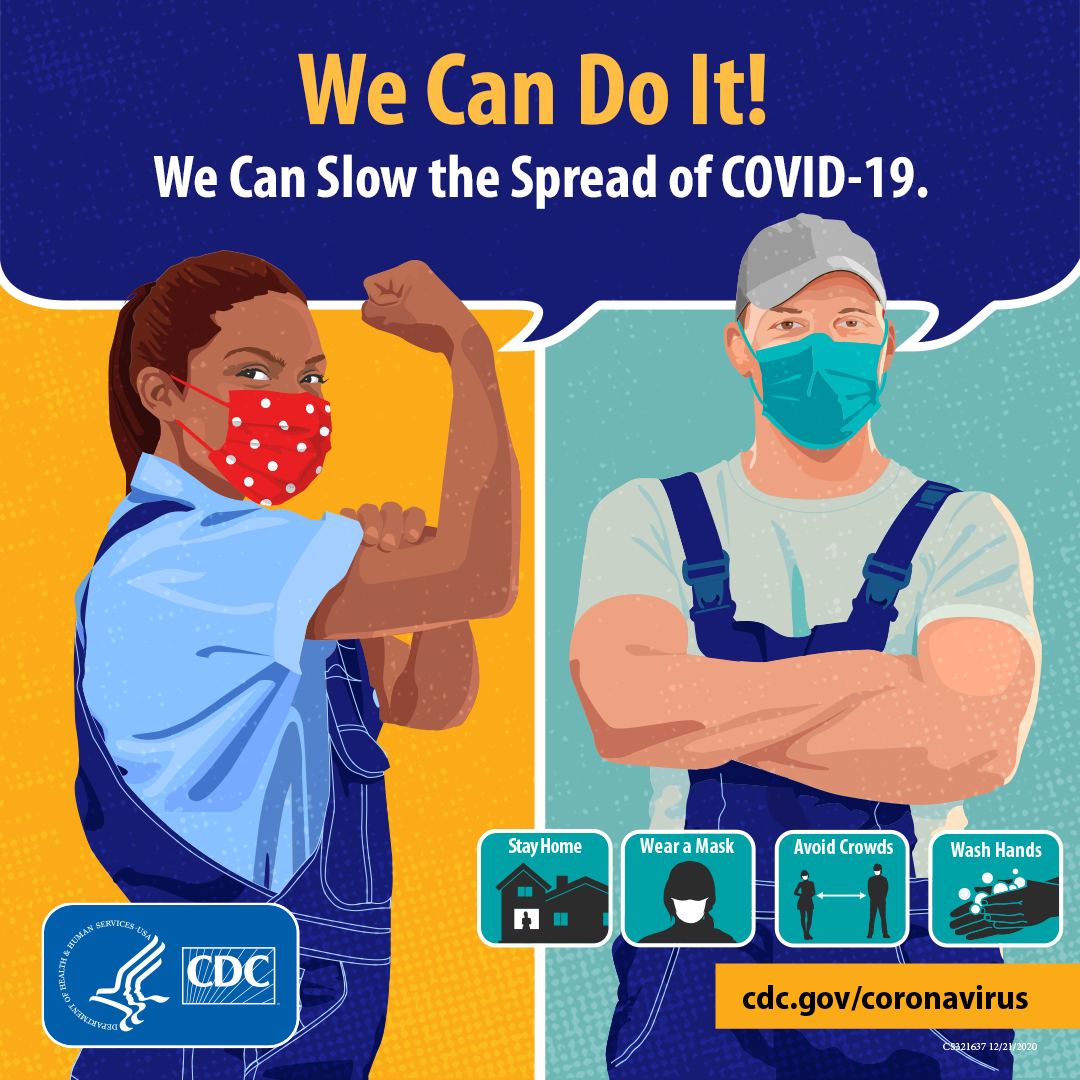
The same tests apply to the campaigns that came after. In the 1980s, as Tattoos, quarantine, and a brochure in every mailbox records, a ballot measure proposed quarantine and voters rejected it, while the Surgeon General mailed information to every household. The 2020–2022 record is at US COVID-19 public health campaigns and messaging, which this hub does not repeat. The wartime government that produced most of these sheets is read as a whole in the Roosevelt administration essay.
What this hub does not cover
Nurse recruiting is left out of the gallery; Become a Nurse and the Cadet Nurse Corps have their own pages. So are Army and Navy safety posters, newspaper cartoons such as Jim Berryman's 1955 polio-vaccine cartoon, commercial advertisements, and Vietnamese health sheets the records credit only to the South Vietnamese government. The 1952 germ-warfare posters are mentioned above but kept out of the gallery, because they argue about a charge rather than give health advice.
 United StatesUS public health poster gallery
 United StatesKill the Rat! (USDA, 1917)
 United StatesA Blood Test for Everyone (USPHS)
 United StatesNo Home Remedy or Quack Ever Cured
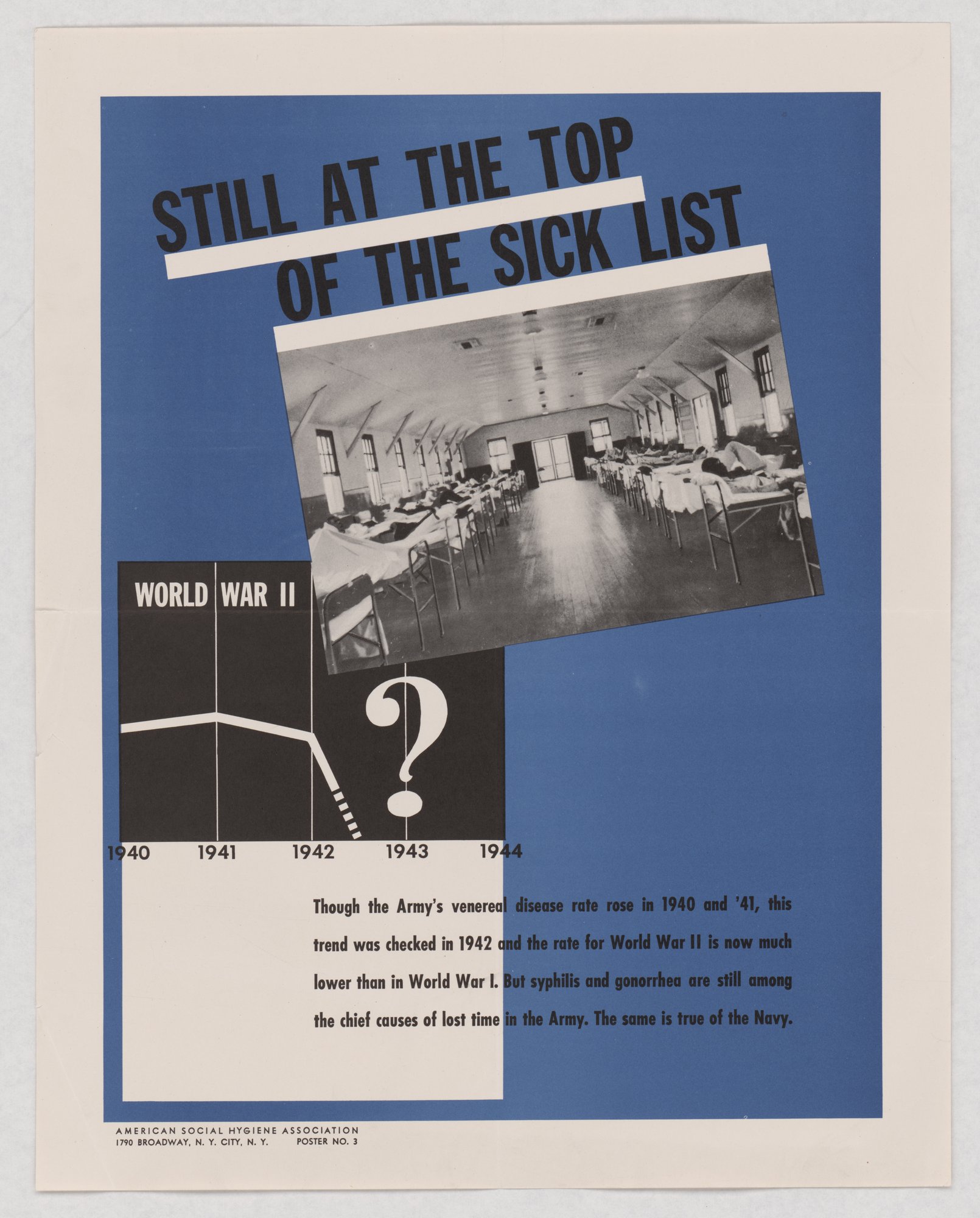 United StatesStill at the Top of the Sick List
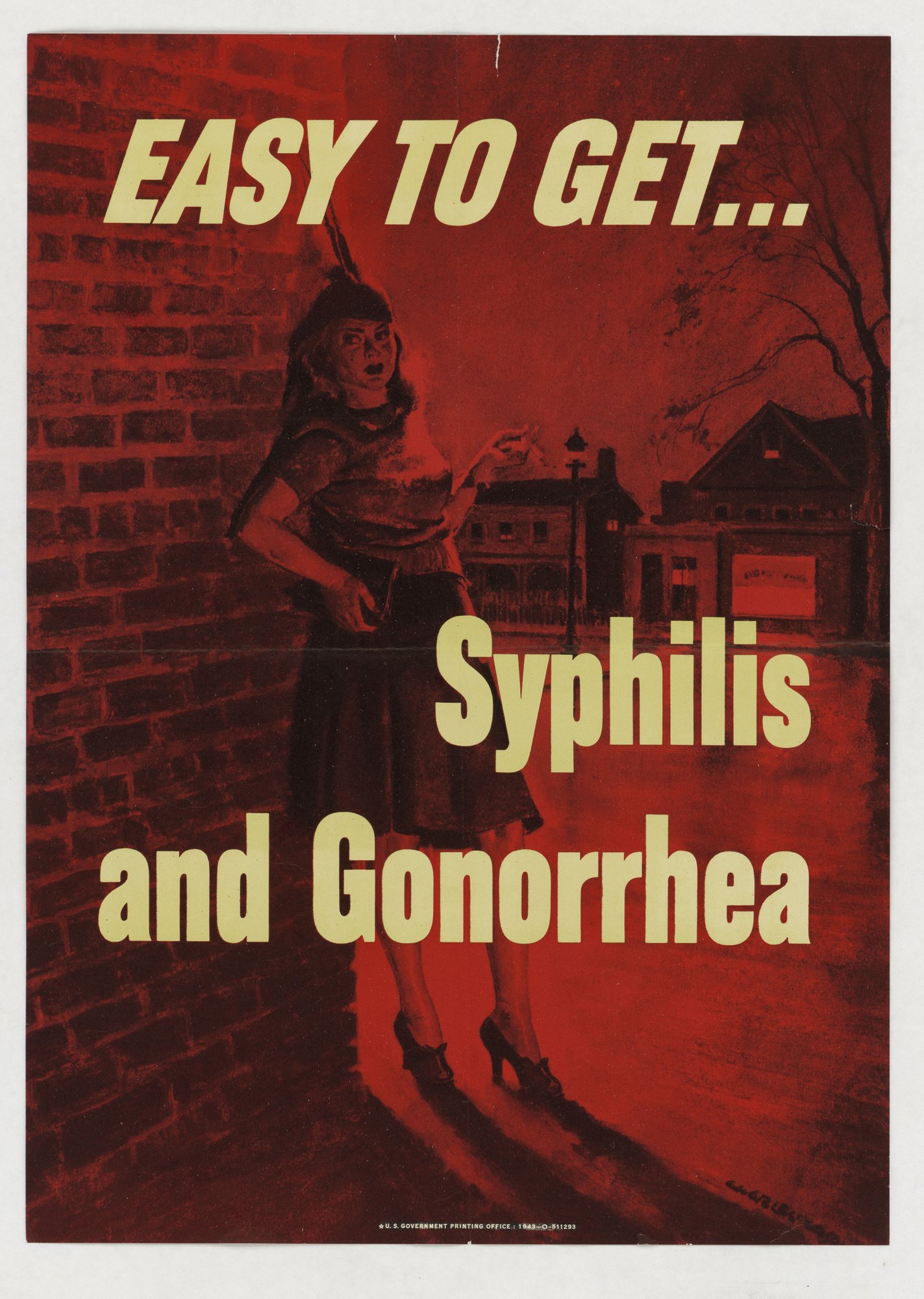 United StatesEasy to Get... Syphilis and Gonorrhea
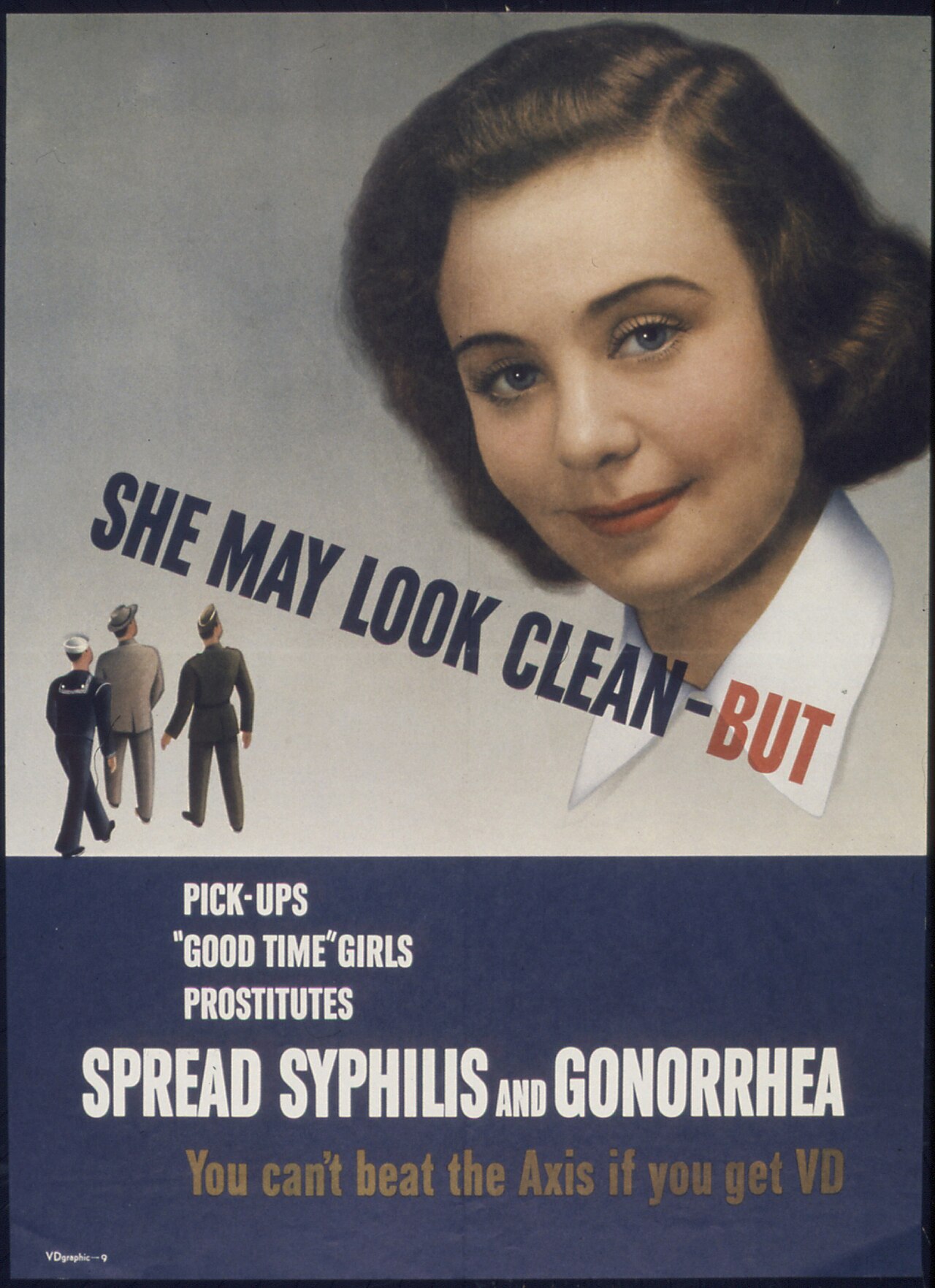 United StatesShe May Look Clean—But
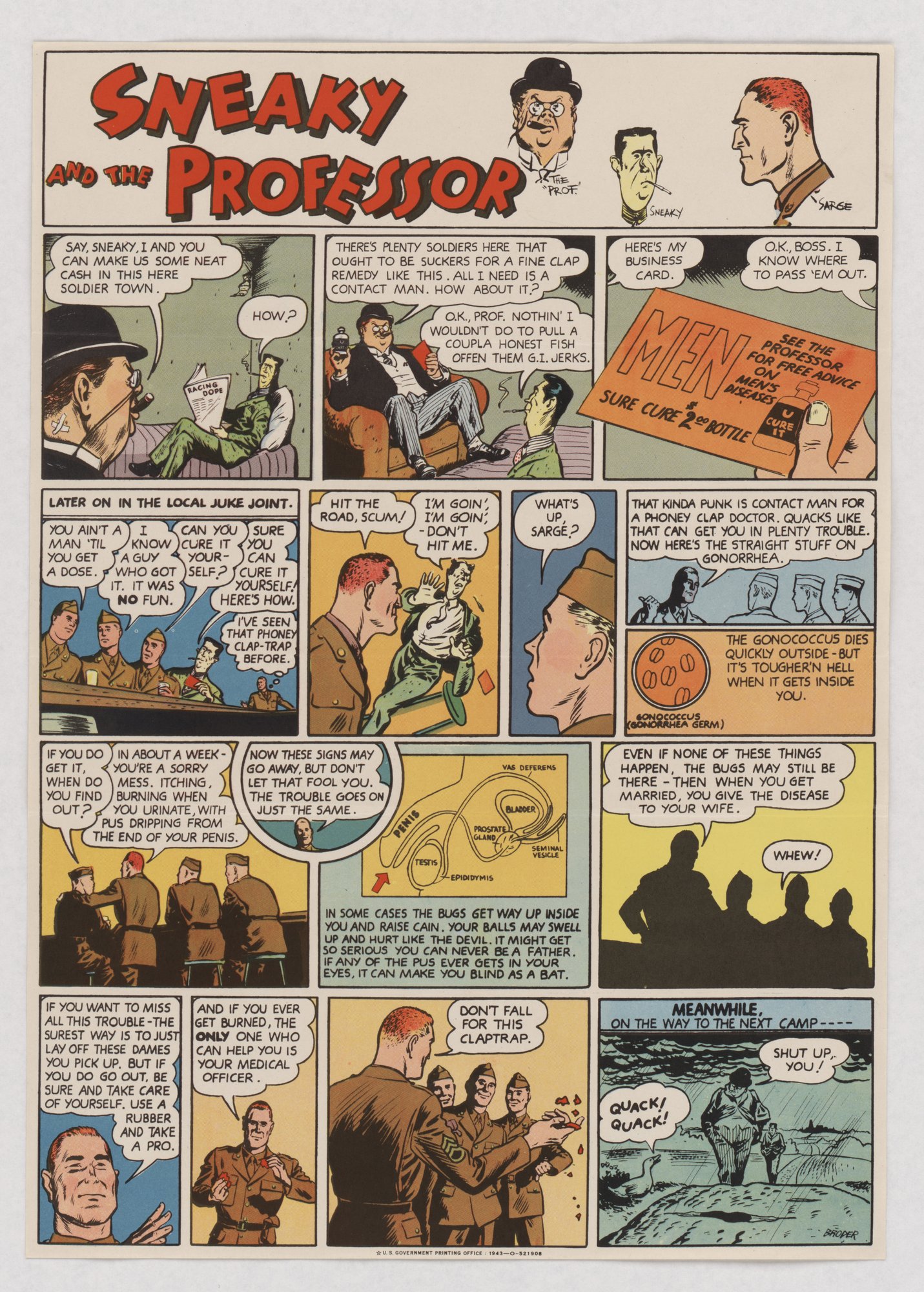 United StatesSneaky and the Professor
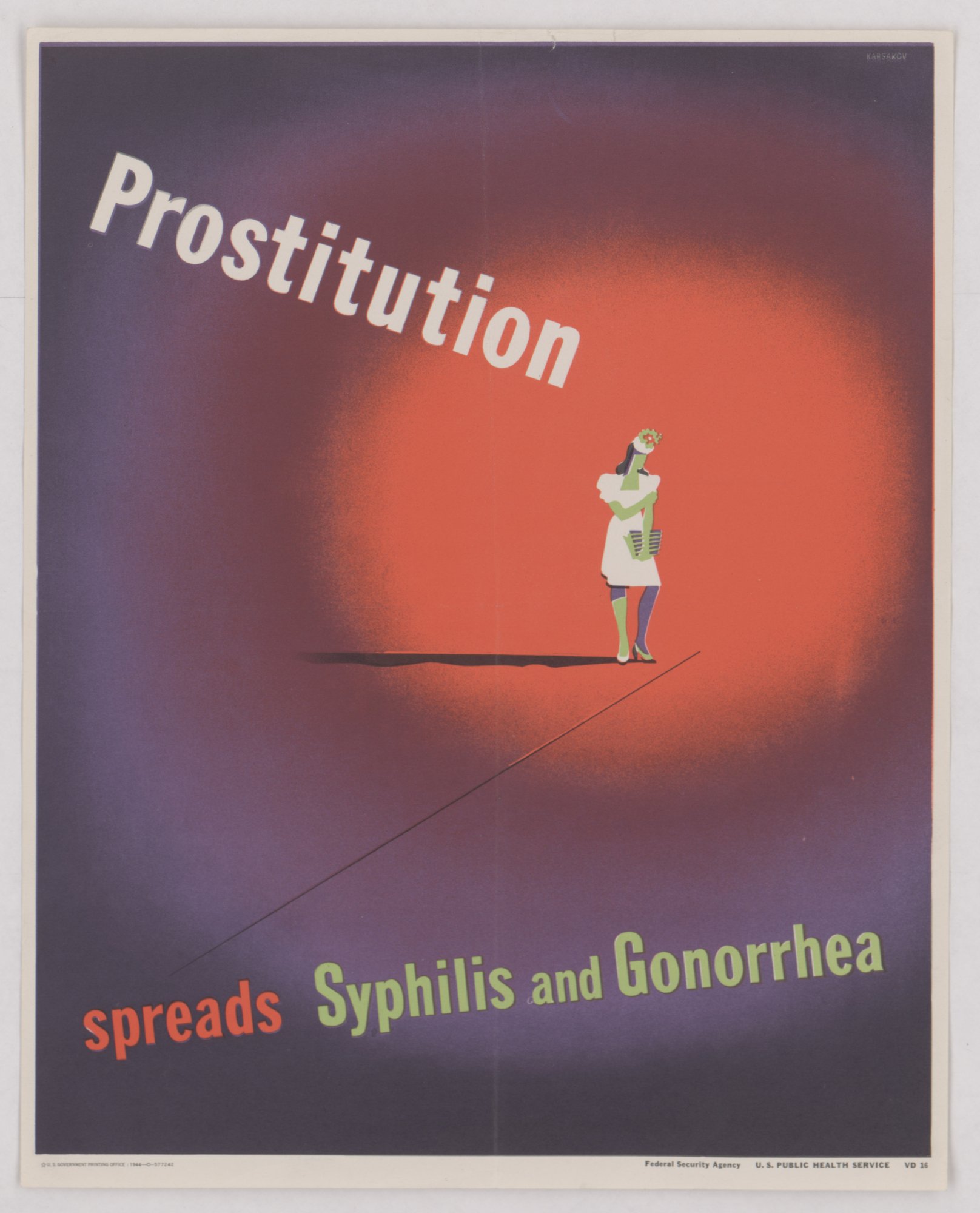 United StatesProstitution Spreads Syphilis (1944)
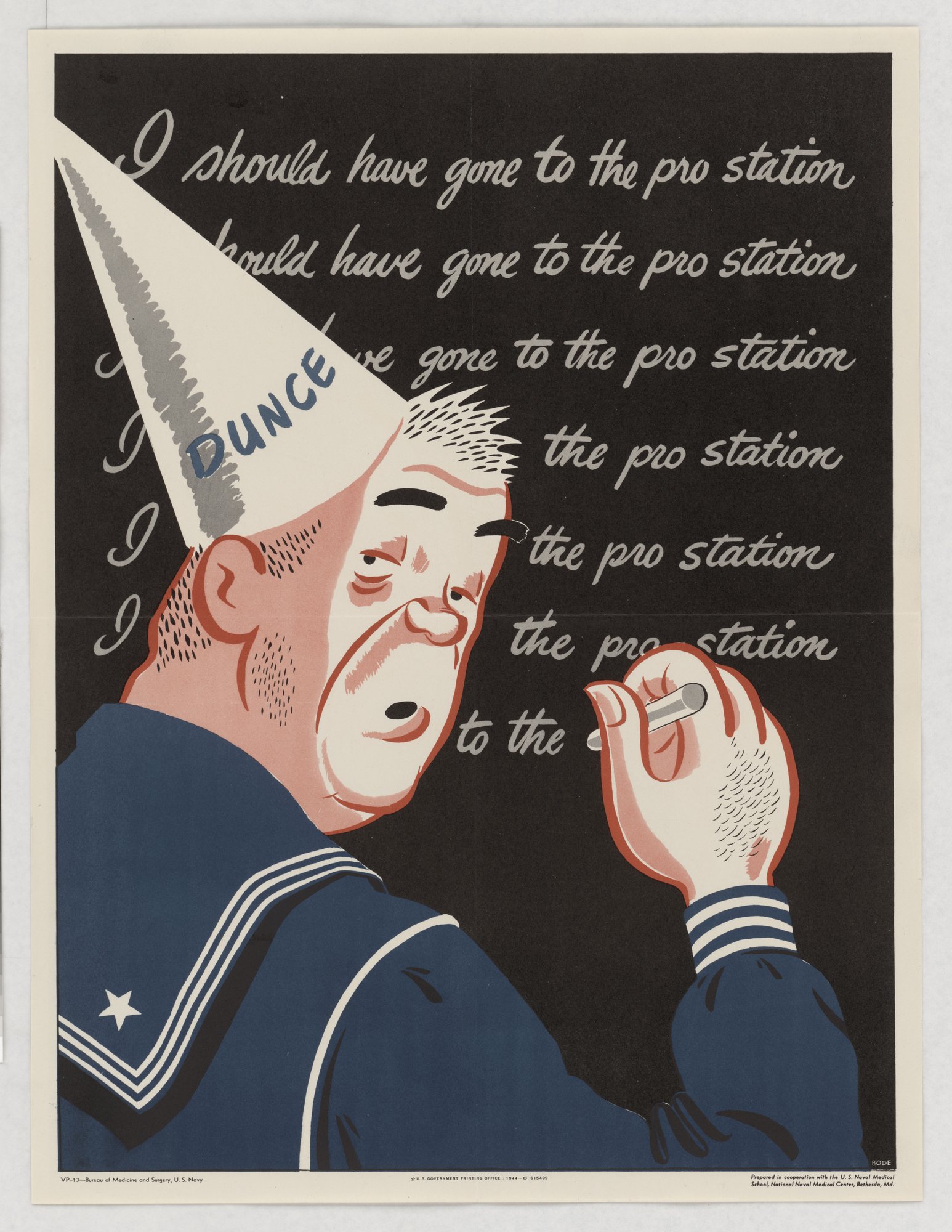 United StatesI Should Have Gone to the Pro Station
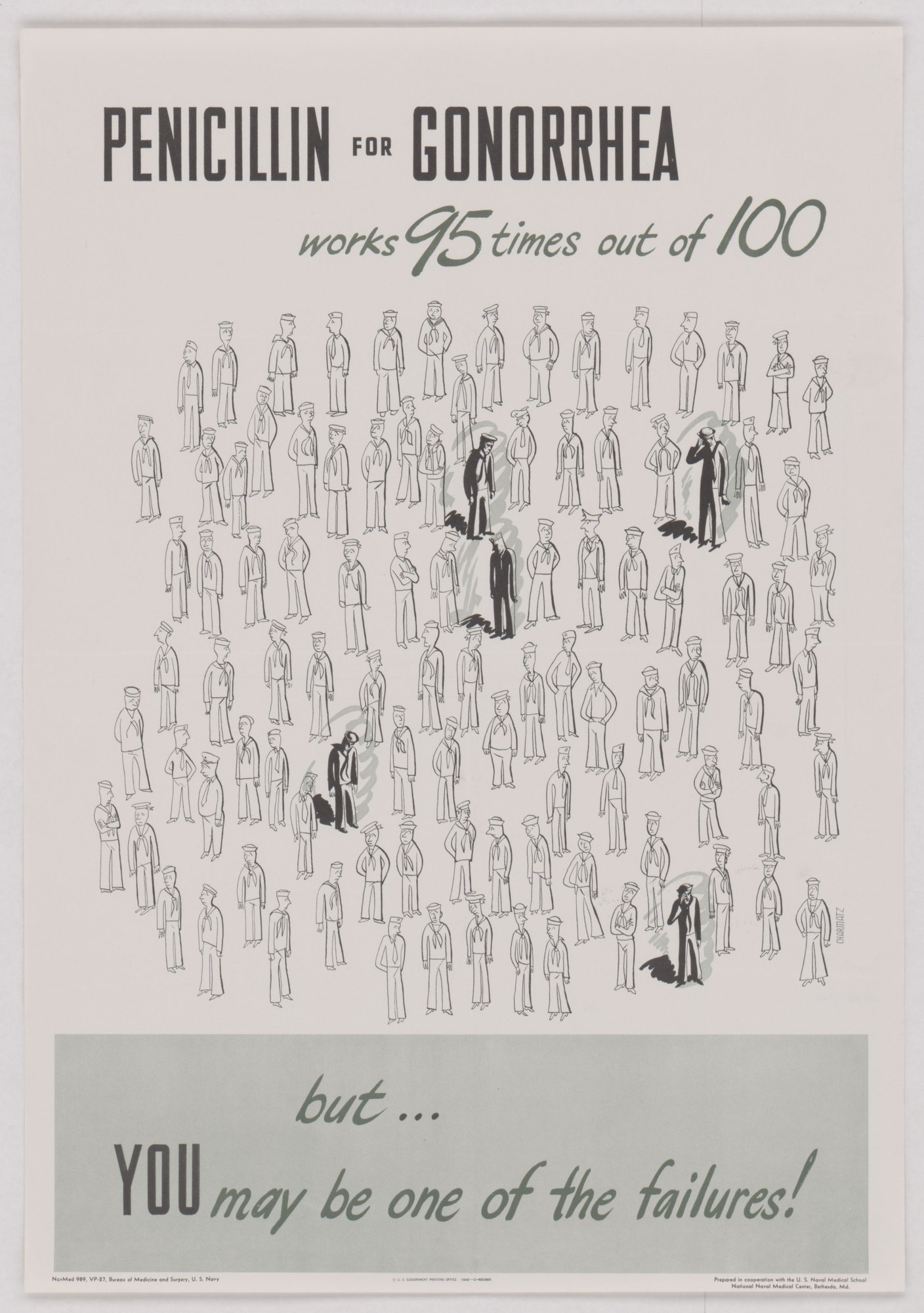 United StatesPenicillin for Gonorrhea (1946)
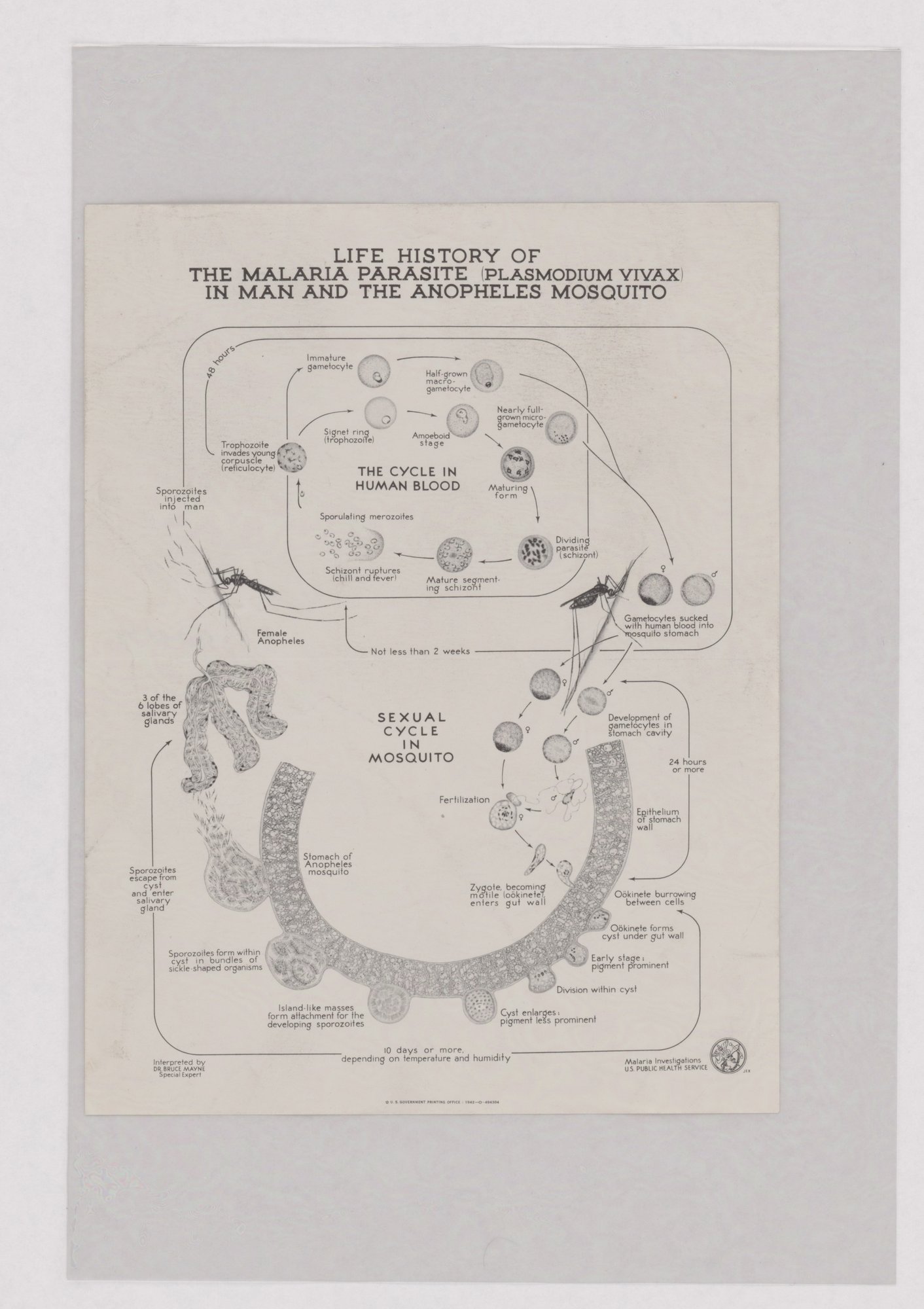 United StatesLife History of the Malaria Parasite
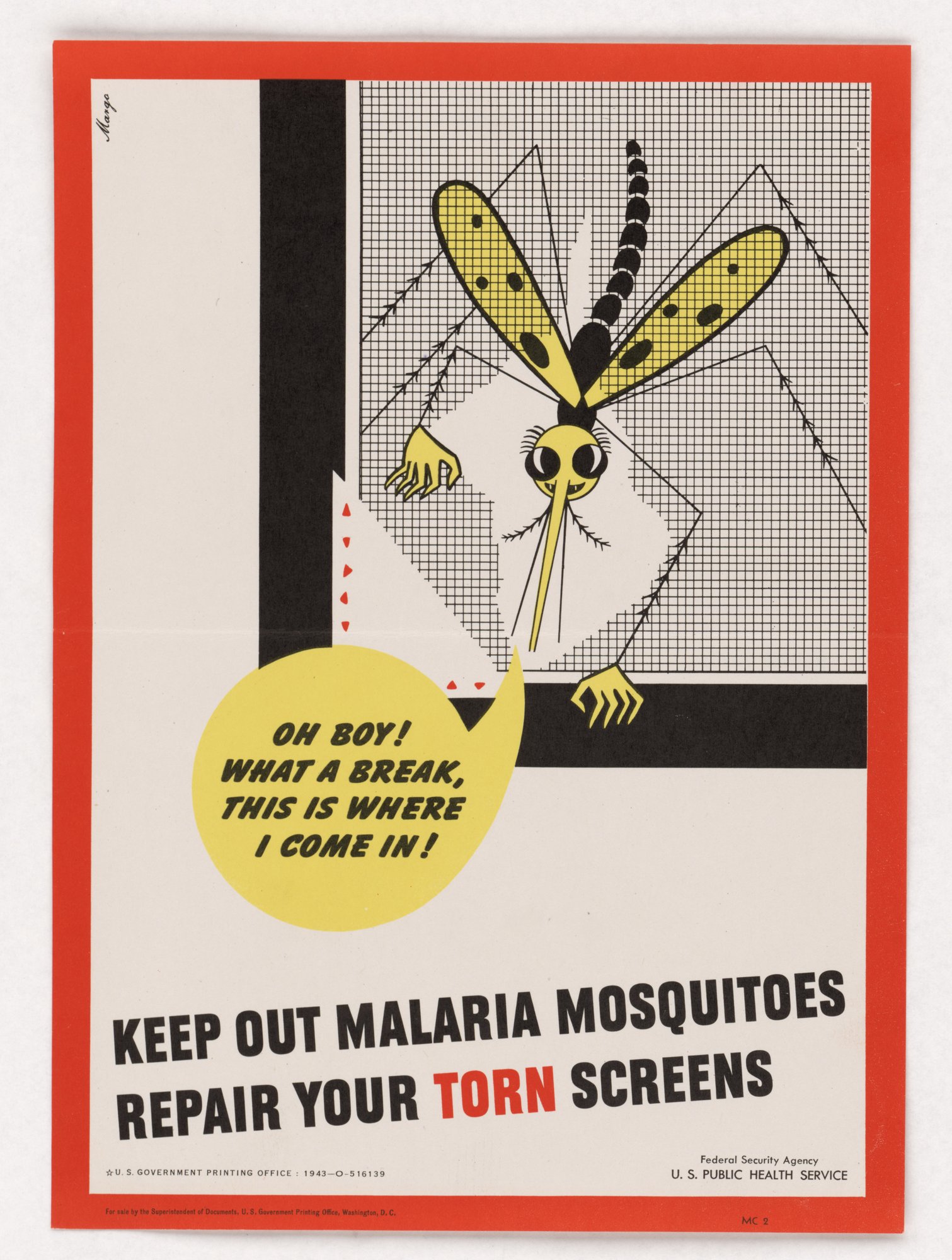 United StatesKeep Out Malaria Mosquitoes
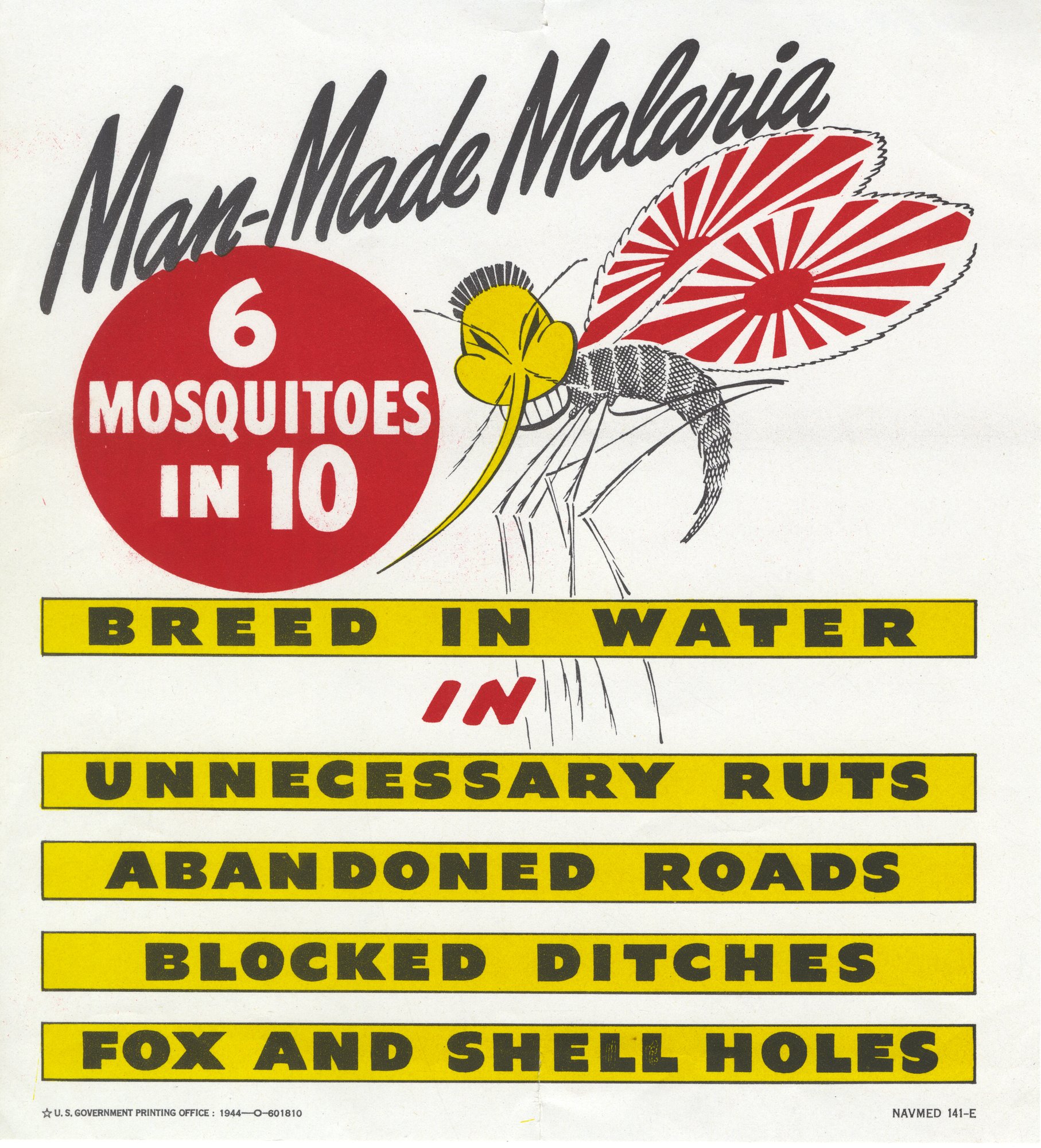 United StatesMan-Made Malaria (Navy, 1944)
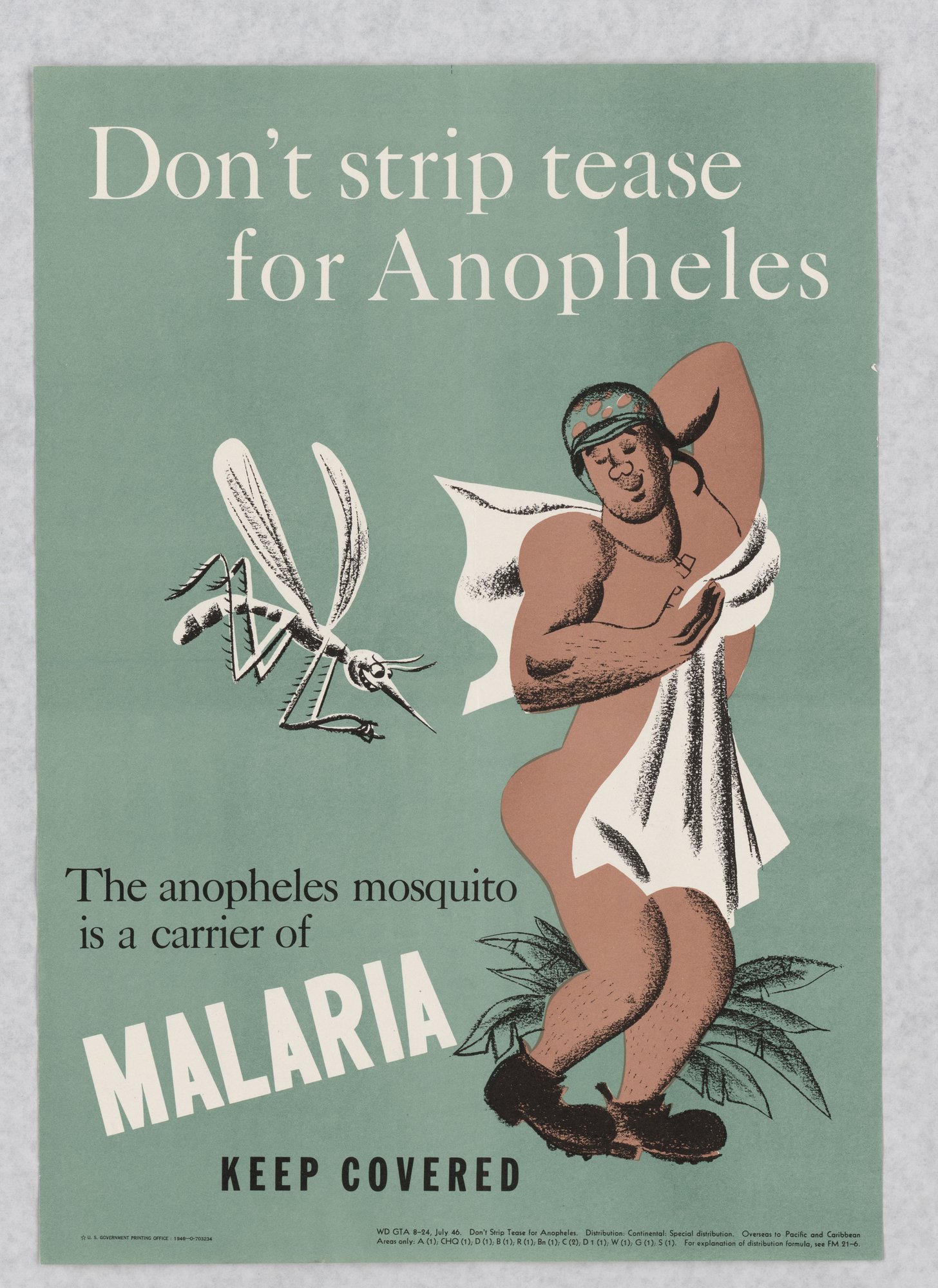 United StatesDon't Strip Tease for AnophelesUnited StatesHealth Wanted: Find TB Early (1943)
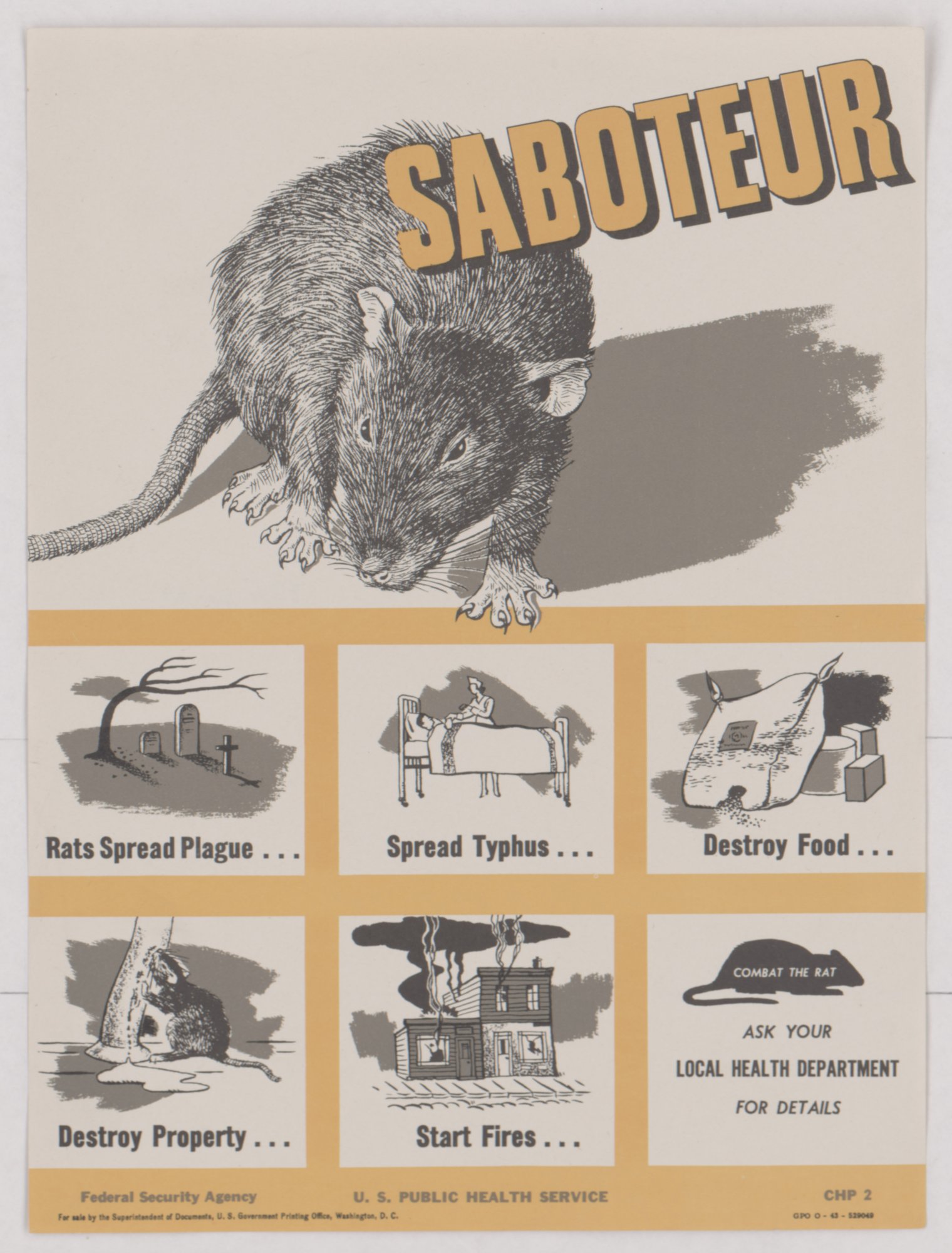 United StatesSaboteur: Combat the Rat
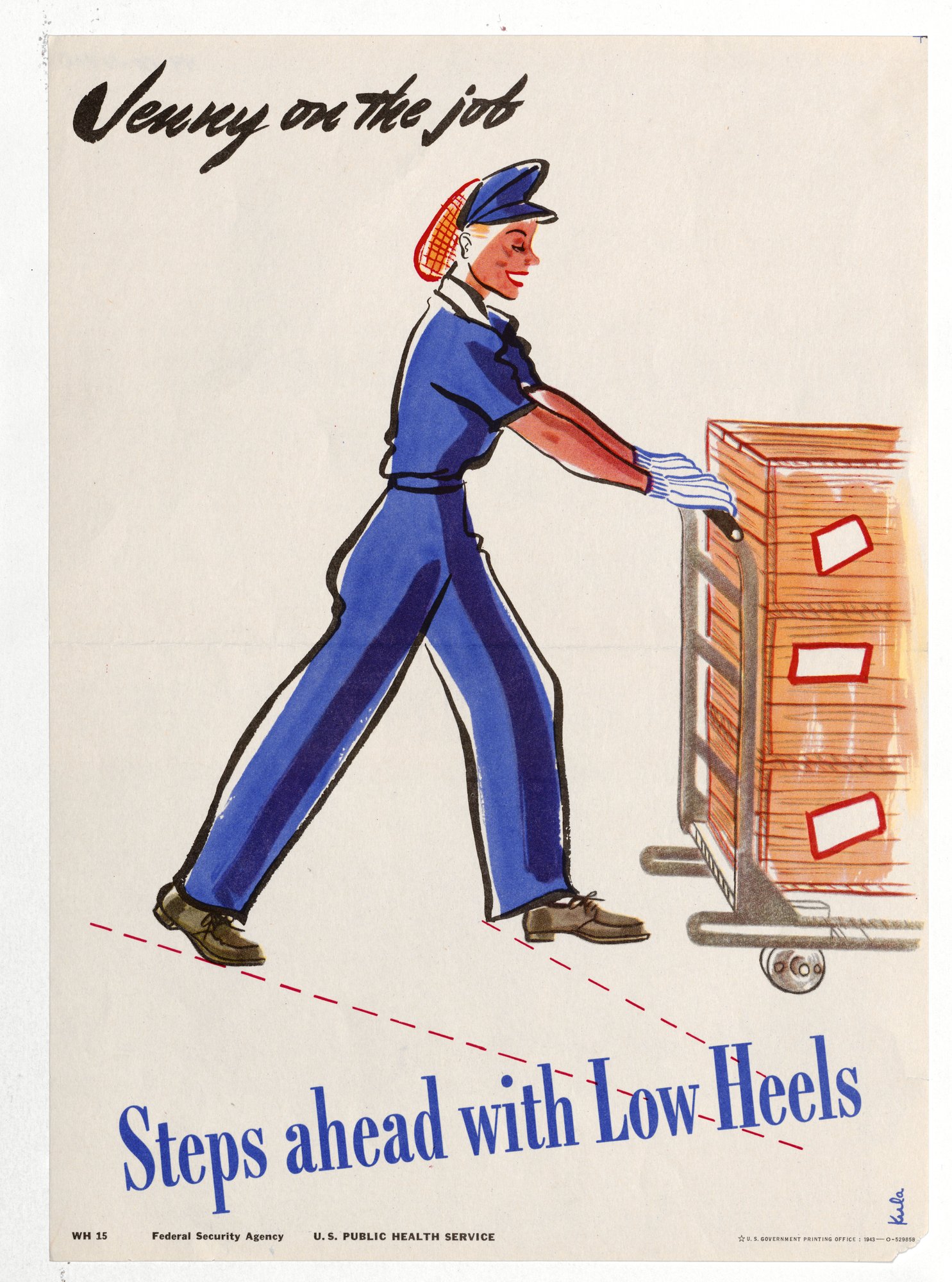 United StatesJenny on the Job, Low Heels
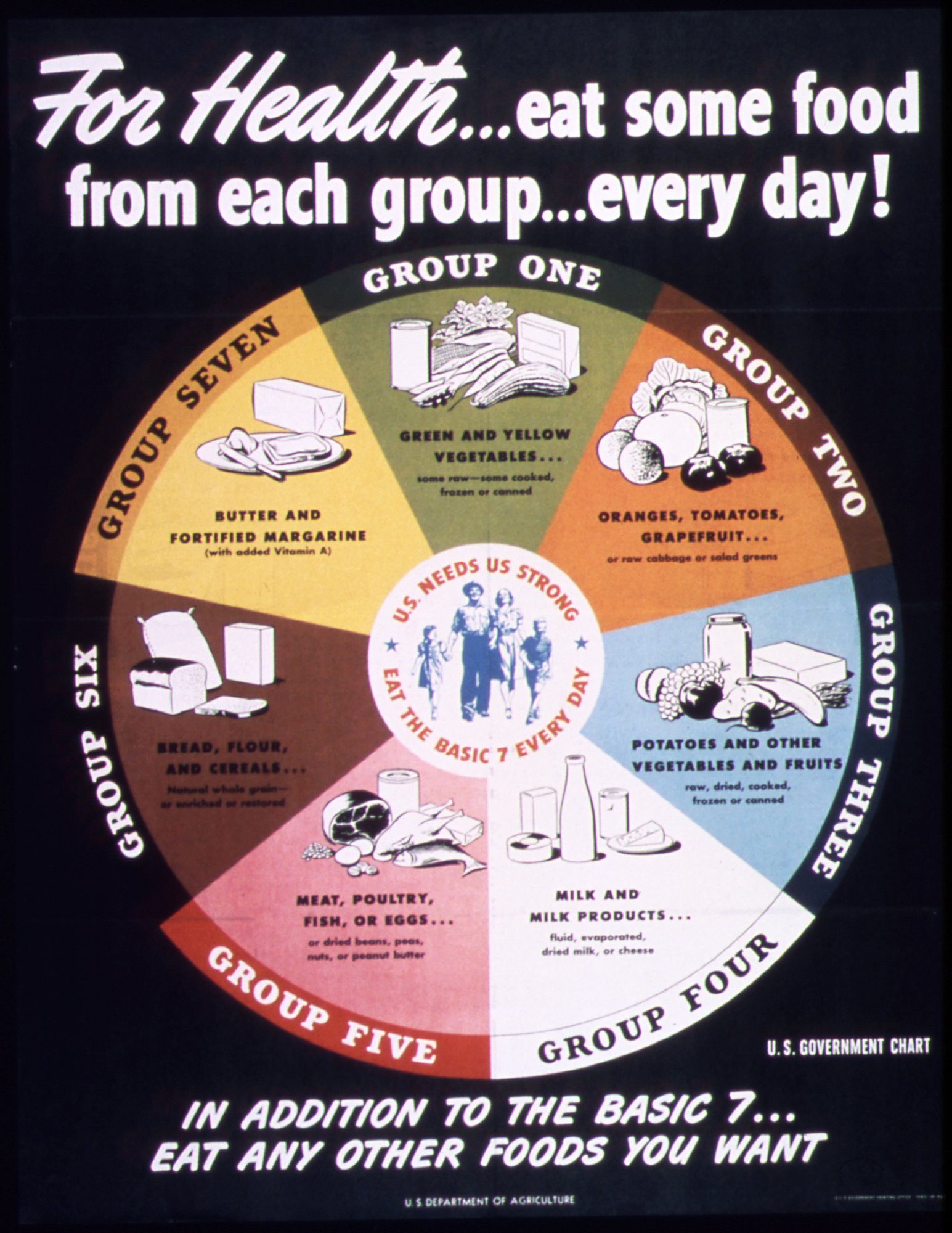 United StatesThe Basic 7 food chart (USDA)
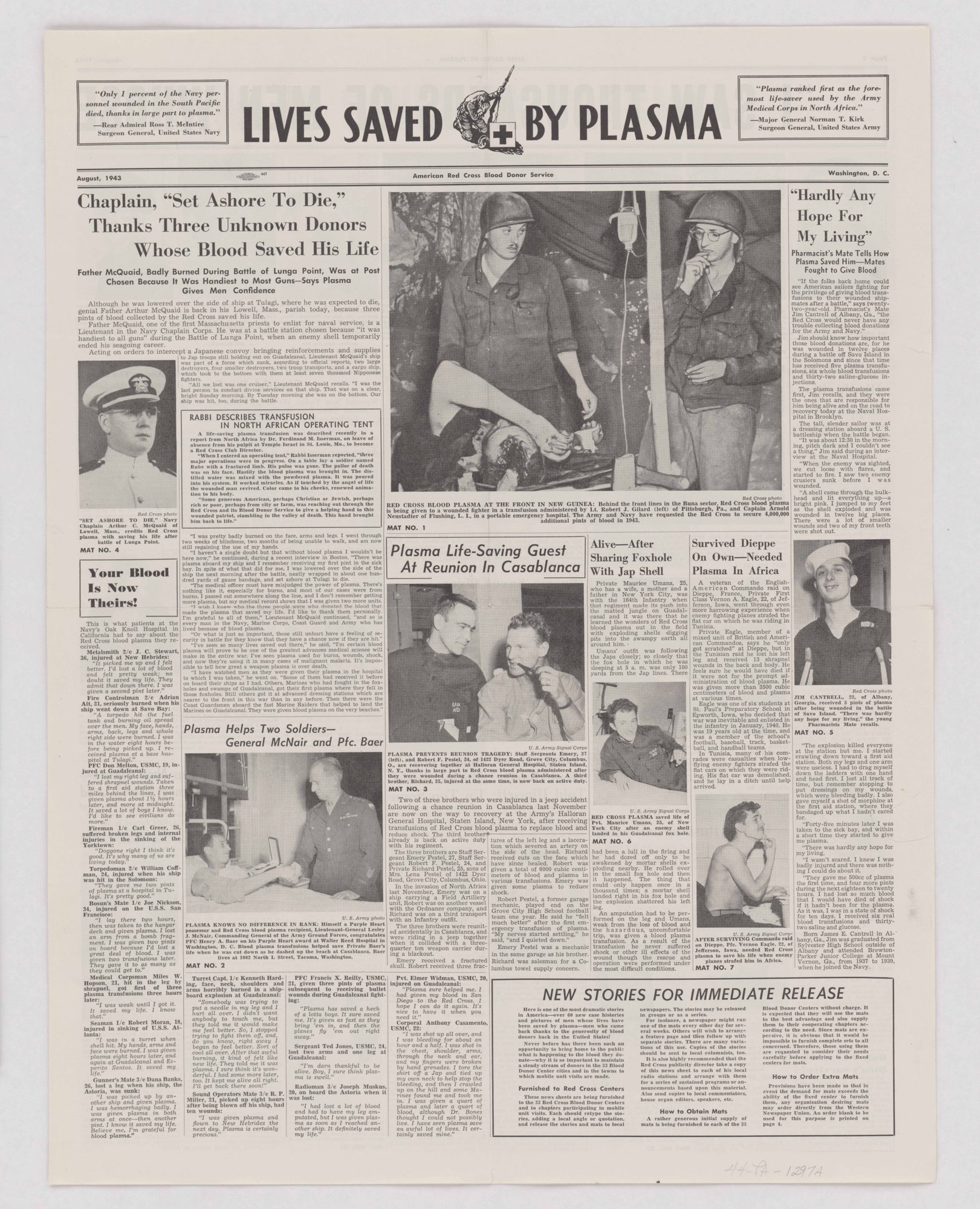 United StatesLives Saved by Plasma
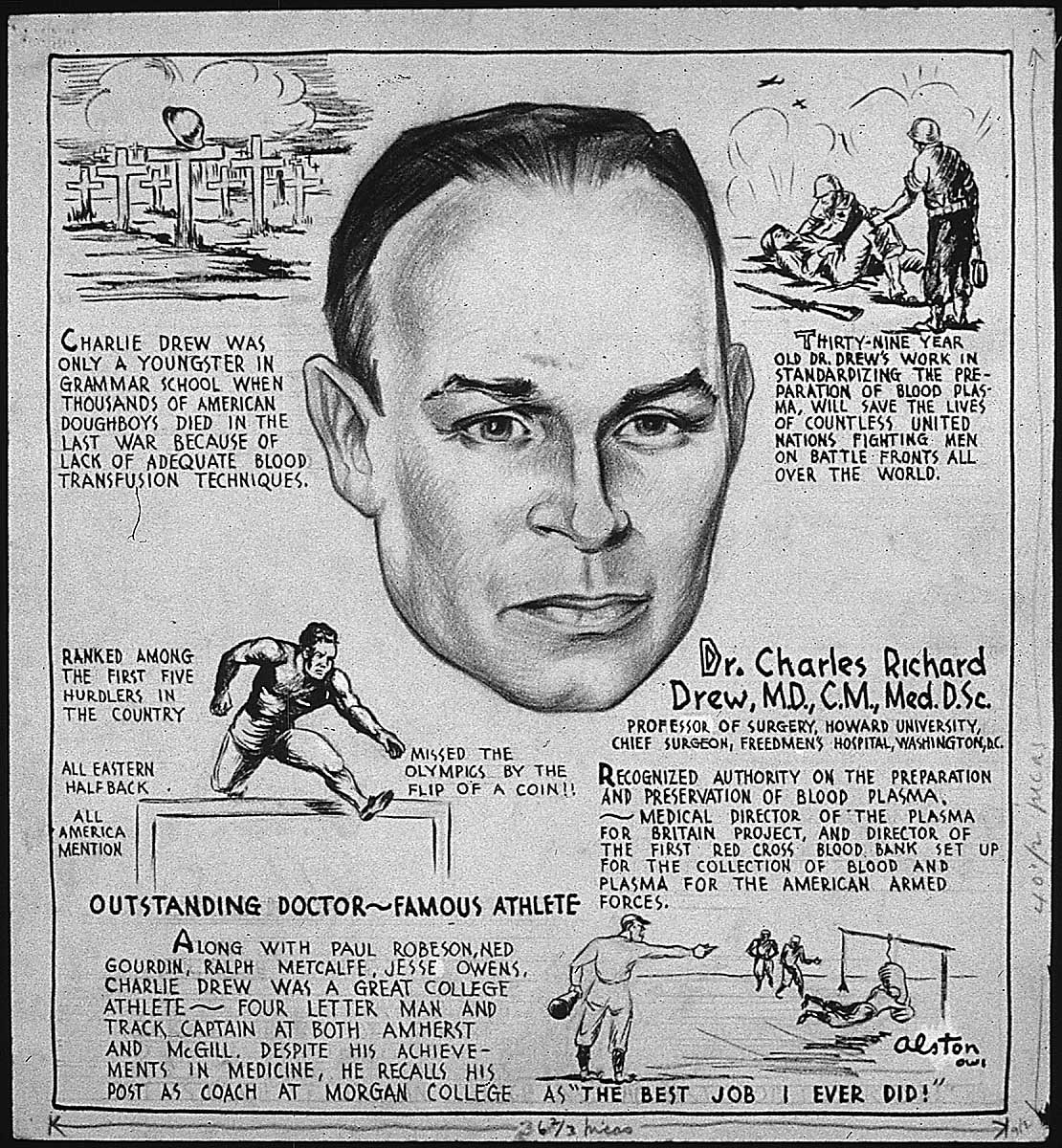 United StatesDr. Charles Richard Drew (Alston, OWI)
![Síntomas del Paludismo [Symptoms of Malaria], 1943 US poster: A health poster lists the symptoms of malaria with small](https://propagandaarchive.org/collection/images/us-health-sintomas-del-paludismo-nicaragua-1943.jpg) United StatesSíntomas del Paludismo (Symptoms of Malaria)
United StatesSíntomas del Paludismo (Symptoms of Malaria)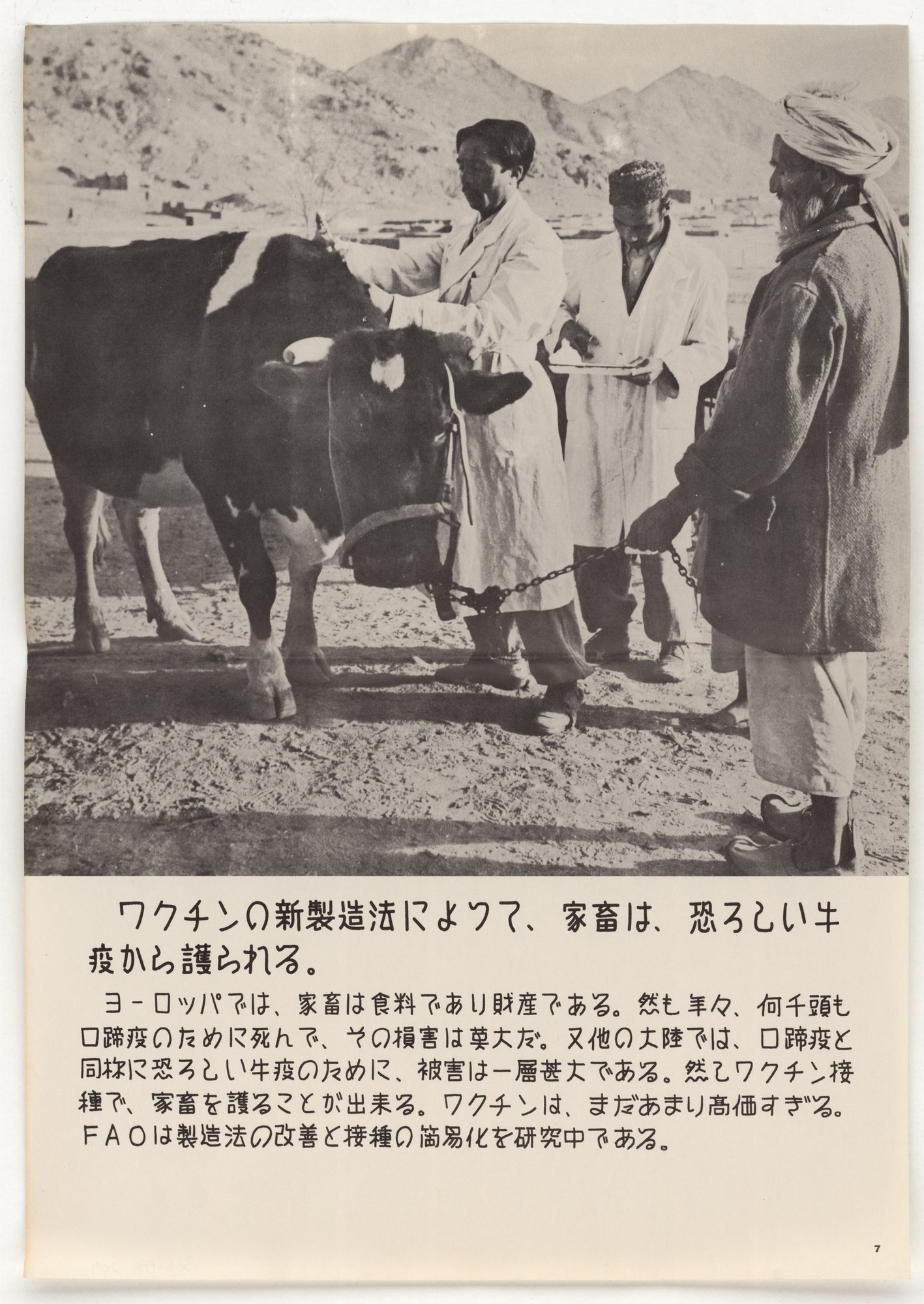 United StatesU.N. Day Poster No. 7, rinderpest (1953)
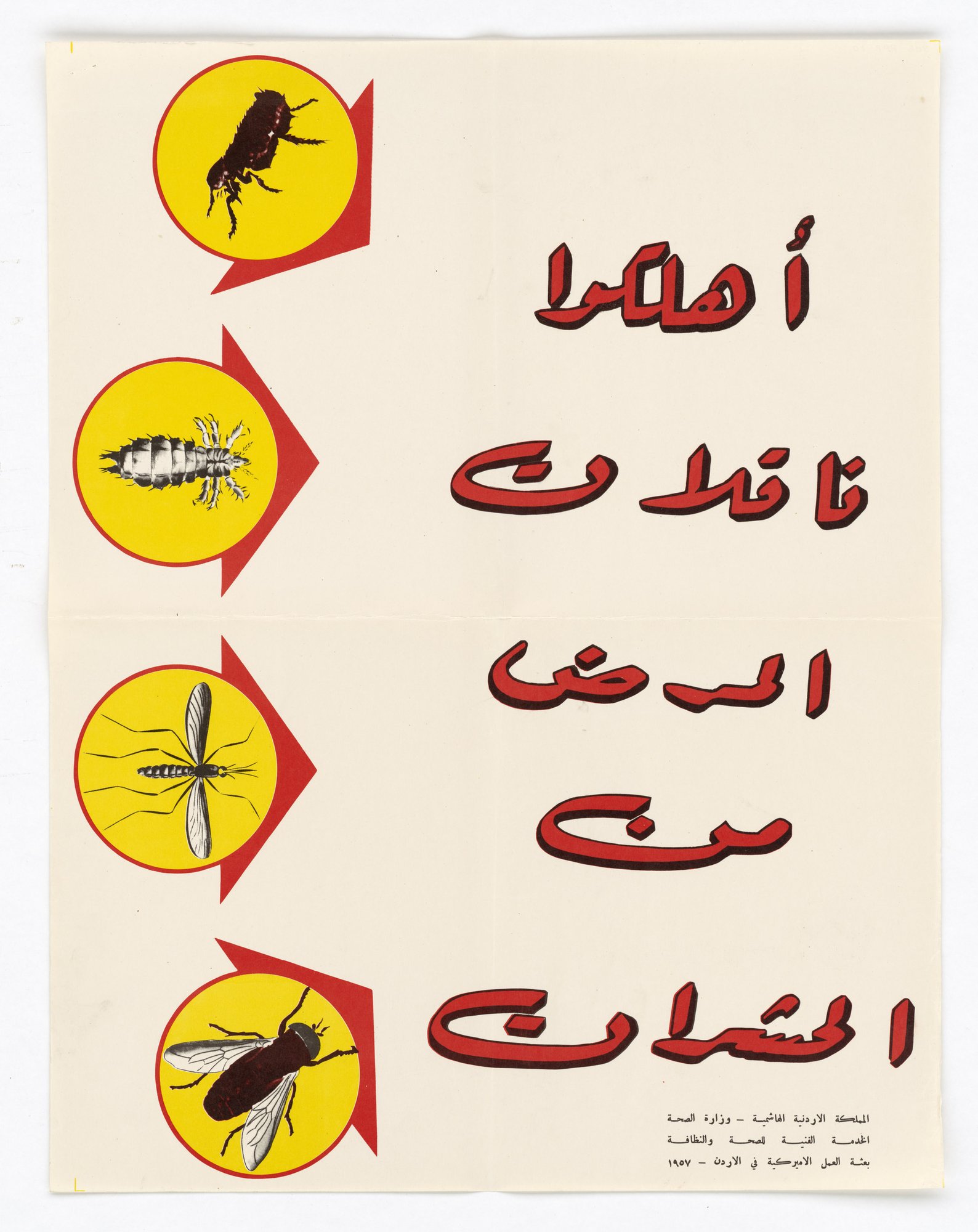 United StatesDestroy the disease carriers
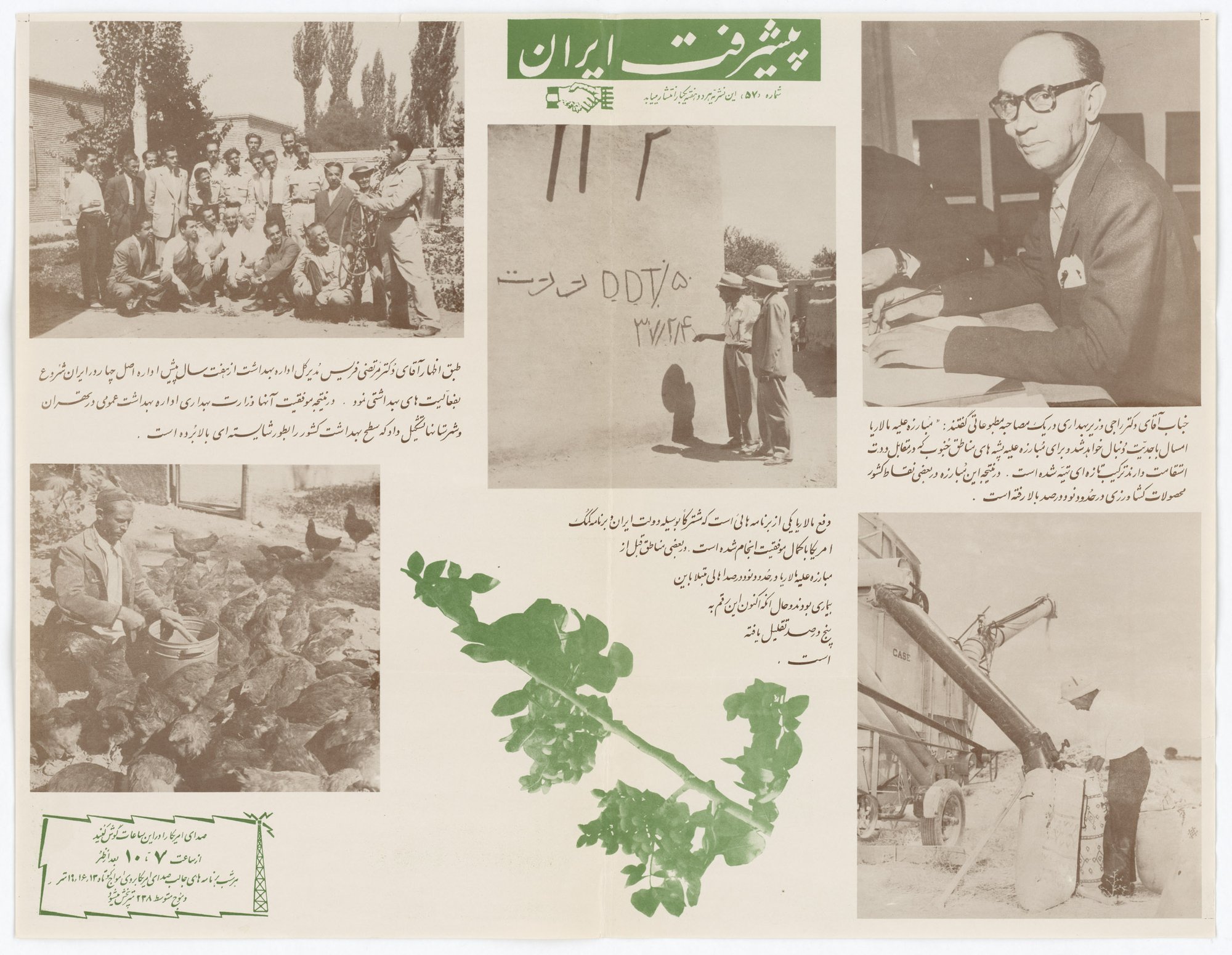 United StatesProgress of Iran No. 57, malaria (1958)
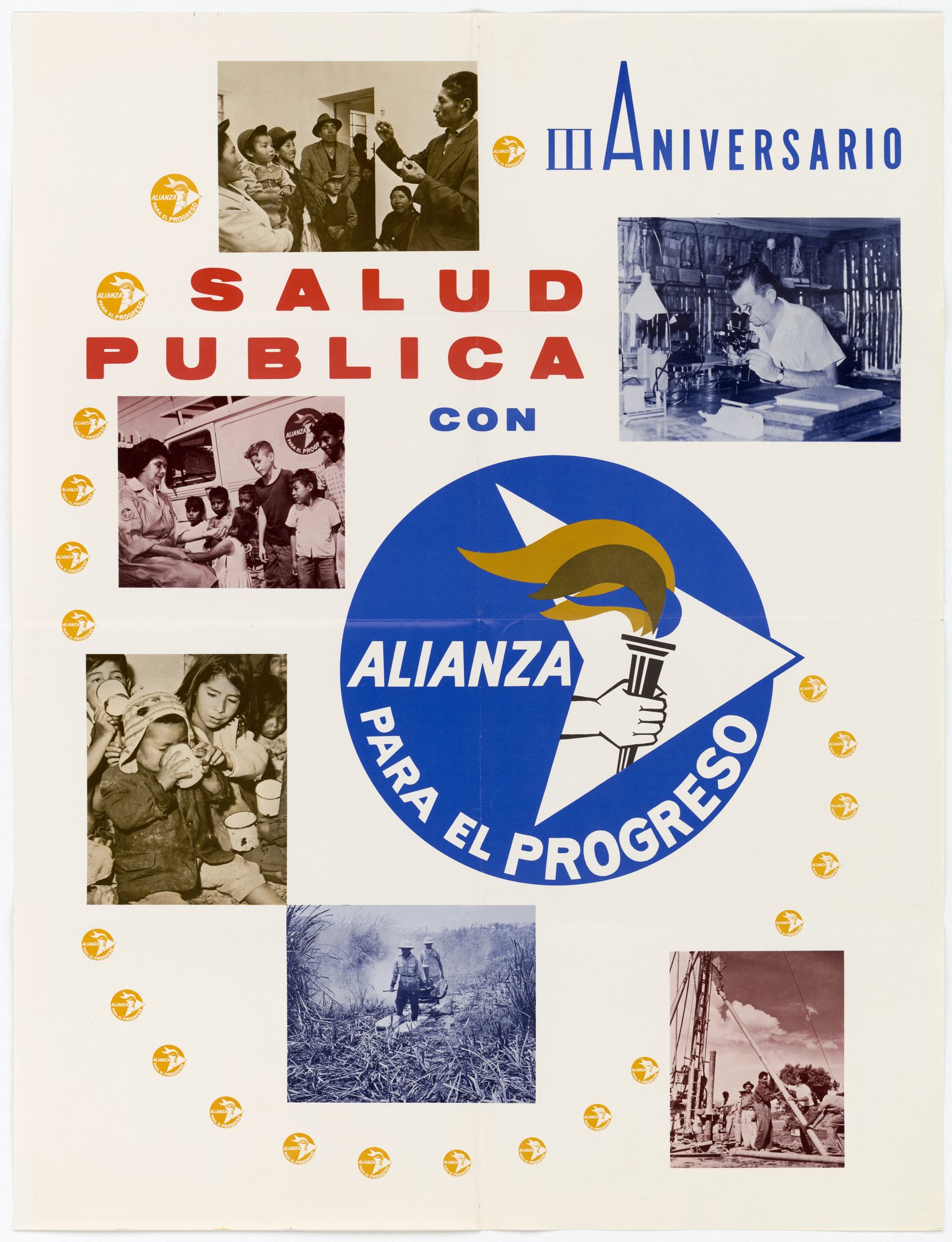 United StatesAlliance for Progress, public health (409b)
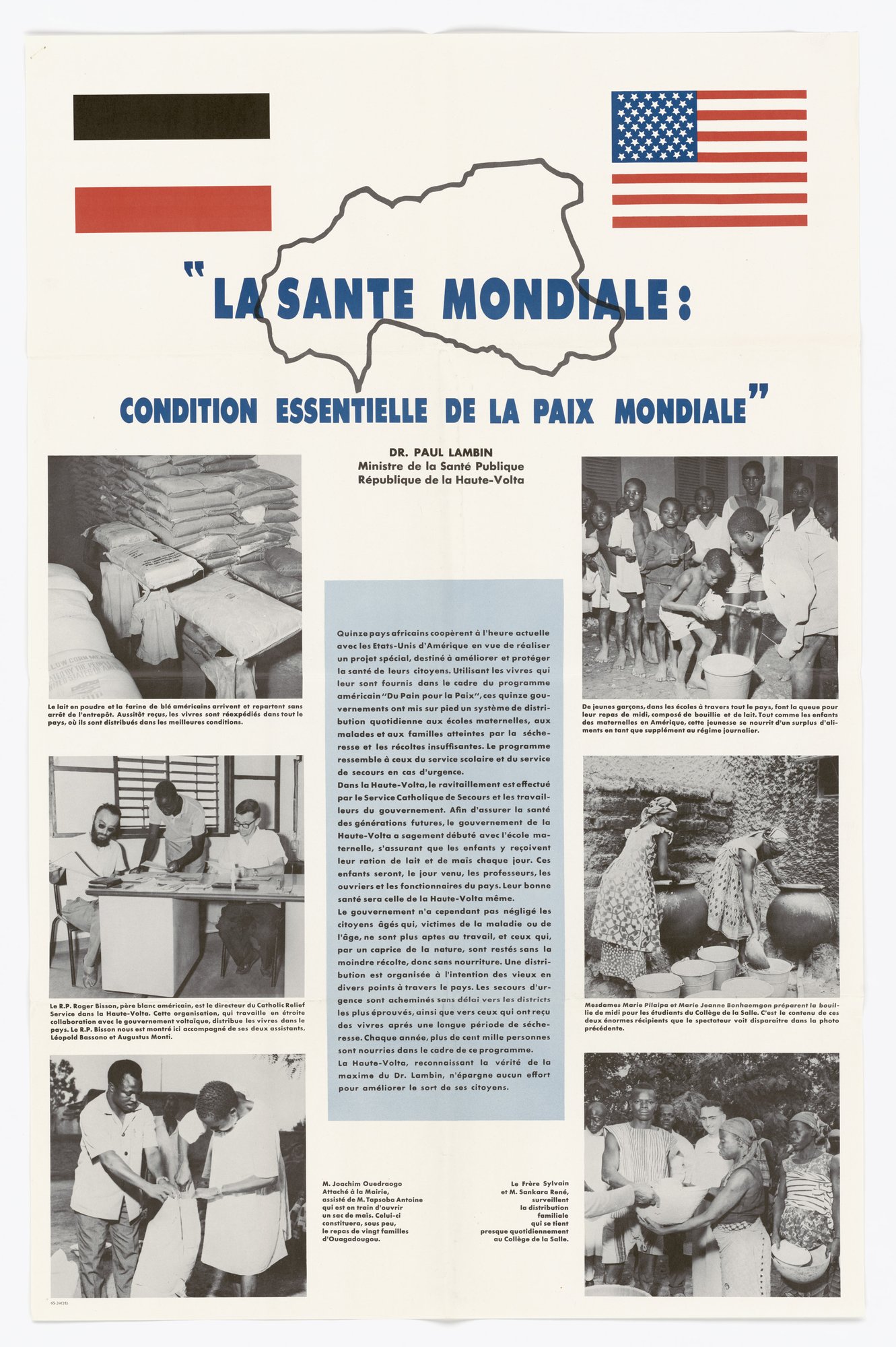 United StatesFood for Peace, Upper Volta
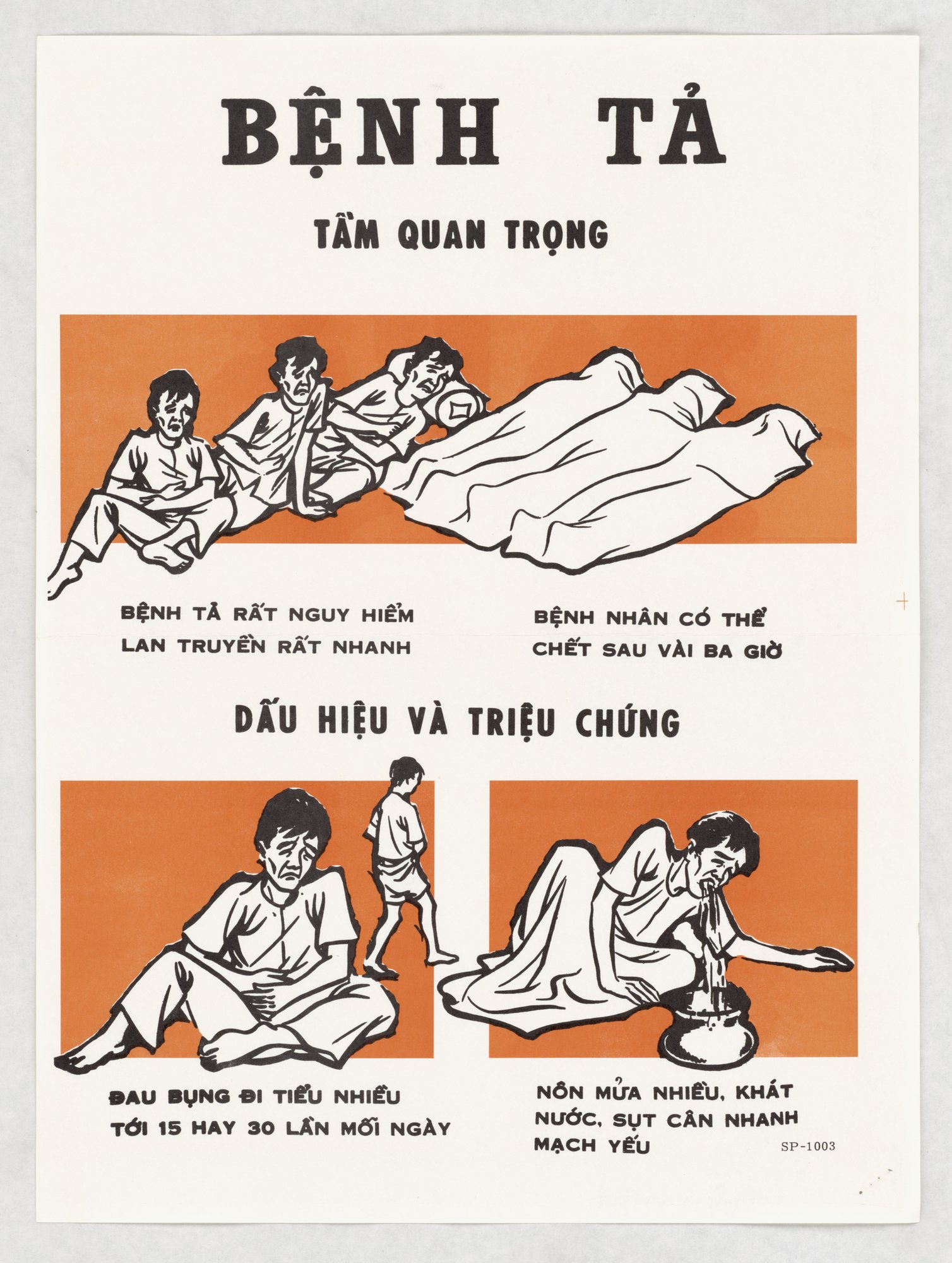 United StatesCholera (Bệnh tả)
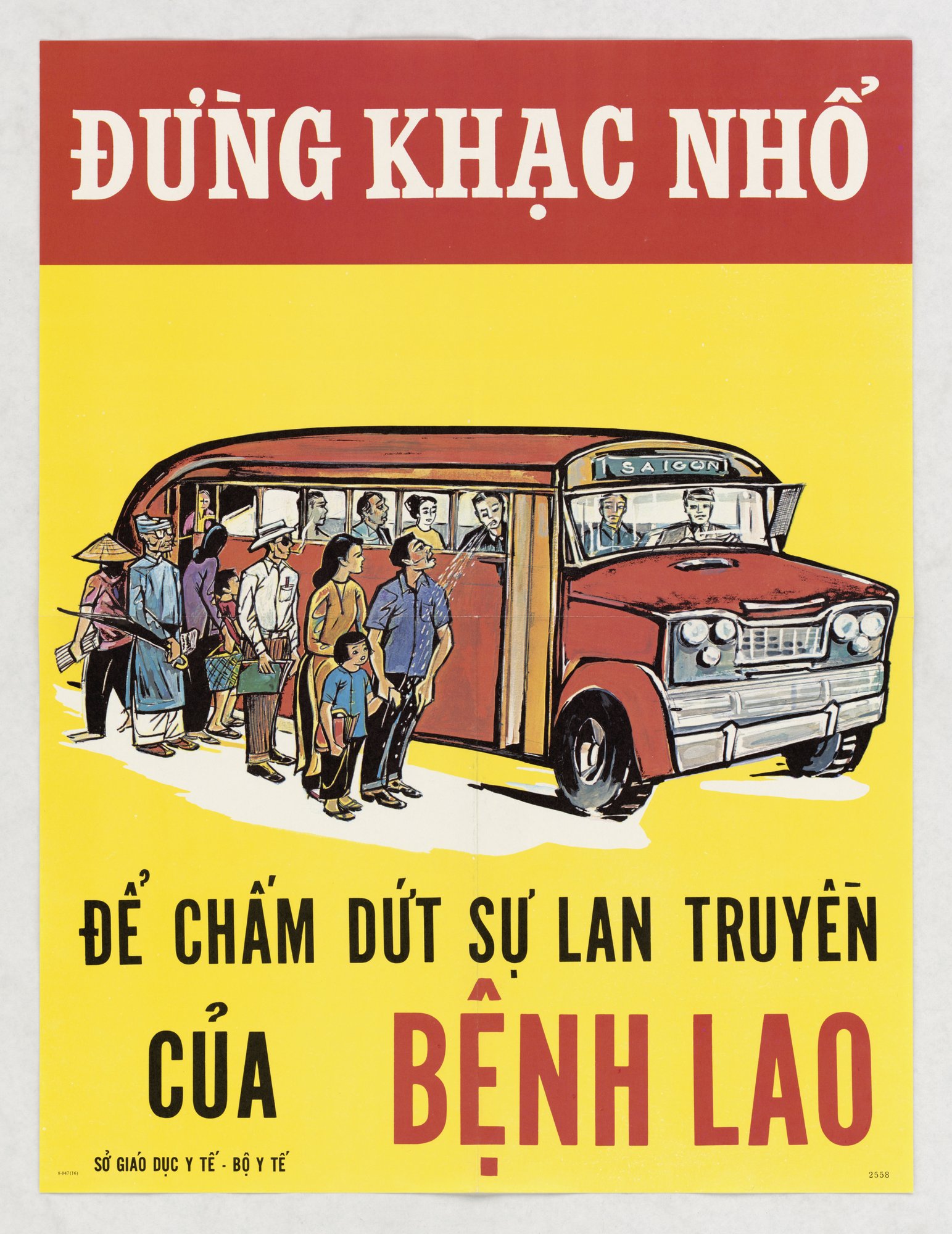 United StatesDo Not Spit (tuberculosis)
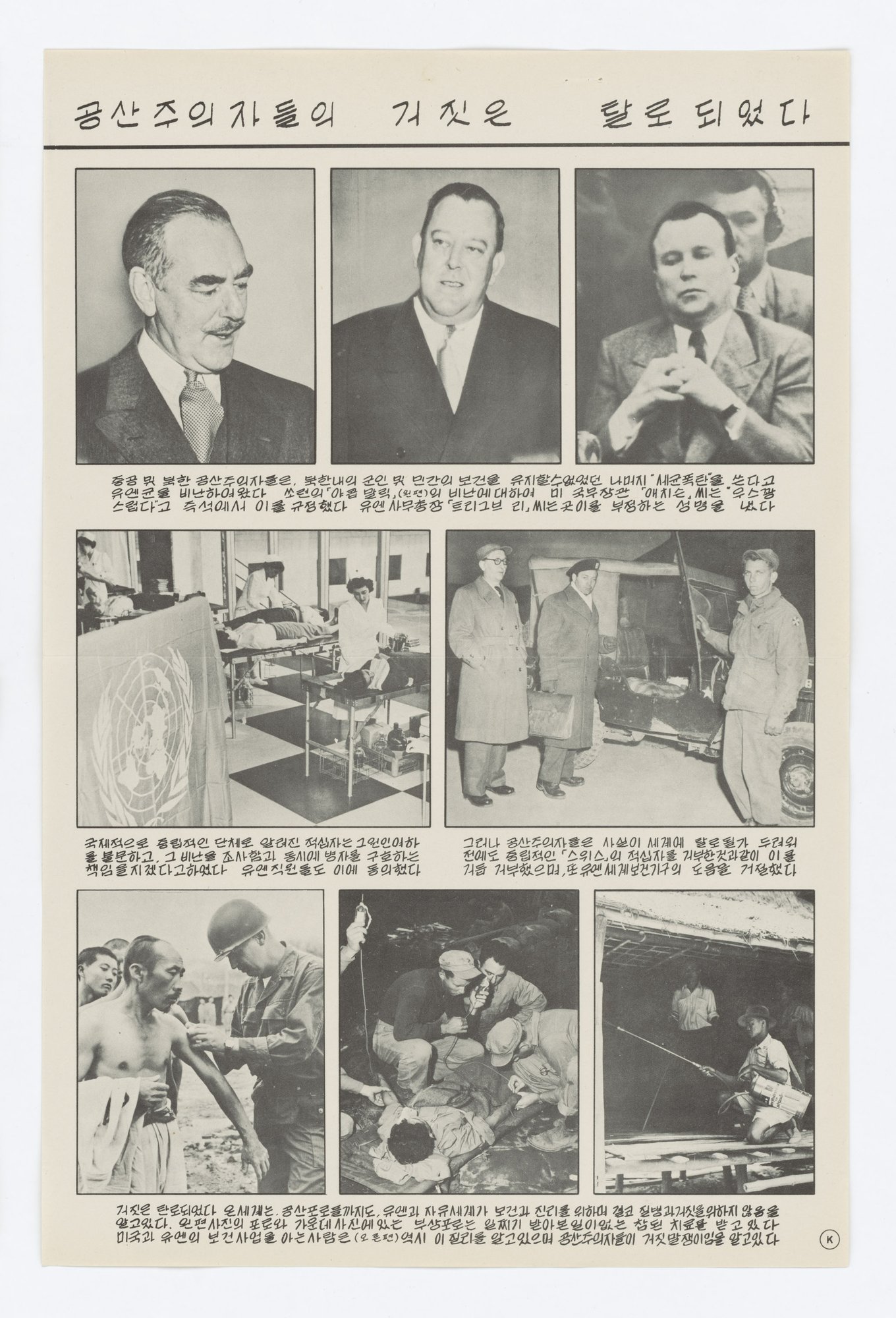 United StatesGerm warfare rebuttal, Korean (1952)
 United StatesA blue ribbon at the fair, a scalpel at the state colony
 United StatesTattoos, quarantine, and a brochure in every mailbox
 United StatesUS COVID-19 public health campaigns and messaging (2020–2022)United StatesRoosevelt administration, 1933–1945