Presidential campaign print in the United States, 1800–1900
From the Federalist newspaper essays of 1800 to the McKinley and Bryan posters of 1900, American parties sold candidates on paper: tickets, banners, broadsides, song sheets, pamphlets and cartoons. This hub collects the object pages on this site and a gallery of 1800–1900 campaign rows in the FRAME snapshot, with every party held to the same standard.
Every presidential contest of the nineteenth century was fought partly on paper. Parties and the printers who sold to them turned out ballot tickets, portrait banners, broadsides, song sheets, pamphlets, newspaper extras and, by 1880, full-color cartoons in weekly magazines. This hub gathers the pieces this site has written up, from 1800 to 1900, and a gallery of campaign rows from the FRAME snapshot. Each card in the gallery opens either an essay here or the archive record.
The standard on this page is the same for every party. Federalists and Jeffersonian Republicans, Whigs and Jacksonian Democrats, the American Party, Free Soilers, Republicans, Democrats, Greenbackers, Prohibitionists and Populists all appear below. Where one of them lied, the page says so. Where one of them sold fear of a race or a religion, the page says that too, whichever side it was.
Where to start
The century opens with newspaper print. In August 1800 the Federalist Gazette of the United States reprinted "The Jeffersoniad," no. VIII, an essay signed "Decius" that attacked Jefferson over the Mazzei letter and called his party "Jacobins." The case study on the 1800 election sets that beside the Republican side's own smears, including a book Jefferson quietly helped pay for.
By 1828 the forms were cheaper and more pictorial. The pro-Adams coffin handbill printed six coffins over Jackson's record; a Baltimore Jackson Ticket answered with a woodcut hickory tree and two Assembly names. In 1832 a New York print drew Jackson as a barn cat clearing out Bank and Clay rats. In 1840 the Whigs made a log cabin and a cider barrel into an emblem, in prints like Sinclair's North Bend cabin, and an unsigned New Orleans broadside redrew the same cabin as a trap for voters.
The 1840s and 1850s were the age of the lithographed banner. Texas Coming In (1844) pulled Clay into Salt River. Currier's Free Soil banner of 1848 printed "Free Soil. Free Labor. Free Speech." over Van Buren and Charles Francis Adams. In 1856 Baker & Godwin sold a Fillmore banner for the American Party, and Currier sold The Great Presidential Sweepstakes, which put Fillmore in front and a cross in Frémont's hands. W. H. Rease's Lincoln and Hamlin banner of 1860 printed "Free Speech, Free Homes, Free Territory" beside a tariff slogan.
The 1864 race was run in the middle of the Civil War. The Democrats sang Little Mac and sold Bromley's Abolition Catastrophe. The Republicans answered with Siebert's Union and Liberty! And Union and Slavery!. In 1868 Thomas Nast drew This Is a White Man's Government for Harper's Weekly and signed a four-panel broadside, Leaders of the Democratic Party. An 1876 pro-Tilden print had Grant advise Hayes to try "an anti-Catholic worm."
From 1880 the humor weeklies led. Puck drew Garfield and Hancock nailing the same board in Where Both Platforms Agree and, after the 1884 vote, blew up the Republican "Claim Agency" in The Mulligan Guard Lies, but Surrenders. The Prohibition Party print of 1888 set a church town against a saloon town. W. H. Harvey's Coin's Financial School (1894) argued for silver, and the archive records that it circulated widely in the 1896 campaign, when the Bryan and Sewall broadside put a coin between its two candidates. In 1900 the Republicans printed McKinley Was Right.
How did nineteenth-century parties sell a candidate in print?
Mostly by attaching him to a symbol and leaving the platform out. Jackson was a hickory tree. Harrison was a log cabin and a cider barrel. Fillmore stood between Justice and Liberty. Lincoln's 1860 banner is one of the few on this page that prints policy words, and even there they share the sheet with an eagle and massed flags. The techniques the archive tags most often on these sheets are transfer, bandwagon and plain folks: lend the man the nation's symbols, show a crowd already following him, and dress him as an ordinary farmer or soldier.
Most of it was commercial. Firms such as N. Currier, Currier & Ives, Baker & Godwin, and G. W. Bromley & Co. sold to buyers who wanted to hang a candidate on the wall, and several of them sold to more than one party in the same year. A printer selling every side's picture is a market at work, not a plot. Ballot tickets, song sheets and newspaper extras were cheaper still, and some of the sharpest pieces carry no printer's name at all.
Which campaign documents were forged?
Two forgeries on this site stand out, one from each party. Late in 1863 David Goodman Croly and George Wakeman of the Democratic New York World wrote an anonymous pamphlet, Miscegenation, written as though by Republican abolitionists, and Democratic speakers and papers then quoted it in the 1864 campaign as the Republican program. The Civil War print case study tells that story; Bromley's Abolition Catastrophe shows the word at work on a campaign print. In October 1880 a pro-Hancock "Advertiser Extra" printed the Morey letter, a forged letter over Garfield's name about cheap Chinese labor, and reported Garfield's denial in the same sheet while insisting the letter was real.
Both were black propaganda in the plain sense: a message made to look as if it came from someone it did not come from. Both were wrong. The earlier case of 1800 is different in kind but worth noting beside them. Jefferson's money behind James Callender's book was concealed sponsorship, not forgery, and the 1800 case study gives it the same scrutiny.
What nativist and racist appeals did campaign print use?
Several, and they came from more than one party. The 1856 Sweepstakes print handed Frémont a cross, which the Library of Congress reads as a hint that he was Catholic, and gave his horse a "Wooly Head" pedigree, a slur for antislavery men. Twenty years later a pro-Tilden print accused the Republicans of baiting voters with "an anti-Catholic worm," without evidence on the sheet. In 1864 Bromley's Democratic print used a racial slur and a word made by forgery. In 1868 the Democratic slogan was "a white man's government"; Nast's cartoon of that name, and a Currier & Ives print turning the slogan against itself, answered it from the Republican side. The archive notes that the Currier & Ives answer gives its Black figure dialect speech and a slur of its own.
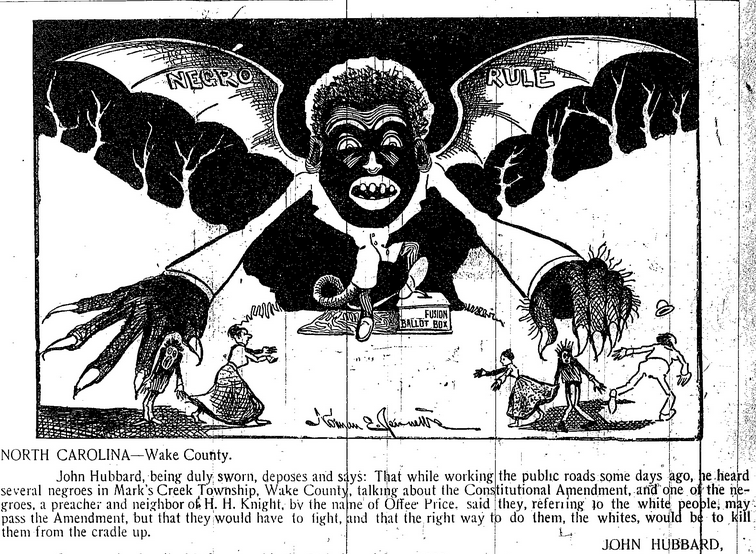
In 1880 Puck drew both parties' platforms agreeing on one thing, hostility to Chinese immigrants, and drew the Chinese man in racial caricature while making the point. The Morey letter forgery traded on the same fear. After the 1884 vote a Puck centerfold drew Jay Gould as Shylock, in the archive's words a stereotyped caricature of a Jewish moneylender. And in July 1900 the News & Observer of Raleigh printed Norman E. Jennett's "Negro Rule" vampire for North Carolina's Democratic white-supremacy and disfranchisement campaign, two years after the Wilmington coup. That cartoon was in service of taking the vote away from citizens, and it is the worst thing in this hub.
These appeals are described here, not repeated. They were wrong when they were printed. Saying so does not require pretending that only one party made them.
What does holding both parties to one standard look like?
It looks like reading the pairs together. In 1800 Federalists called Jefferson a Jacobin and a Republican pamphleteer Jefferson had paid called Adams a monarchist; only Republican editors were prosecuted under the Sedition Act. In 1828 one side printed coffins and the other a tree. In 1840 the Whigs built a cabin and the Democrats drew it as a trap. In 1864 Siebert trimmed McClellan's record and Bromley sold racial fear. In 1868 Nast stacked quotations against Seymour while Democratic printers sold a white man's government. In 1880 a pro-Hancock extra printed a forged letter, and Puck showed both platforms nailing up the same anti-Chinese board. In 1896 one party's placard said silver and the other said sound money, and neither explained itself.
The fair verdict is not that both sides were equally wrong in every year. The 1864 Republican print argued for the end of slavery and the Democratic one argued with a slur. The 1900 North Carolina cartoon served disfranchisement. Those differences belong on the page. The standard is the same; the results are not.
Where did government power come in?
Rarely, and when it did, it was the problem. The Sedition Act of 1798 made "false, scandalous and malicious" writing against the President a federal crime until it expired in March 1801, and the only journalists prosecuted under it edited one party's papers. In 1835 a Charleston crowd burned abolitionist mail and the Postmaster General declined to order it delivered, as the slavery debate case study records. In 1863 a Union general suspended the Chicago Times and Lincoln revoked the order within days. Against that stands the larger fact: the opposition press kept printing, and the elections went ahead, including the one in 1864, held on schedule in the middle of a civil war.
What this hub leaves to other pages
Print before 1800 is in patriot and loyalist print, which also holds the 1770 coffin woodcuts the 1828 handbill echoes. The temperance fight outside the Prohibition Party ticket is in drys and wets. The New York papers' coverage of Cuba and the Maine in 1898 was a newspaper war, not a campaign, and is in the yellow press case study. Imperial cartoons of 1899 and 1900 that do not address the election, such as Judge's "White Man's Burden," are left out of the gallery for the same reason.
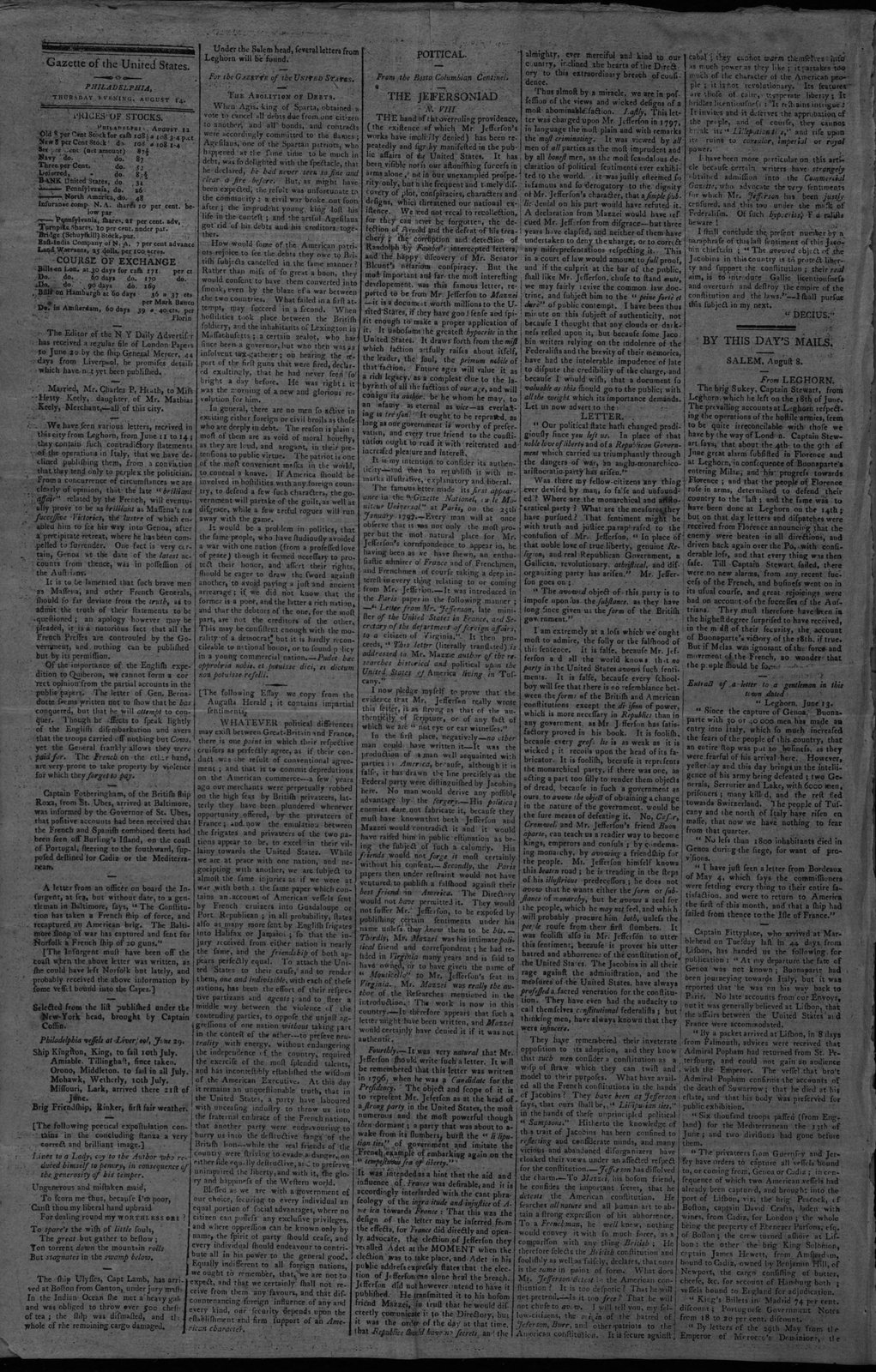 United StatesThe Jeffersoniad, no. VIII
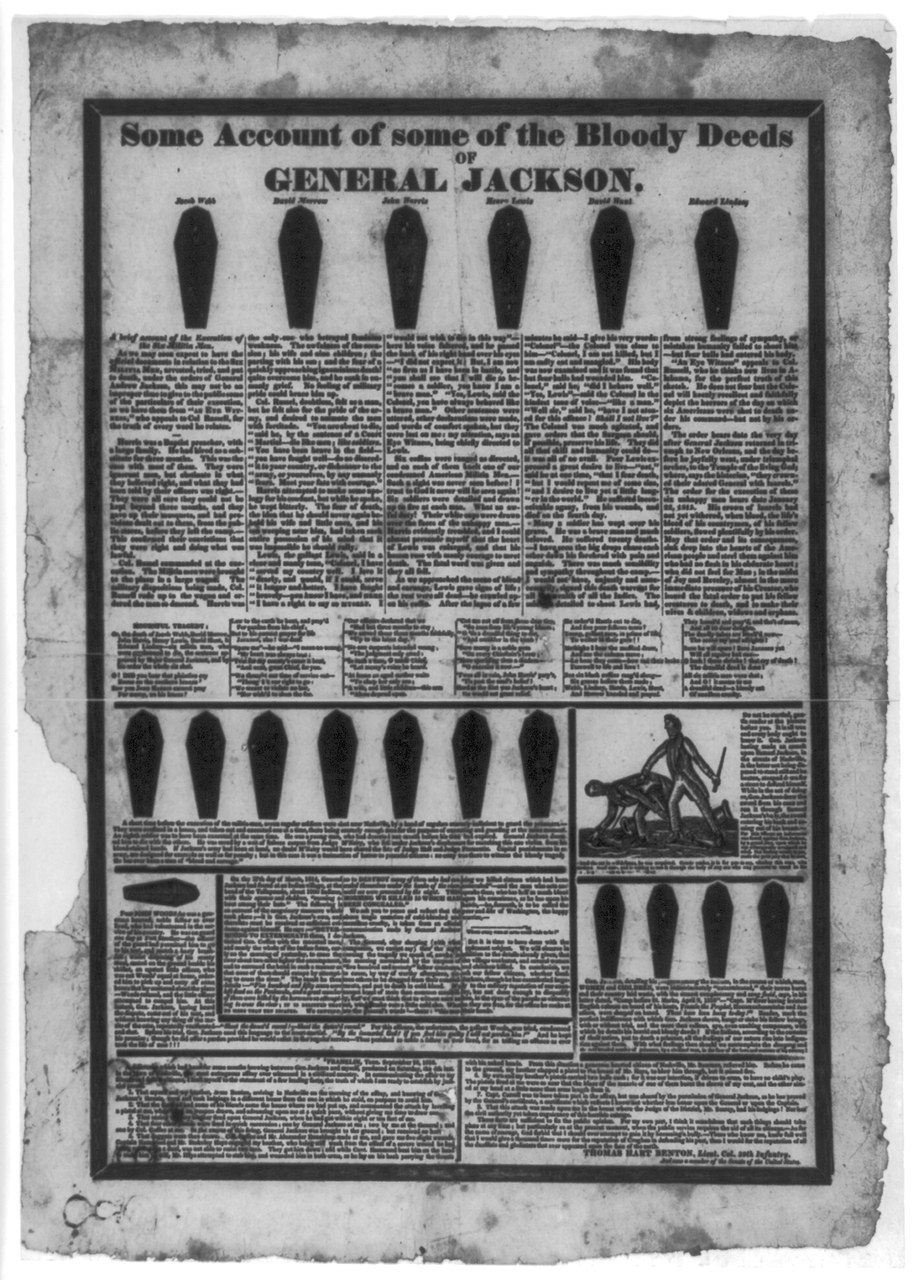 United StatesBloody Deeds of General Jackson
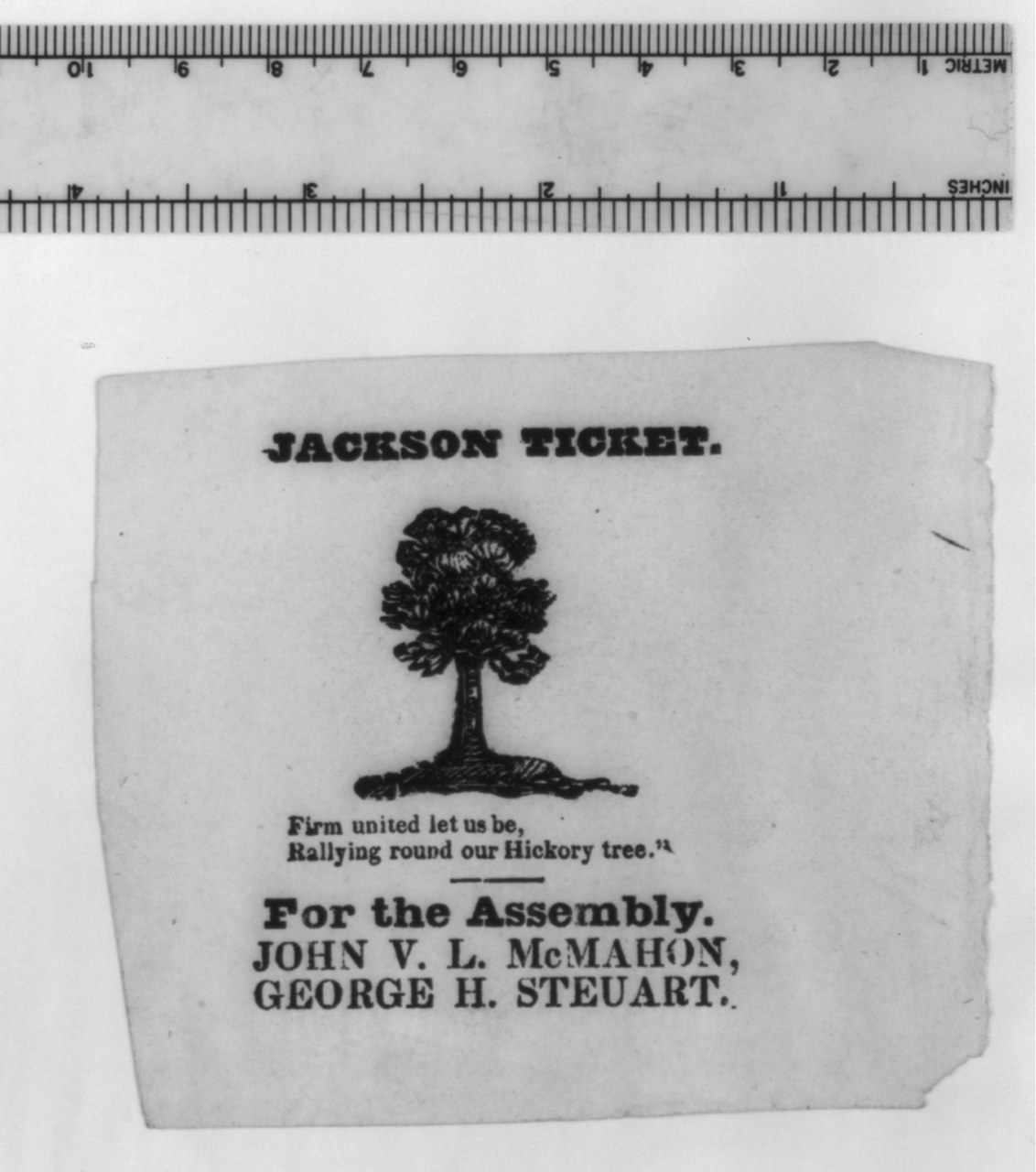 United StatesJackson Ticket, Hickory Tree
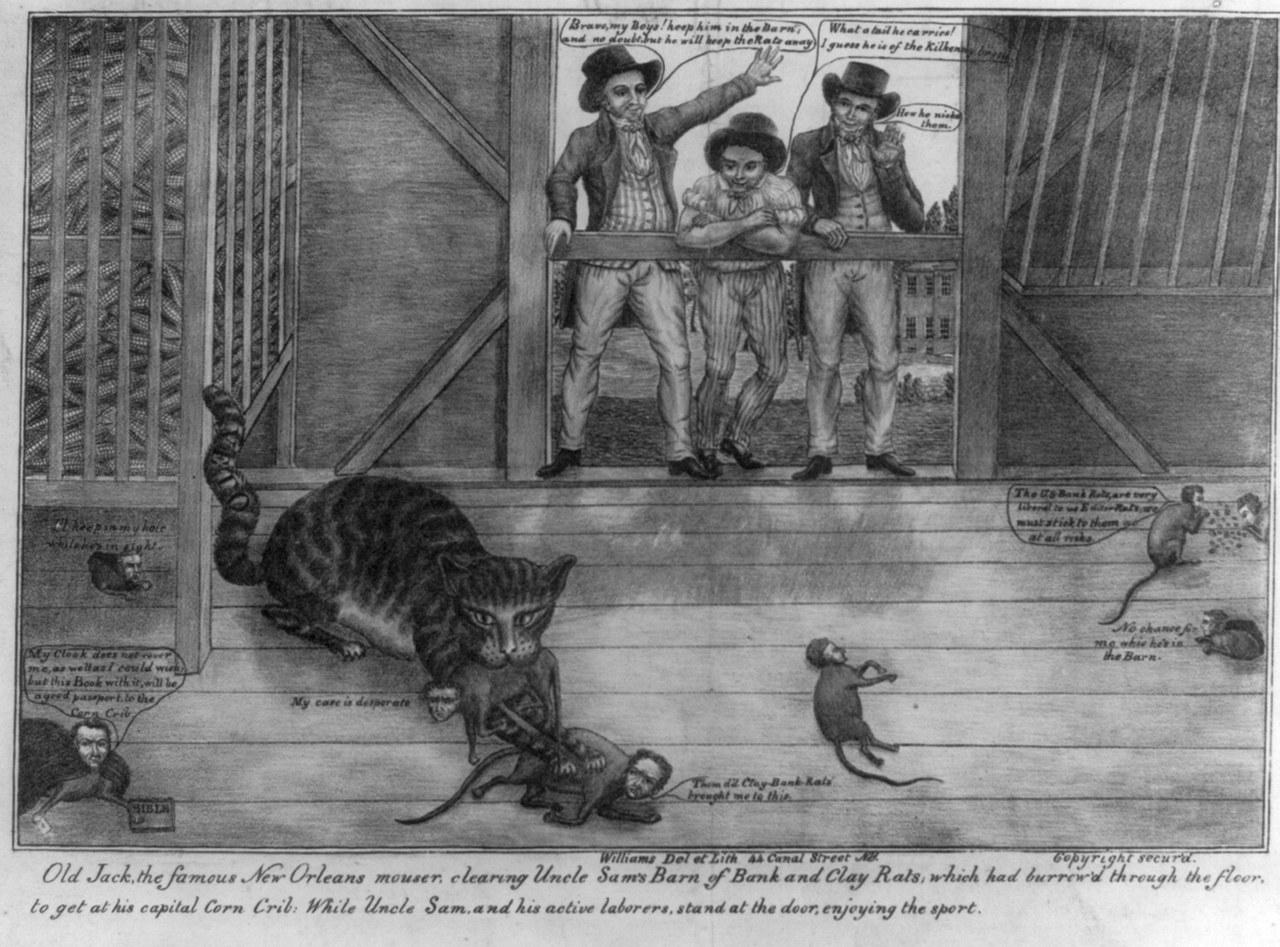 United StatesOld Jack, the New Orleans Mouser
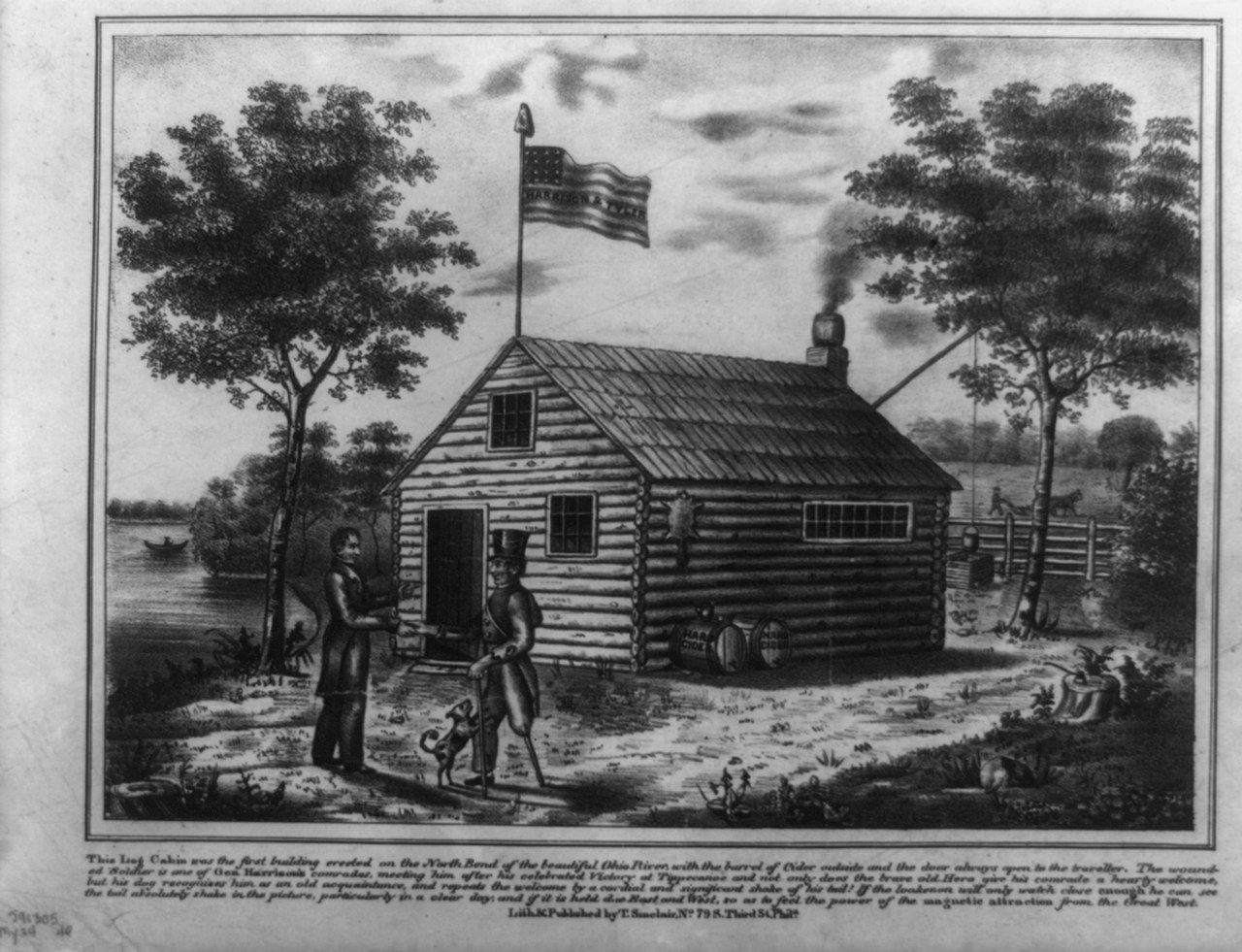 United StatesHarrison's North Bend Log Cabin
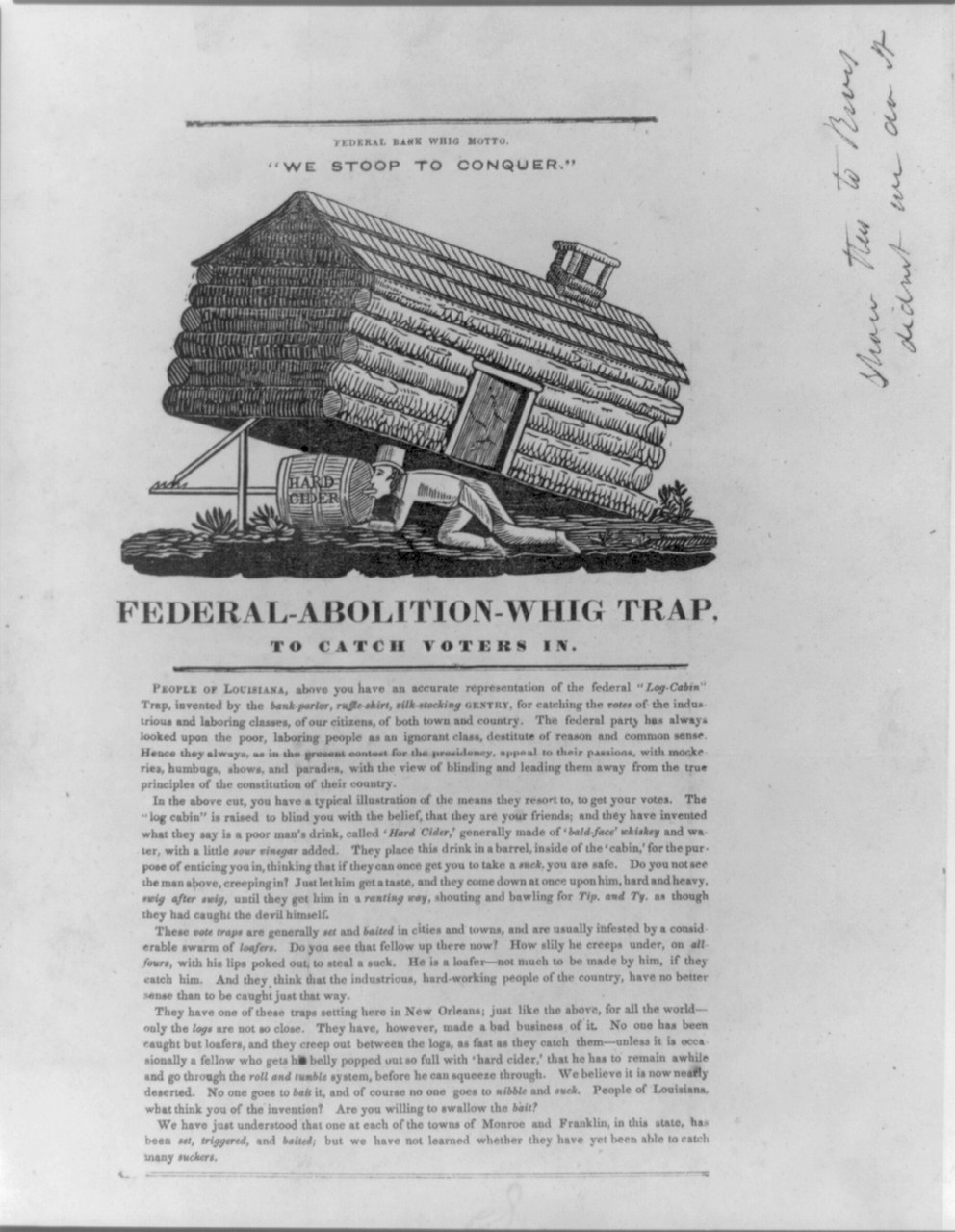 United StatesFederal-Abolition-Whig Trap
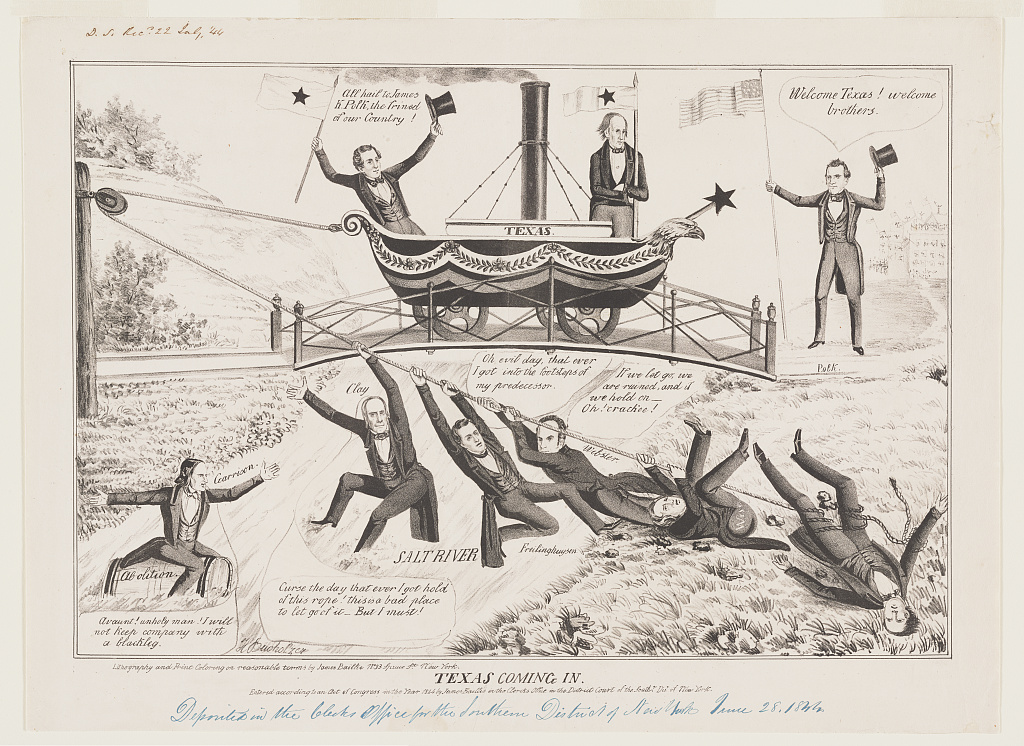 United StatesTexas Coming In
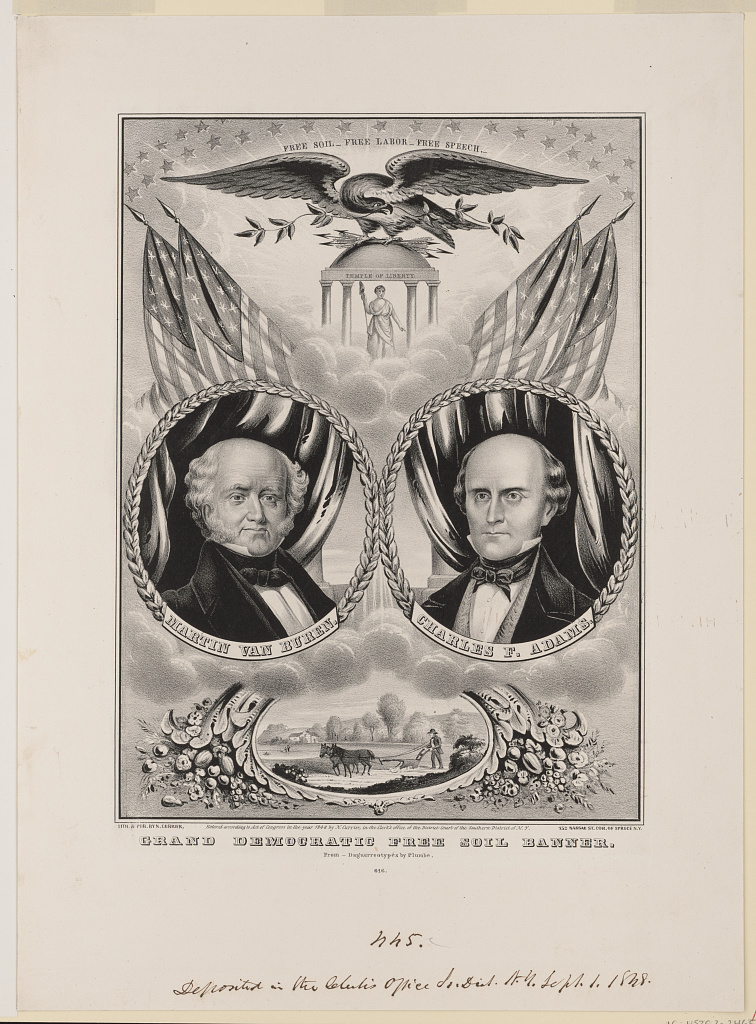 United StatesGrand Democratic Free Soil Banner
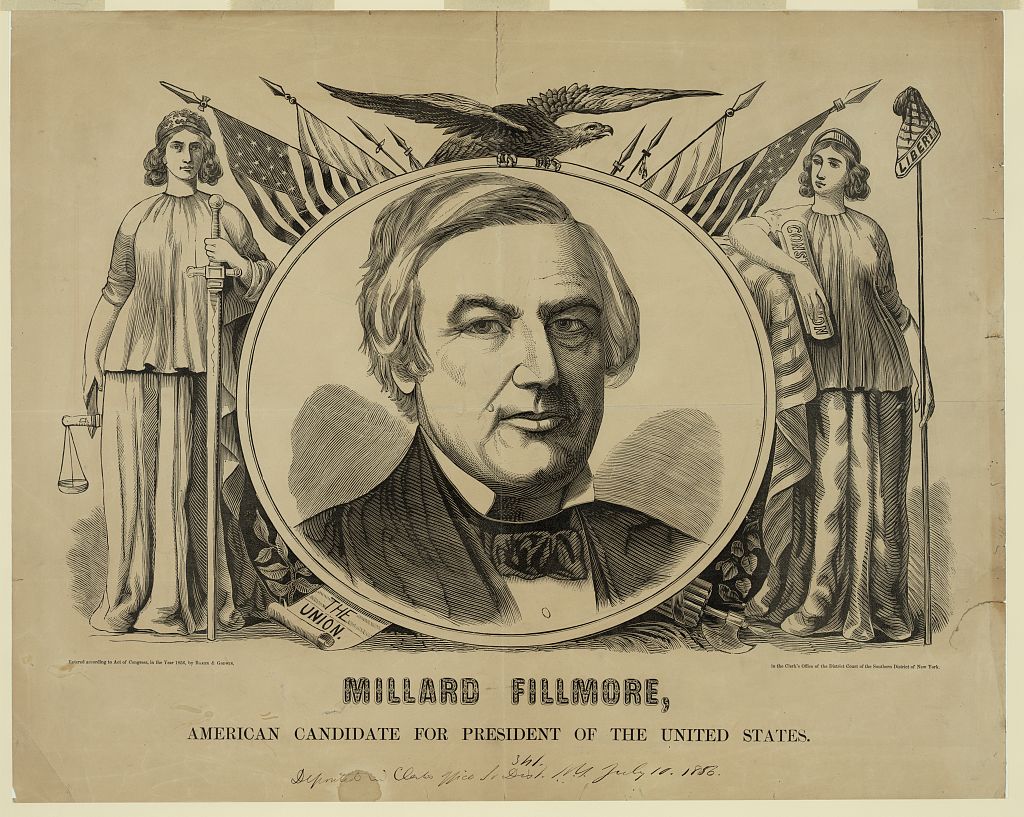 United StatesMillard Fillmore, American Candidate
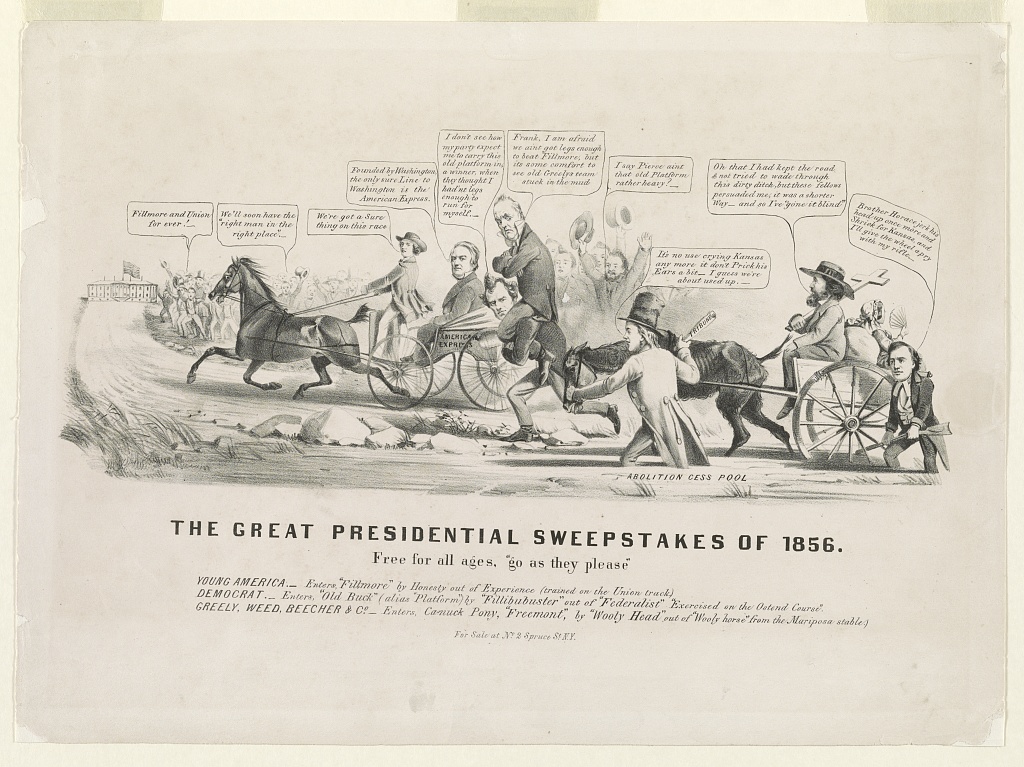 United StatesThe Great Presidential Sweepstakes of 1856
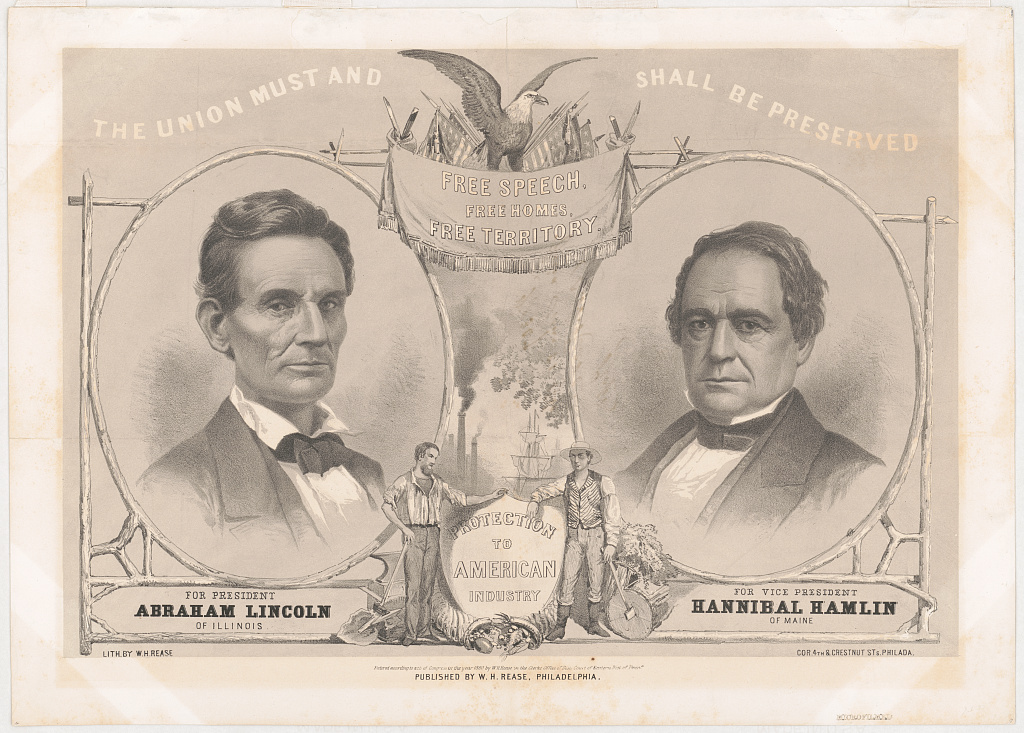 United StatesThe Union Must and Shall Be Preserved
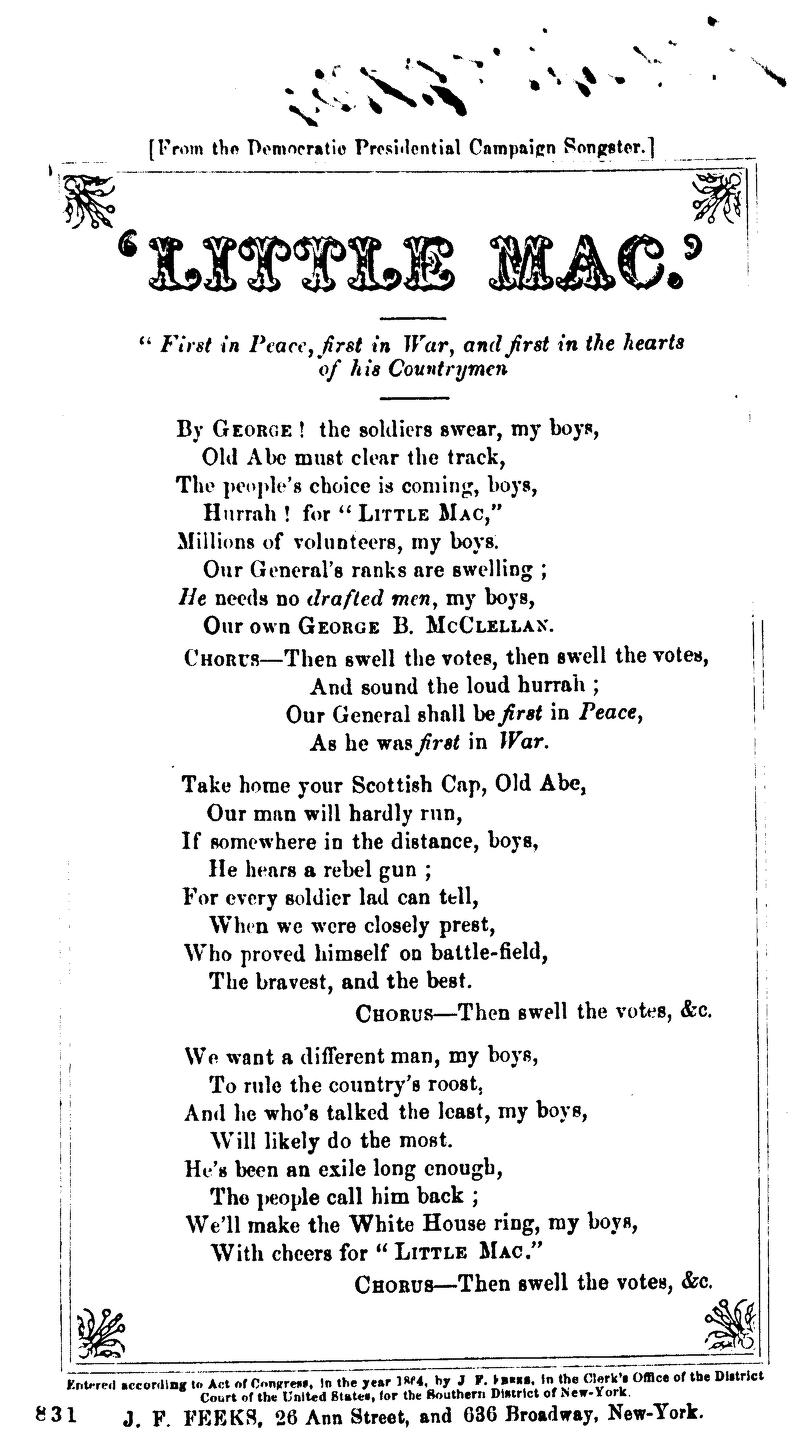 United StatesLittle Mac
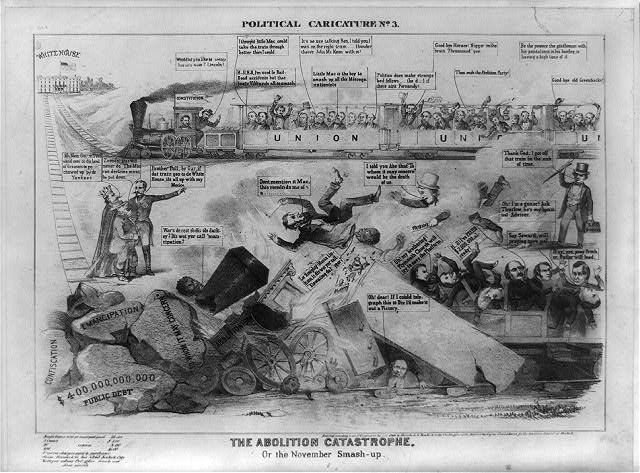 United StatesThe Abolition Catastrophe
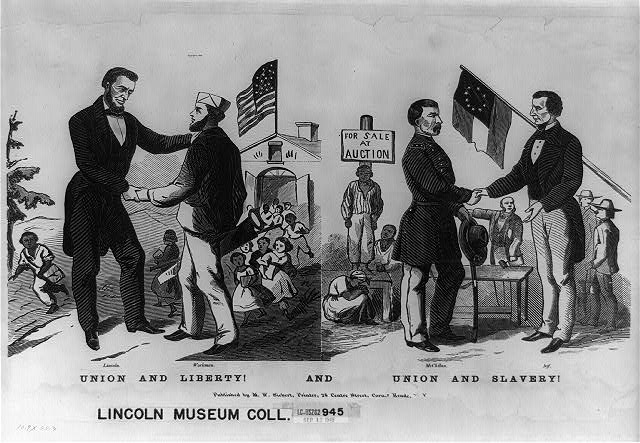 United StatesUnion and Liberty! And Union and Slavery!
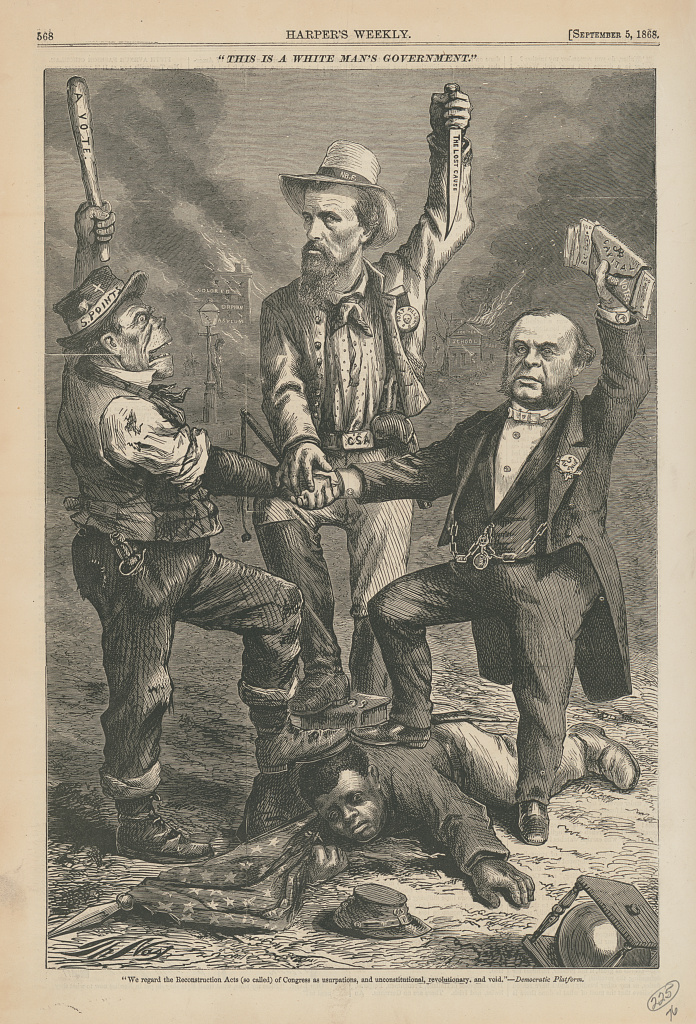 United StatesThis Is a White Man's Government
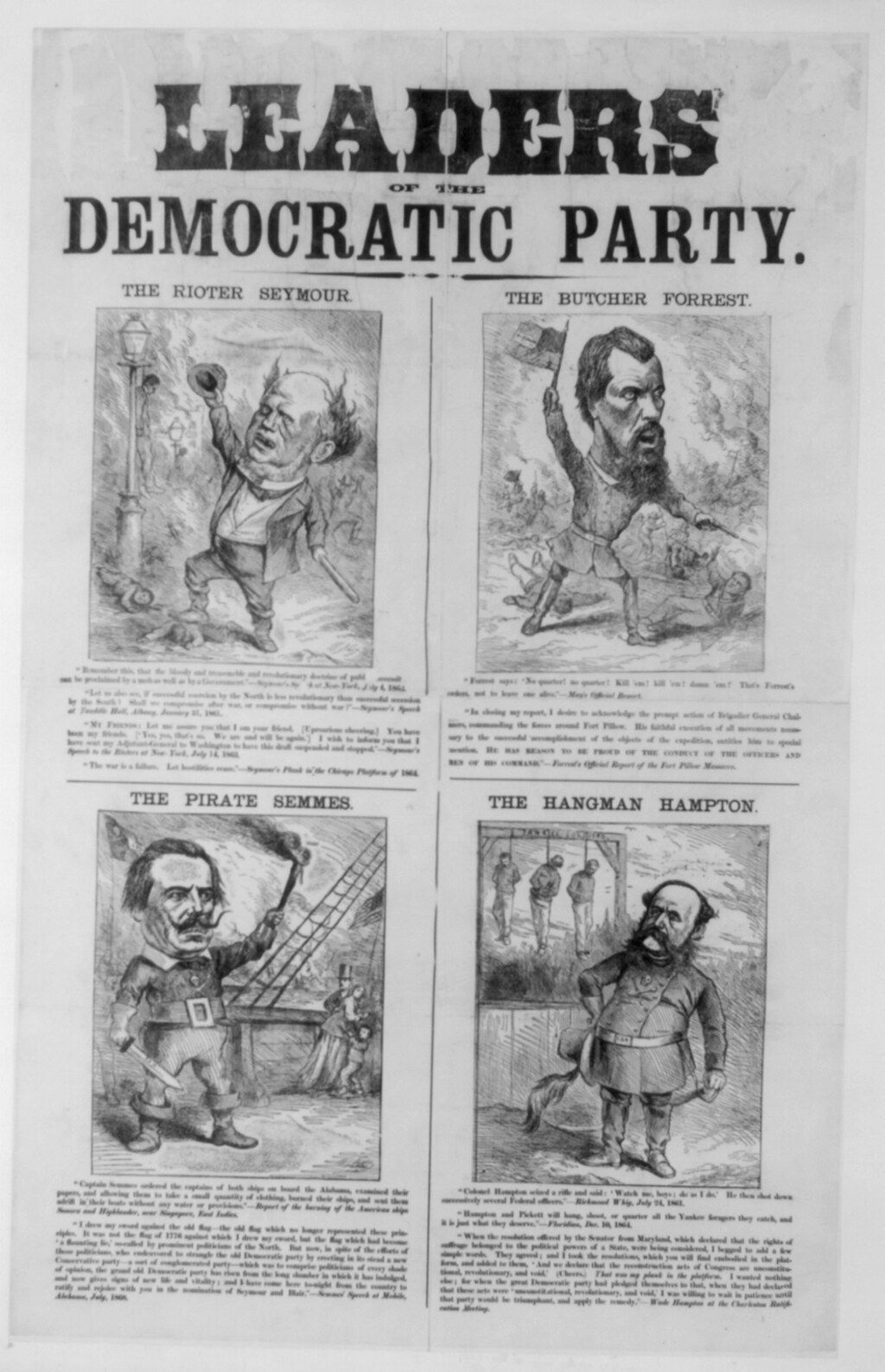 United StatesLeaders of the Democratic Party (Nast)
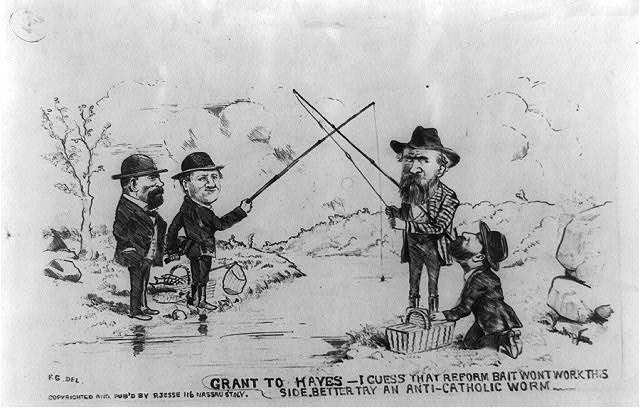 United StatesBetter Try an Anti-Catholic Worm
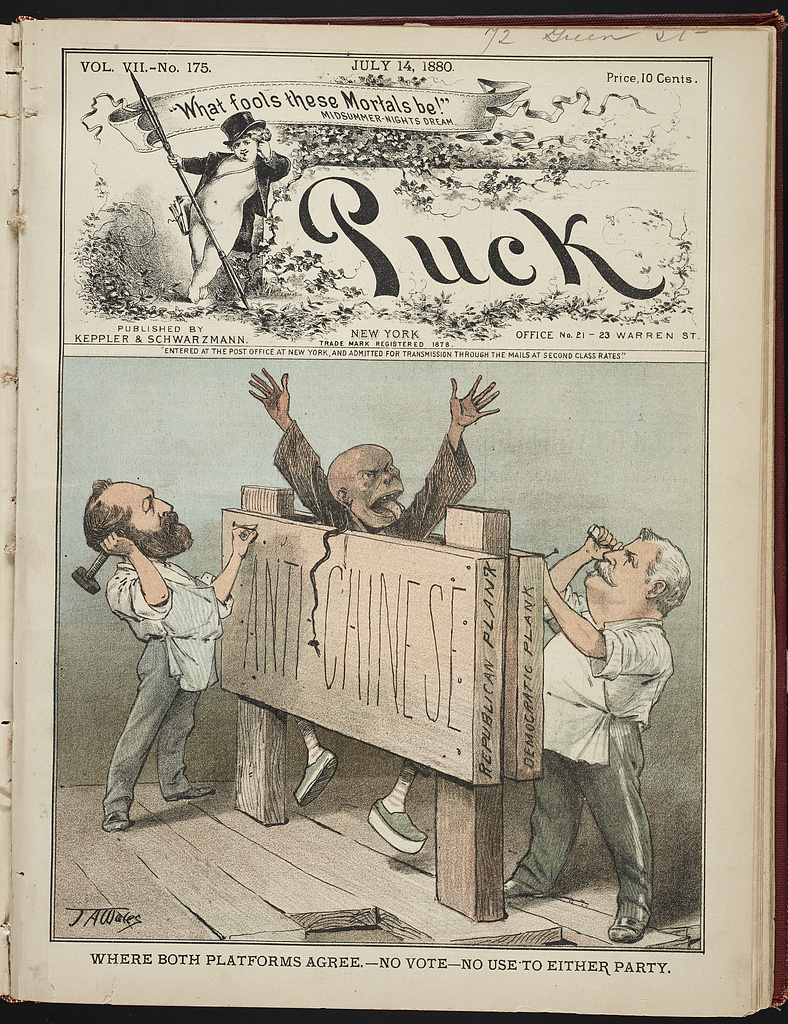 United StatesWhere Both Platforms Agree
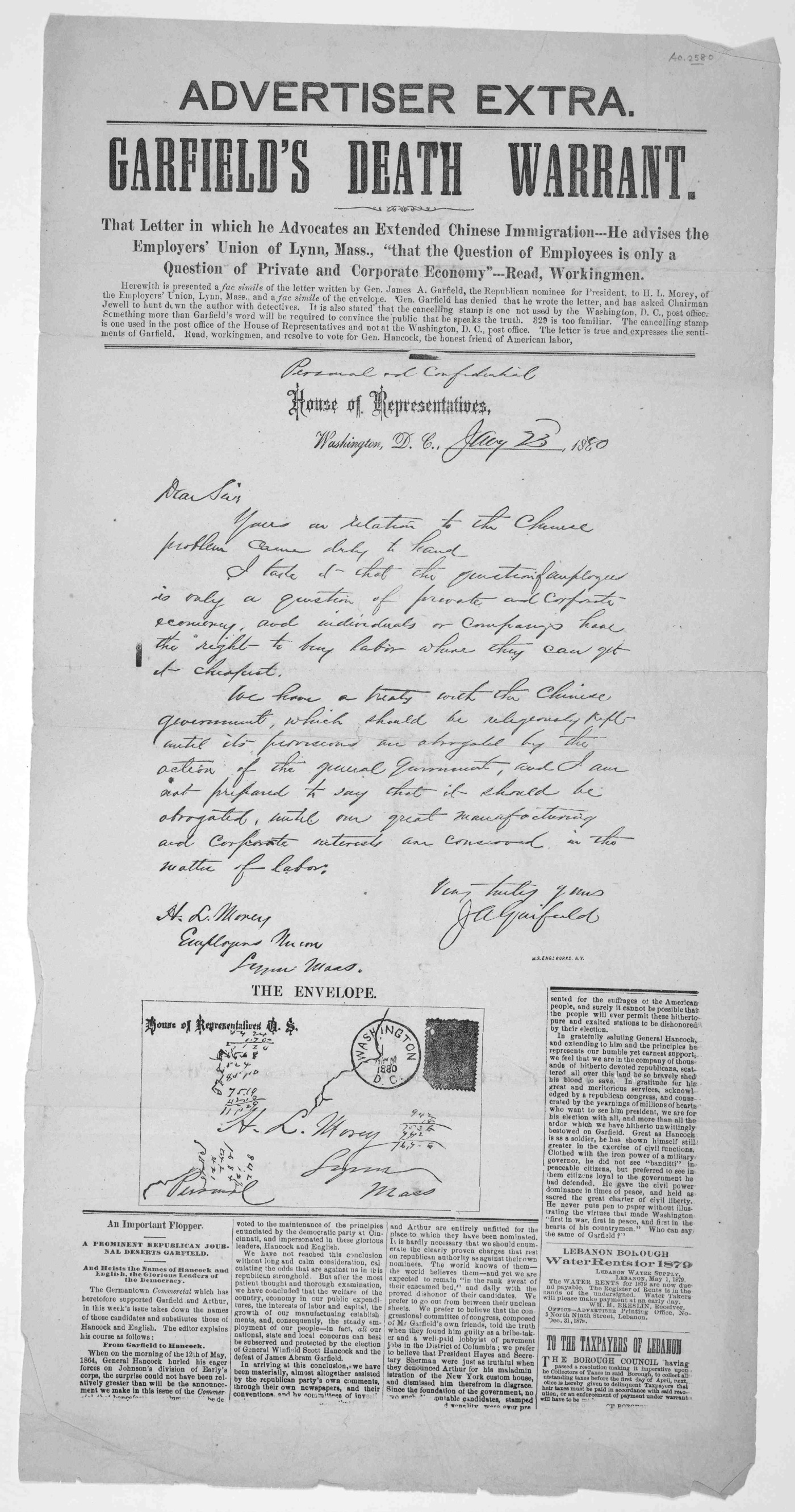 United StatesGarfield's Death Warrant
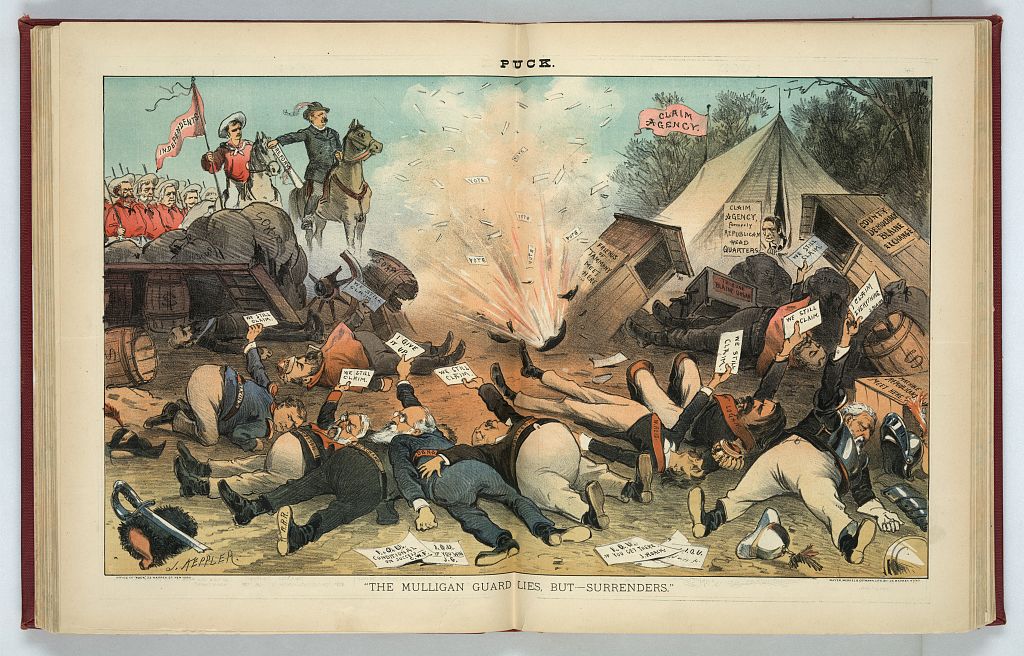 United StatesThe Mulligan Guard Lies, but Surrenders
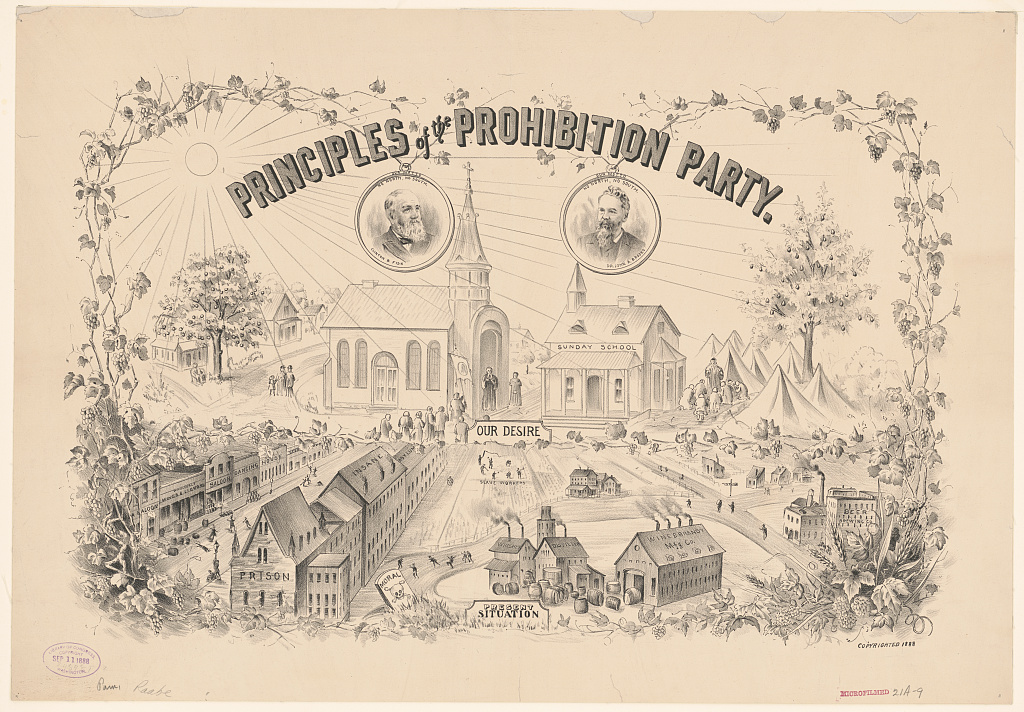 United StatesPrinciples of the Prohibition Party
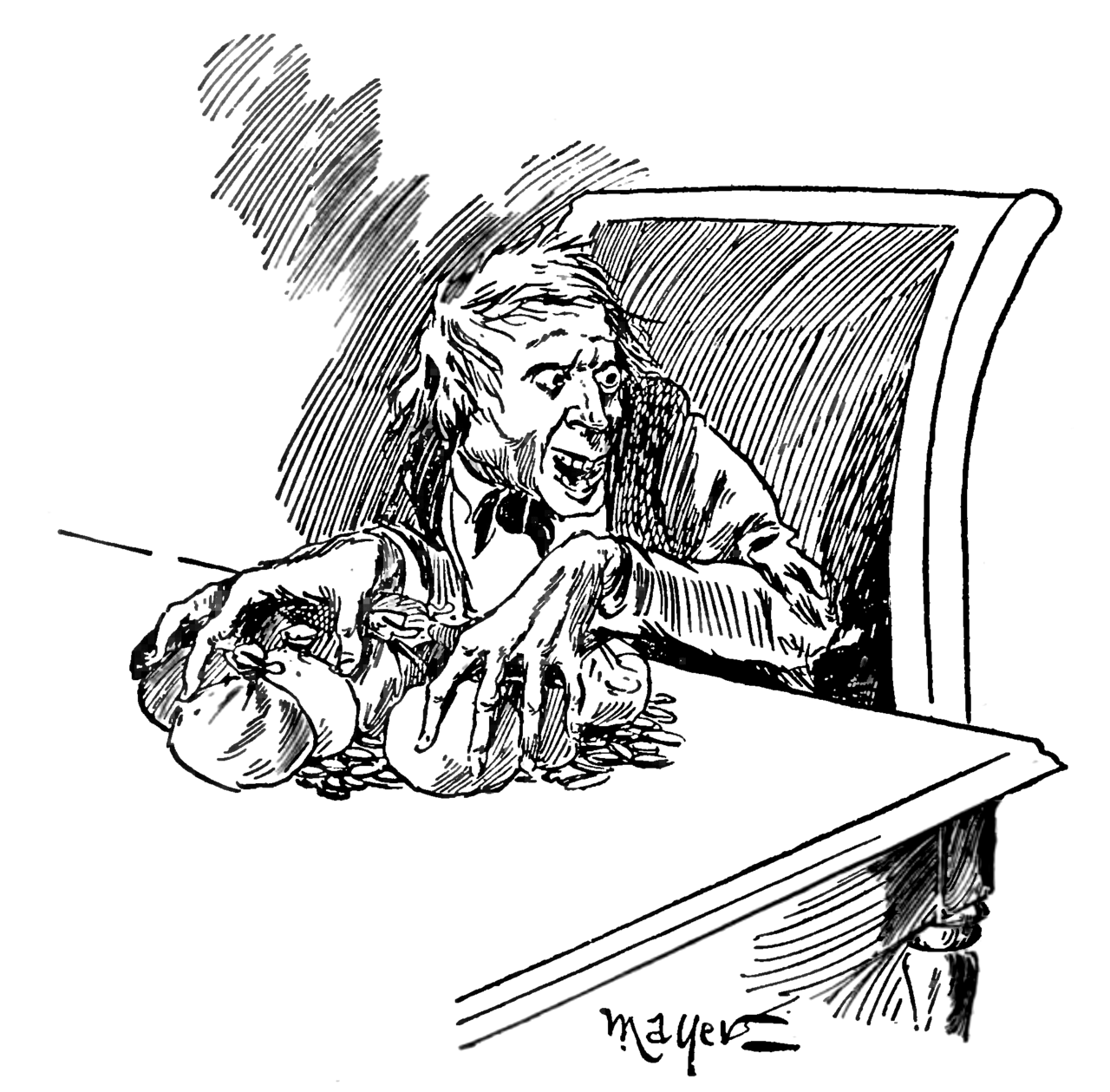 United StatesGreed (Coin's Financial School)
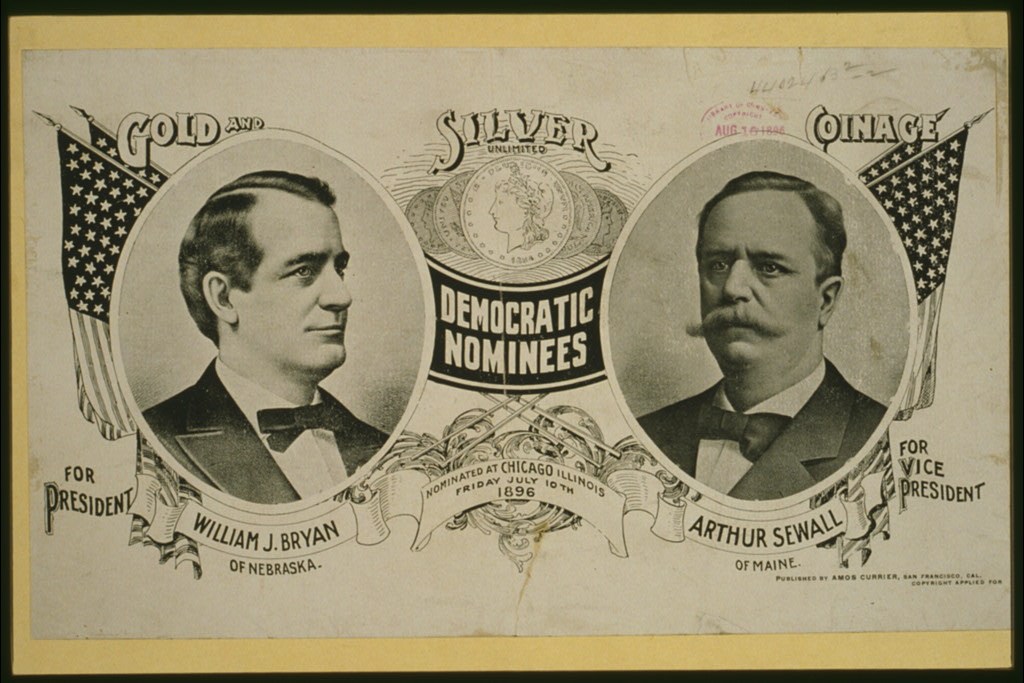 United StatesBryan and Sewall, Unlimited Coinage
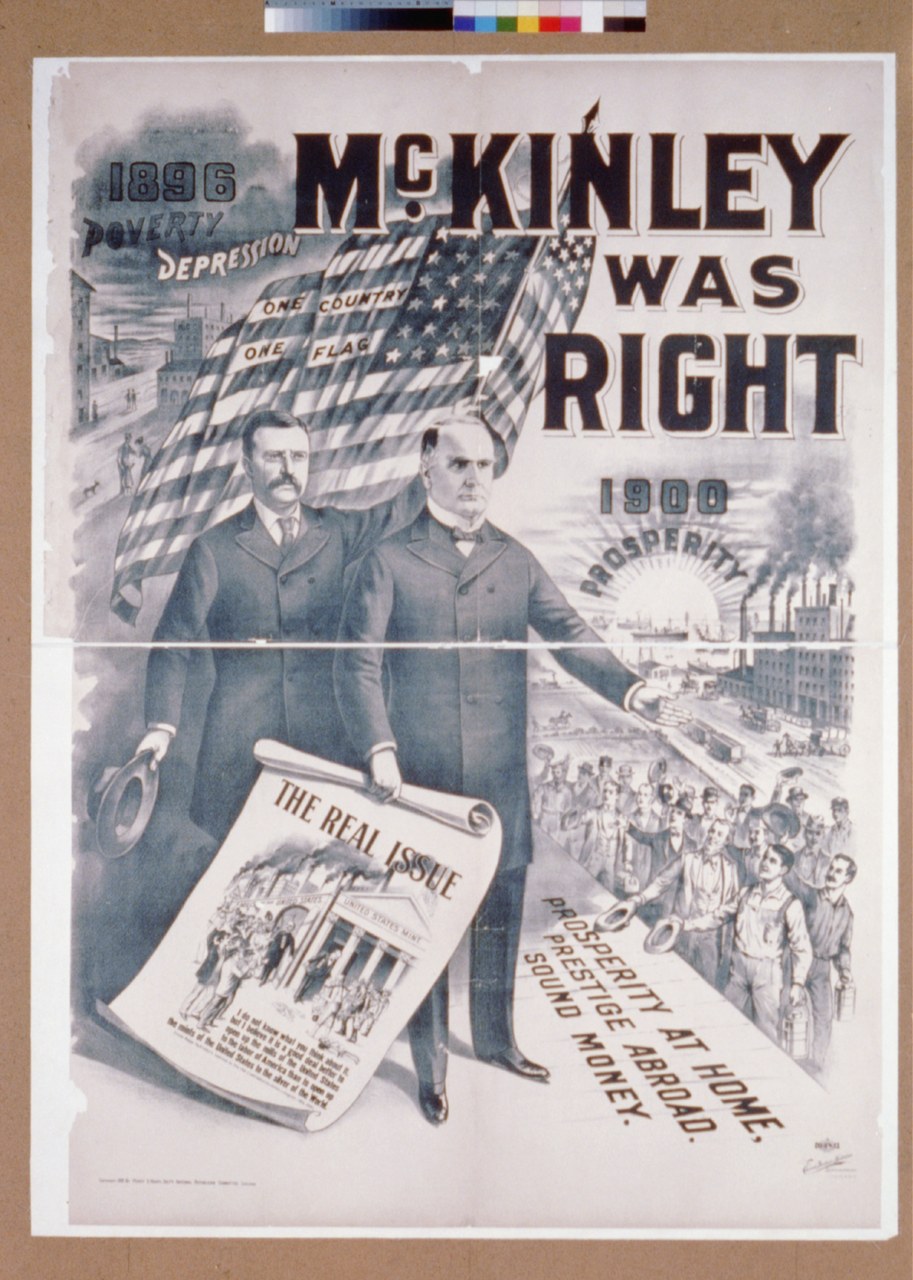 United StatesMcKinley Was Right
 United States"Negro Rule" vampire cartoon (1900)United StatesCampaign print gallery, 1800–1900